Building your custom home in Naples is an extraordinary journey. It's about so much more than wood and stone—it’s about crafting a sanctuary that perfectly captures your vision, a personal haven designed just for you. This guide is your trusted roadmap, created to walk you through the entire luxury home construction experience, from the first spark of inspiration to the unforgettable moment you turn the key in your new front door.
Your Naples Luxury Home Construction Journey
Embarking on a custom home build is a truly remarkable adventure. We like to think of it as commissioning a masterpiece where every choice, from the home's orientation on the lot to the finish on the cabinet hardware, is a brushstroke reflecting your personal story. It’s a path filled with excitement, but naturally, it also comes with significant questions.
Our goal is to pull back the curtain on each step, showing you how partnering with a skilled, experienced builder can transform a complex process into a smooth and genuinely enjoyable experience. This first section will give you a bird's-eye view of the road ahead, so you can begin this venture with complete confidence.
The Unmatched Appeal of a Custom-Built Home
Why choose to build custom in a place as beautiful as Naples? The answer is simple: you get exactly what you desire, without a single compromise. Instead of touring countless properties that are almost perfect, you have the rare opportunity to create a home designed from the ground up to fit your family, your passions, and the rhythm of your life.
This is what makes the process so rewarding—your home becomes a true extension of you. Some of the most compelling advantages include:
Complete Personalization: Imagine designing a kitchen with a dual-island layout perfect for entertaining, a private home gym with a sauna, or a climate-controlled wine cellar. Every architectural detail, from the flow of the floor plan to the style of the crown molding, is your decision.
Cutting-Edge Quality and Technology: Your home will be constructed to the latest building codes, feature modern energy-efficient systems, and be wired for the smart home technology you want—like automated lighting, security, and climate control—right from the start.
Uncompromising Craftsmanship: You are an integral part of the process from the beginning. You can specify the materials, meet the artisans, and be confident that the quality of your home meets your exacting standards, ensuring it's built to last.
A Strong Market Foundation
Building a custom home isn't just a lifestyle decision; it's a sound one, backed by a remarkably strong market. The luxury real estate sector has seen incredible growth, dramatically outpacing the broader housing market. In fact, luxury home prices jumped an incredible 65% between late 2019 and late 2023.
That growth far surpasses the 40% increase seen in non-luxury homes during the same period, proving just how much demand there is for premium properties. You can dive deeper into the data in The Trend Report 2025.
Building a custom home is the ultimate expression of personal achievement and vision. It's an opportunity to create a legacy property that will host cherished memories for generations to come, all while being a significant asset in a robust market.
This positive outlook provides a stable foundation for your project. To give you a clear picture of what's involved, let’s break down the journey into its core phases.
The 5 Core Phases of Luxury Home Construction
Here is a high-level overview of the key stages involved in building your custom Naples home, from initial concept to move-in day. Think of this as the master plan for your project.
Phase | Key Objective | Typical Duration |
|---|---|---|
1. Pre-Construction | Define the vision, assemble the team (architect, builder, designer), and finalize the budget. | 2–6 months |
2. Design & Permitting | Create detailed architectural plans and secure all necessary permits from local authorities. | 4–9 months |
3. Site Prep & Foundation | Prepare the land, handle demolition (if needed), and pour the structural foundation. | 1–3 months |
4. Construction | Frame the home, install systems (plumbing, electrical), and complete all interior and exterior finishes. | 12–24 months |
5. Post-Construction | Conduct final inspections, handle client walkthroughs (punch list), and officially hand over the keys. | 1–2 months |
Understanding these phases helps set clear expectations for the timeline and the milestones you'll hit along the way. Now that you have the big picture, the first real step is finding the perfect canvas for your masterpiece.
Choosing the Perfect Naples Homesite
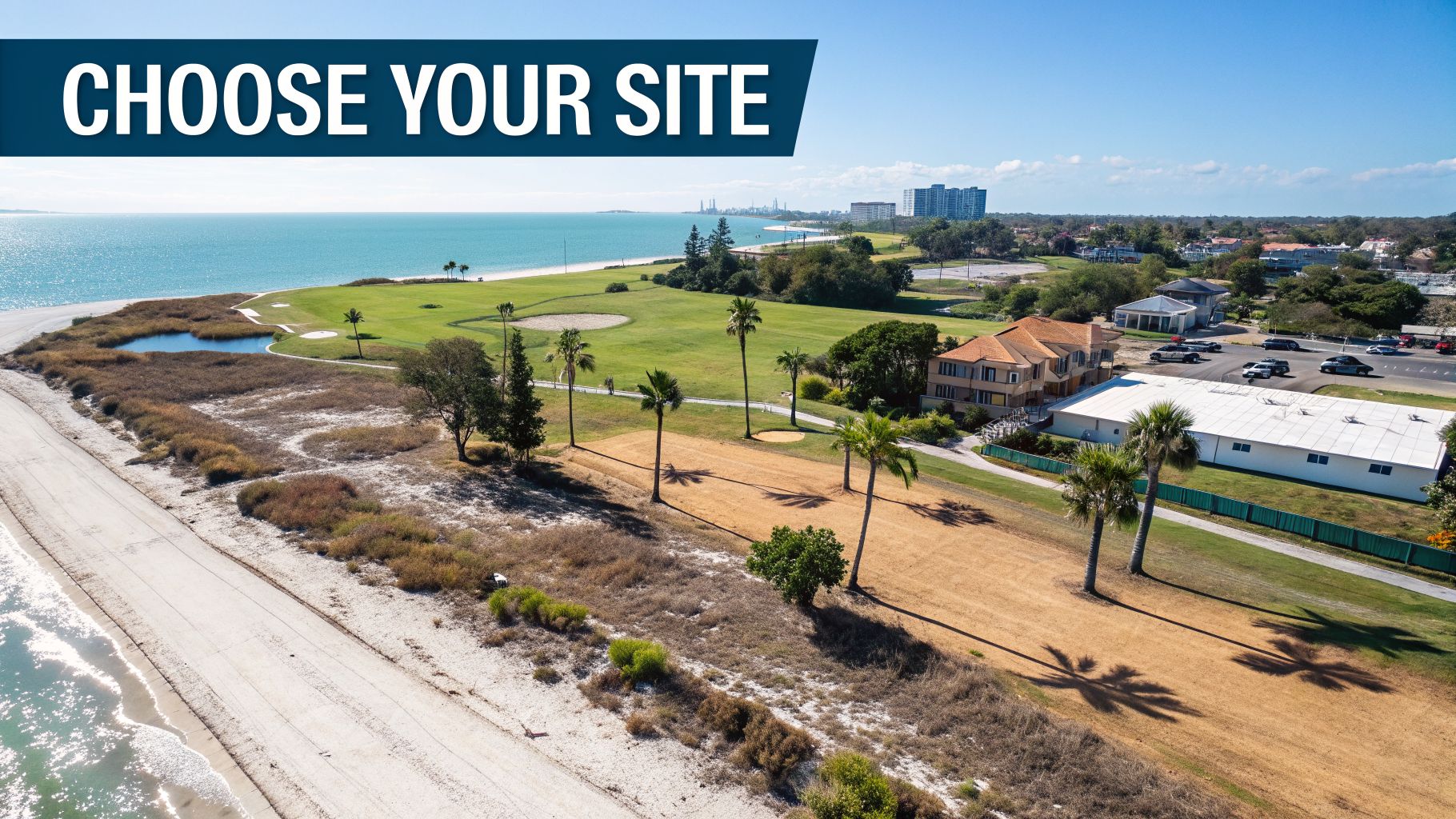
Before a single line is drawn on a blueprint, you must find the right piece of land. Here in Naples, that decision is one of the most important you’ll make in the entire luxury home construction journey. The ground your home sits on will shape everything—from the architectural style and view corridors to the very engineering of the structure.
Choosing a lot isn't just about picking a great view. It's a strategic choice between the lush, peaceful fairways of an inland golf community and the stunning, ever-changing backdrop of a Gulf-front estate. Each setting comes with its own unique personality, along with a distinct set of challenges and opportunities that only a seasoned local builder can truly appreciate.
Coastal vs. Inland Considerations
The dream of a beachfront home in Naples is powerful, but it's a dream that comes with a very specific rulebook. Building on or near the water requires a deep knowledge of local and federal regulations designed to protect your investment and our beautiful coastline.
In contrast, an inland lot, perhaps tucked away in a prestigious community like Grey Oaks, offers a different kind of sanctuary with more privacy and space. While these sites still have to meet Florida’s tough building codes, they typically sidestep the complex coastal regulations, which can open up more design flexibility and sometimes shorten the construction timeline.
The big differences really boil down to a few key areas:
Foundation Engineering: A coastal home in a neighborhood like Port Royal will need deep-pile foundations and have its main living areas elevated to stay safe from flooding. An inland home can often use a more standard slab-on-grade foundation.
Material Selection: The salty sea air is beautiful but corrosive. Proximity to the Gulf means we must choose materials that fight rust and decay, like high-grade stainless steel hardware, specially treated woods, and finishes built to last in the humid climate.
Regulatory Oversight: If you're building on the water, expect more eyes on your project. These properties face a much higher level of scrutiny to ensure they meet strict environmental and structural guidelines.
Selecting a homesite in Naples is a strategic choice. An expert builder doesn't just see a piece of land; they see the potential and the necessary steps to create a resilient, beautiful home that harmonizes with its surroundings, whether it's on the beach or the 18th hole.
Navigating Naples Regulations
Building in Collier County, especially near the coast, means getting familiar with some important rules. The two big ones are FEMA flood zones and Florida’s Coastal Construction Control Line (CCCL). Think of these less as red tape and more as essential safeguards for your home.
The FEMA flood zone designation tells us how high your home’s lowest floor must be to protect it from storm surges. The Coastal Construction Control Line is an even more critical boundary. If your home is seaward of this line, it triggers a whole different level of engineering and construction requirements.
For example, a home inside the CCCL will absolutely need an engineered breakaway wall system on its lower level, plus a structural frame tough enough to handle hurricane-force winds and waves. A builder who knows coastal construction inside and out plans for these rules from day one, weaving them into the design to prevent expensive surprises down the road. It’s all about creating a home that’s not just stunning, but a fortress built to last for generations. For a closer look at what makes each area special, check out our guide to the best Naples neighborhoods.
Once you have a few potential lots in mind, the next step is understanding what it takes to get the land ready. For a great overview of this process, a resource like Land Prep For Building Your Florida Dream Home is a fantastic starting point.
Assembling Your Custom Home Dream Team
Building a custom home isn't just about plans and materials; it's about people. Think of it like conducting an orchestra—each musician is a master, but it's how they play together that creates a breathtaking symphony. In luxury home construction, your orchestra is the architect, the interior designer, and your custom home builder. The success of your project hinges not just on their individual skills, but on how well they work in harmony.
The architect is the composer, drafting the score that brings your vision to life on paper. The interior designer then acts as the conductor, shaping the home's feel and emotional tone through colors, textures, and light. And the builder? They’re the first-chair violinist, leading the entire ensemble to execute the performance with precision and skill.
The Core Trio: Architect, Designer, and Builder
Understanding each professional's role is the first step toward a smooth, rewarding build. While their jobs can sometimes overlap, each one brings a vital and unique perspective to the table.
The Architect: This is the visionary who designs the home’s structure, layout, and exterior look. They ensure the home is not only beautiful but also structurally sound, creating the master plan for everyone to follow.
The Interior Designer: Their focus is on the human experience inside the home. They select the finishes, fixtures, lighting, and furnishings that truly reflect your personality and lifestyle, turning a well-built house into your home.
The Custom Home Builder: This is the expert who brings it all into the real world. They manage the budget, timeline, subcontractors, and day-to-day quality control, making sure every last detail is executed just right.
The Power of Early Collaboration
The old way of doing things was sequential: hire an architect, finalize plans, get bids from builders, and then maybe bring in a designer. Today, the most successful luxury projects in Naples flip that script. The secret is bringing the builder into the conversation right from the beginning, often at the same time as the architect.
Imagine this: your architect designs a spectacular cantilevered balcony. It looks incredible on the blueprints. But when those plans go out to bid, the quotes come back sky-high because the hidden structural engineering is far more complex—and expensive—than anyone anticipated.
Now, let's replay that scene with the builder in the room from day one. As the architect sketches, the builder can offer immediate, practical feedback on cost and constructability. They might suggest a small design tweak that creates the exact same stunning look for 30% less and shaves weeks off the schedule. That's the power of early collaboration in action.
When you involve your builder from the start, the process shifts from a rigid, linear hand-off to a dynamic, collaborative partnership. This synergy is the secret to building a home that’s on time, on budget, and a true reflection of your vision.
Finding the Right Fit for Your Naples Project
Putting together your team is about more than just looking at impressive portfolios. It’s about finding people who communicate well, understand your goals, and genuinely click with you. The best custom builders in Naples have spent years cultivating strong relationships with the area’s top architects and designers. That built-in rapport is priceless, as it means they already have a shared process and a proven history of working together smoothly.
As you meet with potential team members, pay attention to how you communicate with them. It's just as important as their credentials. You can get a great head start by reviewing our guide on what to ask a general contractor before making a final decision.
This collaborative approach is more important than ever. The demand for high-end homes is booming, with the global ultra-luxury market seeing a massive surge. In 2025 alone, there were 555 mega-deals over $10 million in the fourth quarter. This is part of a $40.5 billion annual market, driven by buyers like you who are prioritizing lifestyle and security. You can read more about this trend from global property experts.
Ultimately, your dream team should feel like a group of trusted partners. Find the right ones, and you’re not just building a house—you’re crafting a legacy.
Understanding Your Budget and Timeline
Let's talk about the two elements that are central to a positive building experience: the budget and the timeline. When these are clear, transparent, and realistic from the start, the entire journey of creating your home is exciting. When they’re vague, it's a recipe for stress. Our commitment is to provide a solid, real-world understanding of both.
Think of your budget not just as a single number, but as the financial roadmap for your project. It guides every choice we make together. We generally break it down into three core areas, which helps you see exactly where your investment is going.
Breaking Down Your Budget
The first step is simply to get organized. By putting costs into the right buckets, the numbers become far less intimidating and you gain a greater sense of control.
Hard Costs: This is the largest category. It covers all the tangible elements that go into the physical structure of your home—the labor and materials. This includes everything from the concrete foundation and steel beams to the hurricane-impact windows and the master carpenter who installs your custom millwork.
Soft Costs: These are the essential, behind-the-scenes expenses. This bucket includes fees for your architect and engineers, interior design services, land surveys, and all the city permits and impact fees required to get your project approved and built to code.
Land Costs: As we've discussed, this is the cost of the lot you're building on. It's a foundational piece of your total investment.
It's the interplay between your vision and these costs that truly defines the budget. That stunning slab of Calacatta marble you’ve fallen in love with or the high-end Wolf and Sub-Zero appliance package are hard costs that reflect your unique style. A great builder acts as your trusted guide, helping you balance these desires with the overall financial plan.
To give you a clearer picture, here’s a sample breakdown of how a budget might be allocated for a custom home in our area.
Sample Budget Allocation for a Naples Luxury Home
Cost Category | Percentage of Total Budget (Approx.) | Examples |
|---|---|---|
Foundation & Structure | 15% - 20% | Concrete, steel reinforcement, framing lumber, trusses |
Exterior Finishes | 10% - 15% | Roofing, windows, doors, stucco, siding, paint |
Interior Systems (MEP) | 10% - 15% | HVAC, electrical wiring, plumbing, smart home tech |
Interior Finishes | 20% - 30% | Drywall, flooring, cabinetry, countertops, paint, trim |
Site Work & Landscaping | 5% - 10% | Excavation, drainage, pool, hardscaping, plants |
Appliances & Fixtures | 5% - 10% | Kitchen appliances, lighting, plumbing fixtures |
Soft Costs & Fees | 10% - 15% | Architectural design, permits, engineering, insurance |
Keep in mind these percentages are a general guide; the final numbers will always depend on the specifics of your design and material choices.
Mapping a Realistic Construction Timeline
Just like your budget, your timeline needs a solid structure. Knowing what to expect and when is absolutely crucial for your peace of mind. While every custom home we build is one-of-a-kind, the journey follows a well-worn path.
A well-managed schedule is proactive, not reactive. It anticipates potential hurdles, like seasonal weather or supply chain lead times for custom materials, and builds in contingencies to keep the project moving forward smoothly.
This timeline gives you a sense of how the key roles of the architect, designer, and builder fit together chronologically to bring your home to life.
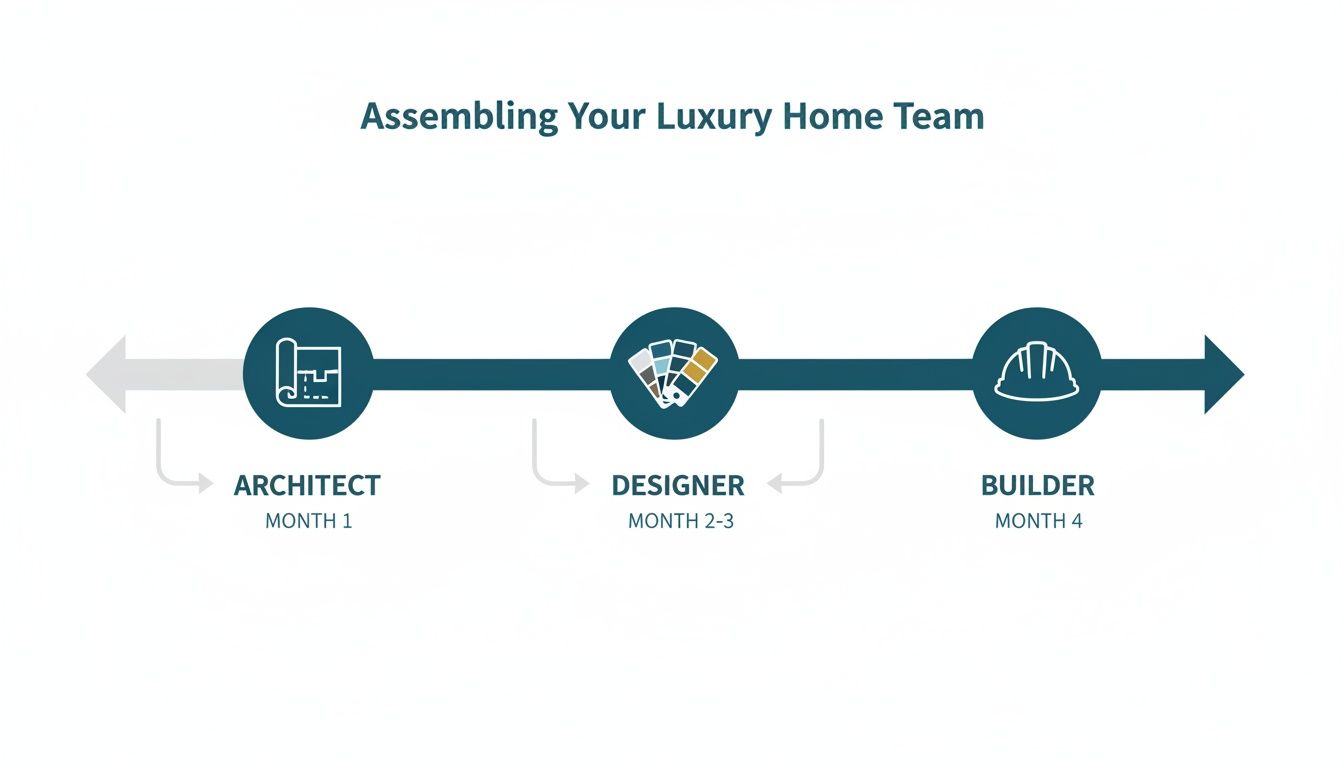
As you can see, a successful project starts long before we ever break ground. It’s about assembling the right team of experts, in the right order, to build a strong foundation of collaboration.
For a new custom home here in Naples, you can generally expect the entire process—from the first sketch to move-in day—to take 18 to 24 months. The actual on-site construction part of that timeline usually takes up 12 to 18 months.
However, this isn't set in stone. For example, a highly complex architectural design might require more time in the permitting office. We also have to plan around Florida’s hurricane season, which runs from June through November and can pause work like roofing or framing for a few days.
Here’s a perfect real-world example. Let's say you've picked out some incredible custom-milled flooring from a small workshop in Italy. The lead time might be six months. A seasoned project manager anticipates this and orders that flooring the moment the design is finalized. That way, it arrives on-site exactly when the house is ready for it, preventing a chain reaction of delays that could hold up the painters, cabinet installers, and electricians.
That kind of foresight is what separates an average build from an exceptional one. It all comes down to open and honest communication with your builder. When you feel comfortable asking questions about the schedule and potential roadblocks, you get the clarity you need for a predictable, and truly enjoyable, path to your new home.
From Foundation to Final Finishes
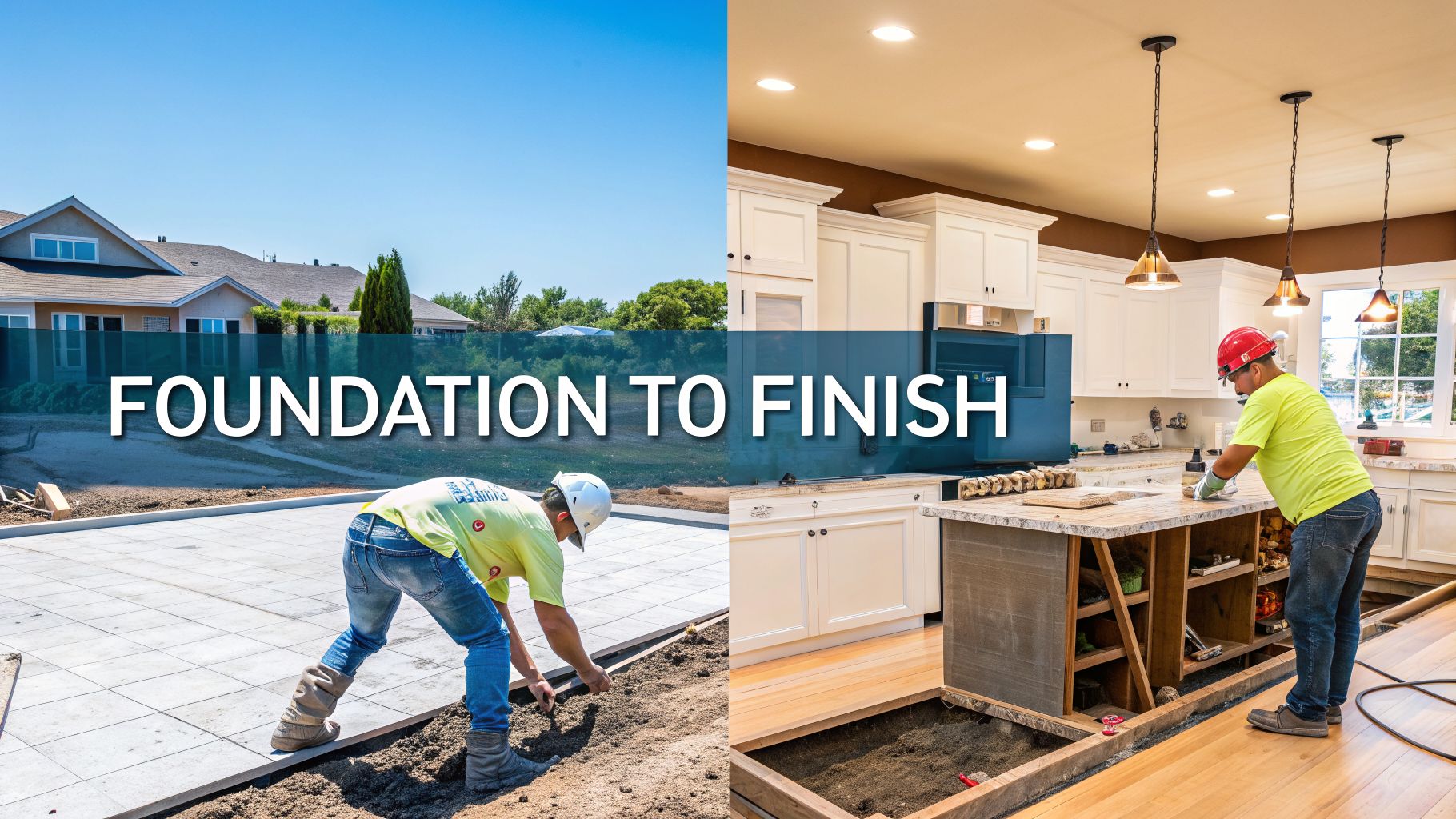
This is the moment it all becomes real. After months of poring over blueprints and imagining life within design boards, you finally get to see your vision rise from the ground. For most of our clients, watching the daily progress is the most rewarding part of the entire luxury home construction journey.
It’s a carefully choreographed ballet of skilled trades, all managed by your project manager to ensure every cut, every wire, and every tile aligns perfectly with the plan. This is where meticulous planning meets master craftsmanship.
The Major Construction Milestones
Building a custom home is a logical, step-by-step process where each phase provides the literal foundation for the next. While every project has its own unique character, the fundamental milestones are a constant. It’s an amazing thing to watch.
Here are the key phases you’ll see unfold on your property:
Foundation and Structure: It all starts with pouring a reinforced concrete foundation, engineered specifically for your lot's unique soil conditions and elevation. Shortly after, the home’s skeleton—the framing—goes up. This is the first time you can actually walk through the rooms and get a true feel for the scale and flow of your home.
Rough-Ins and Enclosure: With the frame complete, the house is "dried-in" with roofing, sheathing, and windows to protect it from the elements. At the same time, crews are busy inside, installing the complex web of plumbing, electrical wiring, and HVAC systems—the home’s central nervous system.
Interior and Exterior Finishes: Now, the personality of your home really starts to shine through. Drywall is hung and finished, intricate millwork and custom cabinetry are installed, and exterior finishes like stucco, siding, and stone are meticulously applied.
Final Touches: The home stretch! This is all about painting, laying down beautiful flooring, and setting every last light fixture and appliance. It all culminates with landscaping and a final punch-list walkthrough, where we obsess over every tiny detail to ensure absolute perfection before handing you the keys.
Craftsmanship Is in the Details
Exceptional site management and relentless quality control are what separate a good house from a truly magnificent Naples residence. It’s about so much more than just following the plans—it’s a deep commitment to getting it right, every single time. Think of it like a master watchmaker; the precision you can't see is just as critical as the beautiful finished product.
In luxury construction, the project manager is your primary point of contact and the conductor of the entire on-site orchestra. Their role is to ensure flawless execution, transparent communication, and that the finished home not only meets but exceeds your highest expectations.
This dedication shows up in our daily habits, from disciplined site cleanups that keep everyone safe and efficient to multi-point inspections after each trade completes their work. Regular site meetings with you are also a cornerstone of our process. We want you to be informed and involved, to see the progress firsthand and feel comfortable asking questions along the way.
This demand for excellence is what powers the U.S. ultra-luxury market, which saw sales of homes priced over $10 million soar to an incredible $38.63 billion in 2025 across 2,261 transactions. You can dive deeper into these market trends in luxury real estate to see just how strong the appetite is for uncompromising quality.
There’s simply nothing like the feeling of seeing these details come together. The moment you run your hand across your new quartzite kitchen island for the first time, or watch your first Naples sunset through your floor-to-ceiling hurricane windows. These are the moments that turn a construction project into your home.
Your Naples Custom Home Questions, Answered
Starting the journey of building a custom home is incredibly exciting, but it naturally comes with a lot of questions. Let’s walk through some of the most common things people ask us about luxury home construction here in Naples. We want you to feel confident and informed every step of the way.
How Long Does It Take to Build a Luxury Home Here?
This is usually the very first question on everyone's mind! While no two custom homes are exactly alike, a good rule of thumb for a luxury build in Naples—from the first design sketch to the day you get your keys—is 18 to 24 months.
The physical, on-site construction part of that process typically takes about 12 to 18 months. The final timeline really depends on a few key things: the home's size, how intricate the design is, how smoothly the local permitting process goes, and any wait times for special materials or finishes.
What Makes Building in a Coastal Area Like Naples Different?
Building on the stunning Naples coast is a unique skill. It's not just about aesthetics; it's about engineering a home that can stand up to our specific coastal environment. We have to follow strict building codes designed to protect your investment from hurricanes and flooding.
This means we’re not just building a beautiful home—we’re building a resilient one. This calls for specific materials and techniques:
Hurricane-Impact Windows and Doors: These are non-negotiable for withstanding high winds and protecting your home's interior.
Reinforced Structures: The entire frame and foundation are engineered to handle powerful wind loads.
Elevated Foundations: If your property is in a flood zone, we have to build your home above a certain elevation to safeguard against storm surge.
A builder who truly knows Naples understands that these coastal requirements aren't just red tape—they are the very foundation of a safe, durable home that will last for generations. This local expertise is absolutely crucial for a successful build.
Can I Make Design Changes During Construction?
Yes, you can, but it’s a formal process. Any adjustments made after we've started building are handled through a "change order." This is simply a document that details the new request, what it will cost, and how it might affect the project schedule.
Honestly, the best strategy is to lock in as many of your design choices as you can before we break ground. Mid-stream changes can create a domino effect, leading to delays and budget increases. Constant, open communication with your builder is the real key here. It ensures any necessary changes are handled smoothly and without surprises.
And if you're thinking about adding a pool to your new home, you might find this guide on pool installation and maintenance FAQs helpful during your planning phase.
Creating your dream home should be a joyful and collaborative experience, not a stressful one. We're committed to building relationships that are just as solid as the homes we construct.