Thinking about remodeling your condo is more than just picking out new countertops or paint colors. It’s about tailoring your space to perfectly fit your life, especially here in Naples where the lifestyle is a huge part of the appeal. It all begins with a clear-eyed look at why you're renovating in the first place and what you really want to get out of it. This initial vision is the bedrock of your entire project, guiding every choice you'll make down the road.
Crafting Your Vision for Naples Coastal Living
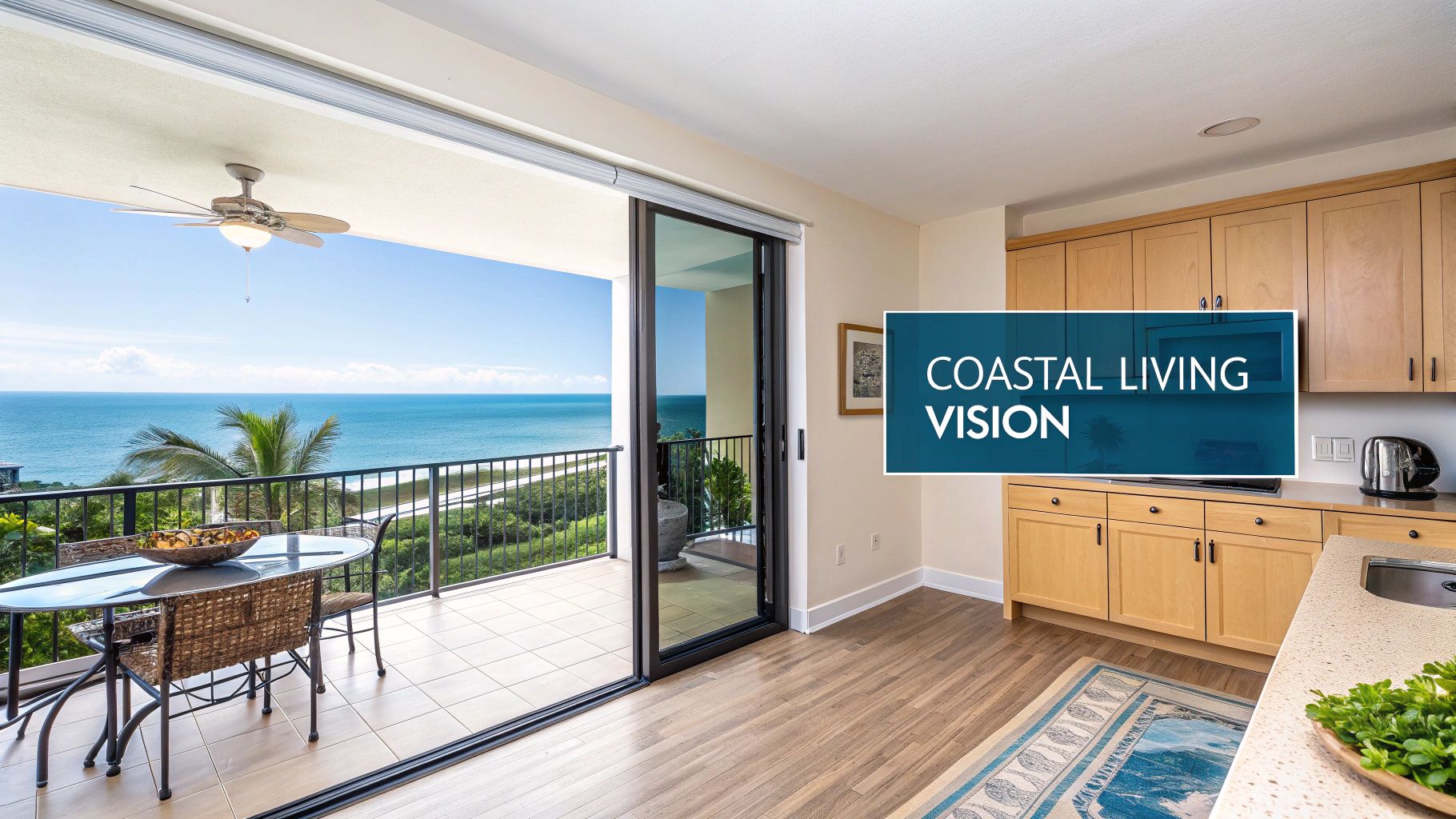
That first spark of inspiration is always exciting. Maybe you saw a stunning kitchen in a magazine or are just dreaming of a spa-like bathroom to unwind in after a day on the water. But taking that initial buzz and turning it into a successful, tangible project? That’s where the real work begins. Now is the time to move past vague ideas and start building a concrete plan that truly reflects how you live.
Think of it as writing the script for your ideal life in Naples. Before a single wall comes down, you need to decide what story you want your home to tell.
Define Your Lifestyle and Goals
Honestly, the best condo renovations I’ve ever seen come from a deep understanding of the owner's day-to-day life. Start by asking yourself some real questions. Is this condo your quiet weekend escape, or is it the go-to spot for hosting friends and family after a beach day? The answer completely changes your design priorities.
For instance, a couple who loves to entertain will probably want to knock down a wall for an open-concept living area, complete with a huge kitchen island where everyone can gather. On the other hand, someone who works from home might need a dedicated, quiet office space that can be elegantly tucked away when company comes over.
Drill down into the specifics of your daily life:
Entertaining Style: Are we talking intimate dinners or big, casual get-togethers? This will dictate your kitchen layout, how big your island needs to be, and where people will sit.
Daily Routines: Is a quick coffee at a breakfast bar a non-negotiable part of your morning? Or do you dream of a luxurious soaking tub to end your day?
Storage Needs: Are you a collector who needs beautiful display shelves, or do you prefer everything hidden away for a clean, minimalist look?
A clear vision is your most valuable tool. It ensures that every dollar spent and every decision made contributes directly to a home that not only looks beautiful but functions perfectly for you.
Create Your Must-Have and Nice-to-Have Lists
Once you’ve got a handle on your lifestyle goals, it's time to get specific. This is where you draw a line in the sand between your absolute necessities and your "wouldn't it be nice" extras. Trust me, this exercise is critical for keeping your budget in check and making smart trade-offs later.
Your "must-have" list is for the non-negotiables—the things that fix current problems or are the entire point of the renovation. Your "nice-to-have" list is for the dream features you'd love if the budget and space allow.
Let's walk through an example: a couple downsizing to a beachfront condo.
Must-Haves:
An open-concept kitchen to make the main living area feel more spacious.
A walk-in shower with a built-in bench for safety and comfort.
Durable, easy-to-clean flooring that won't get ruined by sandy feet.
Nice-to-Haves:
A built-in wine fridge in the kitchen island.
Heated floors in the master bathroom.
Motorized shades for those big ocean-view windows.
This simple separation helps everyone, from you to your contractor, stay focused on what truly matters. For a little inspiration, take a look through a gallery of completed Naples condo remodels. Seeing how these ideas come to life can spark new thoughts and help you figure out what really belongs on your own "must-have" list.
Getting the Green Light: Condo Rules and Naples Permitting
Once you have a good idea of what you want to accomplish, it's time to tackle the administrative side of things. This is where the reality of remodeling in a shared building sets in. It might not be as glamorous as picking out tile, but trust me, getting this part right from the start is the key to a project that runs smoothly.
In Naples, you're essentially dealing with two layers of approval: your building's Homeowner's Association (HOA) and the City of Naples itself. Each has its own set of rules and priorities, and you need a thumbs-up from both before a single hammer is swung. Taking the time to understand and prepare for this process will save you from major headaches, unexpected costs, and a lot of frustration down the road.
Working With Your HOA
Think of your HOA as the guardian of the building. Their job isn't to squash your dreams, but to protect the building's structure, ensure everyone's safety, and maintain a peaceful living environment for all residents. They have a rulebook—usually called the Covenants, Conditions, and Restrictions (CC&Rs)—that spells out exactly what's allowed.
Before you fall in love with the idea of taking down a wall, you and your contractor need to get your hands on these documents and go through them with a fine-tooth comb. They contain critical details about everything from what hours contractors are allowed to work to the specific underlayment required for new hardwood floors to dampen sound.
A well-prepared, respectful presentation to your HOA board is more than just a formality—it’s the key to getting a quick and enthusiastic 'yes'. Show them you've done your homework and respect the community rules.
To get that quick 'yes', you need to give the board a professional submission package. This is your chance to show them you're serious and have thought everything through.
Your package should pull together all the key details:
A Clear Project Summary: What exactly are you planning to do? Lay it out from demolition to the final touches.
Professional Plans: Include architectural drawings showing the condo's current layout and what you're proposing.
Contractor Vetting: The board will want to see a copy of your contractor's state license and proof of their liability and workers' comp insurance.
A Realistic Timeline: Provide an estimated start date, end date, and any major phases of the project.
Material Specs: This is a big one. For example, if you plan to install new wood-look tile flooring, you must provide the soundproofing underlayment specifications to prove it meets the building’s sound transmission requirements for your neighbors below.
Securing Permits from the City of Naples
While your HOA is focused inward on the building, the City of Naples is focused on safety and making sure everything is built to code. Getting the right city permits isn't optional—it's the law for most remodeling work beyond simple cosmetic changes.
Your general contractor should be the one to handle this entire process, but it’s smart for you to know what's happening behind the scenes. Generally, you'll need a permit for any work that involves your condo's structure, electrical, or plumbing systems.
Here are some common projects that will definitely require a city permit:
Taking out or moving walls (even if they aren't load-bearing).
Reconfiguring a kitchen or bathroom layout, which means moving plumbing lines.
Adding new electrical outlets, putting in recessed lighting, or upgrading an electrical panel.
Replacing windows or your lanai's sliding glass doors.
Simple cosmetic upgrades like painting, installing new cabinets in the same footprint, or replacing countertops typically don't need a city permit. But—and this is important—your HOA might still need to approve them. A seasoned contractor can help you navigate this distinction.
The timeline for all this is a huge factor. After your designs are finalized, you should budget at least four to eight weeks for the combined HOA approval and city permitting process to play out. This is where hiring an experienced local contractor really pays off. They know the people in the building management offices and the city permitting department, and they know exactly how to package the paperwork to get it approved the first time. That kind of insider knowledge is invaluable for keeping your project moving forward.
Budgeting Your Luxury Condo Renovation
Alright, let's get down to brass tacks and talk about the budget. While dreaming up your perfect coastal retreat is the fun part, crafting a solid budget is what actually makes it happen without a single sleepless night. Think of it as your financial blueprint—the one thing that guides every single decision and keeps surprise costs at bay.
It’s easy to get fixated on the big, flashy items like new cabinetry or that perfect quartzite countertop. But a true high-end renovation is a complex puzzle, and your budget needs to account for every single piece, including the ones you can't see.
Uncovering the True Costs of Remodeling
A realistic budget is so much more than the cost of materials. To avoid sticker shock down the road, you have to factor in every professional, every fee, and a little extra for the unexpected. It's not one big price tag; it's a collection of interconnected costs that all work together to bring your vision to life.
Here are the key things your budget absolutely must cover:
Design and Architectural Fees: This is for the brains behind the operation—the experts who draft the detailed plans and renderings that your build team will follow.
Permitting and HOA Fees: The necessary evil of any remodel. These are the administrative costs to get the green light from the City of Naples and, of course, your condo association.
Materials and Finishes: This is typically the largest slice of the pie. It covers everything from flooring and tile to appliances, lighting, and hardware.
Labor and Construction: This pays for the skilled hands that make it all happen—the carpenters, electricians, plumbers, and painters who do the heavy lifting.
The Contingency Fund: This one is non-negotiable. Seriously. You must set aside 10-15% of your total construction cost as a safety net. It’s for those "uh-oh" moments, like opening a wall and discovering old, corroded plumbing that needs immediate replacement.
A detailed budget isn't about reining in your creativity; it's about empowering it. When you know exactly where every dollar is going, you can make clear, confident choices that keep your dreams and your finances perfectly aligned.
The approval process is a major part of this. Your project budget has to account for getting your vision approved, first by your HOA and then by the city.
Where Your Money Goes: A High-End Budget Breakdown
Knowing where your money is likely to go from the start is incredibly helpful. While no two projects are identical, we see similar investment patterns across high-end condo remodels here in Naples. This gives you a fantastic starting point for understanding which areas will command the biggest parts of your budget.
Here’s a sample breakdown to give you an idea of the typical cost percentages for a full-scale luxury renovation.
Naples Condo Remodel Budget Breakdown Example (High-End)
This table provides estimated cost percentages for a comprehensive, high-end condo renovation in Naples, helping homeowners understand where their investment goes.
Project Component | Estimated Percentage of Total Budget |
|---|---|
Kitchen Renovation (Cabinets, Countertops, Appliances) | 25-35% |
Bathroom Renovations (All Bathrooms Combined) | 20-30% |
Labor and General Construction | 15-20% |
Flooring and Finishes (Tile, Paint, Trim) | 10-15% |
Design, Permitting, and Management Fees | 8-12% |
Plumbing and Electrical Work | 7-10% |
This allocation really shows why kitchens and bathrooms are the heavy hitters in any remodel. They are incredibly complex spaces that demand a perfect blend of design, premium materials, and multiple skilled trades.
Maximizing Value and Making Smart Investments
Remember, remodeling your condo isn't just an expense; it's a direct investment in your lifestyle and your property's equity. While returns vary, national data shows that major kitchen and bath remodels can recoup 50–75% of their cost at resale. In a luxury market like Naples, where a dated interior can be a major drag on a property's value, those returns are often even higher.
One of the best ways to get the most out of your budget is through a process we call value engineering. Now, this isn't about cutting corners or using cheap materials. Not at all. It's about making smart, strategic substitutions that deliver that high-end look without the eye-watering price tag. A classic example? Selecting a stunning, large-format porcelain tile that flawlessly mimics Calacatta marble for a fraction of the cost—and it’s more durable to boot. You can explore a deeper dive into how value engineering in construction works in our detailed guide.
Ultimately, a good budget is a living document. It needs to be detailed enough to give you a clear roadmap but flexible enough to adapt to the real world of construction. With thoughtful planning and a transparent partnership with your contractor, you can build a financial plan that gets you the dream condo you deserve, minus the financial headaches.
Bringing Your Coastal Oasis to Life: Design and Materials
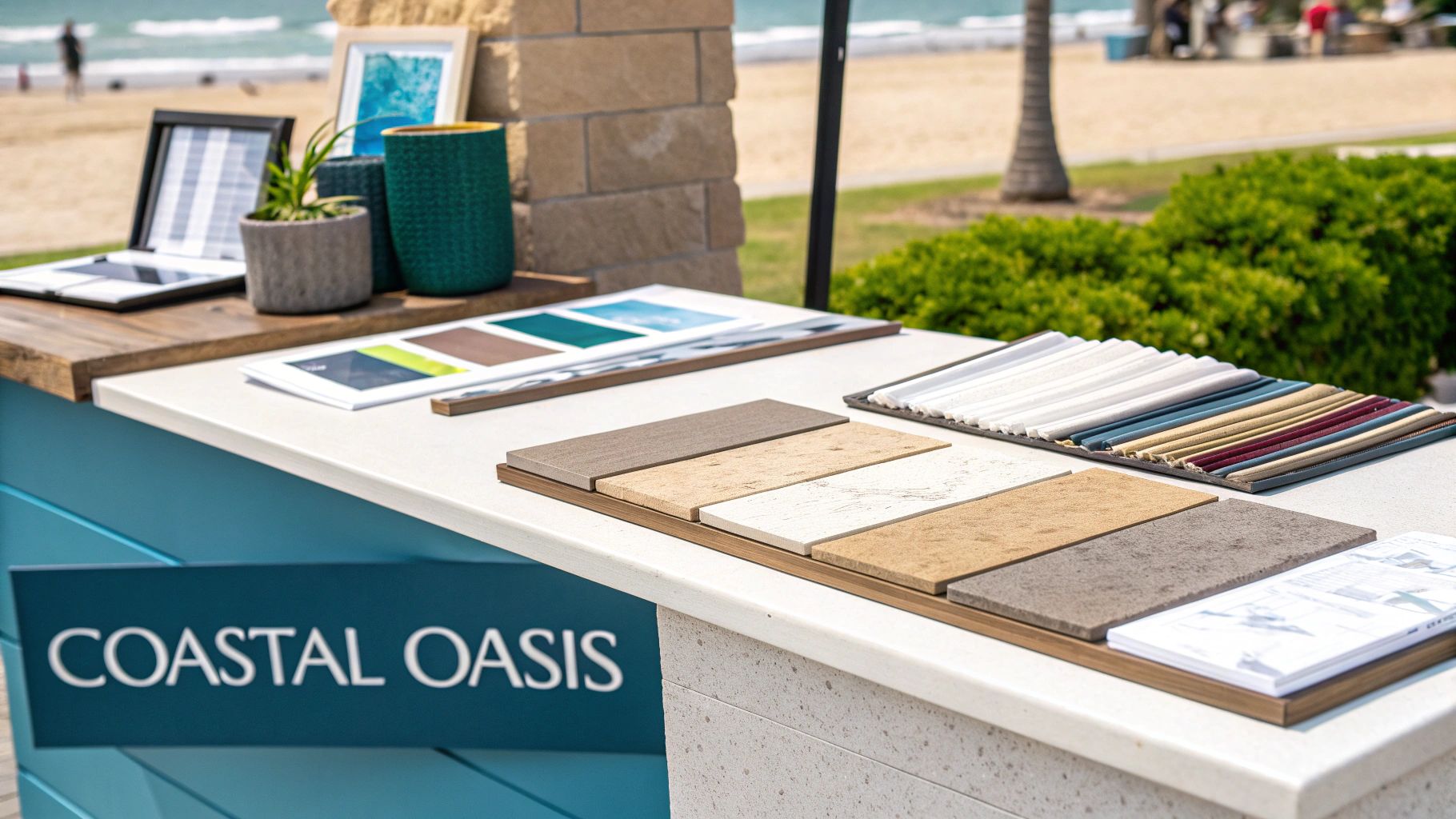
Alright, with the practicalities of budgets and approvals moving forward, we get to the fun part—the part where your vision really starts to take shape. This is where we bring your personality into the space, choosing the colors, textures, and finishes that will transform your condo into a personal Naples sanctuary.
It’s a creative and exciting process, but it’s also a strategic one. The goal isn’t just to make your condo beautiful; it’s about making smart choices that blend aesthetics with the unique demands of our coastal environment.
Capturing That Effortless Naples Vibe
The look we’re often after in Naples is what I call "casual luxury." It’s an aesthetic that feels bright, airy, and sophisticated without being stuffy. It’s less about plastering walls with seashells and more about evoking the serene feeling of the coast.
Here’s how we typically build that look from the ground up:
A Light, Neutral Foundation: We start with a palette of soft whites, sandy beiges, and gentle grays. These colors are fantastic for reflecting our abundant natural light, making every room feel more expansive and open.
Layers of Natural Texture: To keep the neutral palette from feeling cold, we bring in warmth and character. Think white oak for flooring, woven fabrics, and the beautiful veining of natural stone for countertops.
Subtle Pops of Coastal Color: Accent colors are pulled right from the view outside your window. Hues of ocean blue, soft seafoam green, and hints of coral are used thoughtfully—in throw pillows, a piece of art, or a stunning backsplash—to add life without overwhelming the calming atmosphere.
This balanced approach creates a timeless backdrop that feels both luxurious and genuinely livable. It's the essence of the relaxed Naples lifestyle.
Selecting Finishes That Can Handle the Elements
Living on the coast is a dream, but the salt, sun, and humidity can be incredibly harsh on building materials. For any condo remodel here, durability has to be a top priority. The secret to a home that looks just as good in five years as it does on day one is choosing finishes that are built to last in this environment.
Take flooring, for instance. Traditional hardwood is beautiful, but it can warp and swell with our humidity. A far better choice is large-format porcelain tile designed to look like natural wood or stone. It's practically indestructible, completely water-resistant, and won't scratch when a little sand inevitably finds its way inside.
In a coastal remodel, the best design choices are the ones that marry beauty with resilience. Every material you select should be working hard to resist humidity, sun, and salt, protecting your investment for years to come.
The Kitchen: The Heart of Your Condo
In nearly every Naples condo, the kitchen is the hub of the main living area. It has to be more than just a place to cook; it's a centerpiece for entertaining and daily life.
Let’s talk about the key ingredients for a dream coastal kitchen:
Custom Cabinetry: High-quality cabinets in a crisp white or a soft, misty blue immediately set the coastal tone. We always specify solid wood construction with durable, factory-applied finishes that can stand up to moisture without chipping or peeling.
Stunning, Hardworking Countertops: Quartzite has become the go-to for luxury remodels, and for good reason. It delivers the jaw-dropping beauty of natural marble but is significantly harder and less porous, so it resists stains and etching from everyday things like lemon juice or a spilled glass of wine.
High-Performance Appliances: A modern, energy-efficient appliance suite is non-negotiable. We often integrate panel-ready refrigerators and dishwashers that disappear into the surrounding cabinetry. This creates that seamless, high-end look that keeps the focus on your beautiful design choices.
When these elements come together, you get a kitchen that's a true joy to be in, whether you're preparing a meal or hosting a dinner party.
The Bathroom: Your Personal Spa Retreat
Your bathroom shouldn't feel purely utilitarian. It should be your personal escape—a space designed for relaxation and rejuvenation at the start or end of a long day.
Turning a standard bathroom into a spa-like retreat often comes down to a few key design moves:
Luxurious Walk-In Showers: One of the biggest upgrades is replacing an old tub-shower combo with a spacious, curbless walk-in shower. Using frameless glass doors makes the entire room feel larger and more open.
A Statement Soaking Tub: If space permits, a beautiful freestanding tub acts as a stunning sculptural piece and offers the ultimate spot to unwind.
Thoughtful Lighting Layers: This is a real game-changer. We layer different types of lighting: dimmable overhead fixtures for overall brightness, elegant sconces by the vanity for perfect task lighting, and even a small, waterproof light in a shower niche. This flexibility allows you to set the perfect mood for any occasion.
By focusing on these details and carrying the coastal palette through with beautiful tile work and high-quality fixtures, an ordinary bathroom becomes an extraordinary personal haven. This design phase is where your dream condo truly comes into focus, laying the groundwork for a home that perfectly reflects your style.
Finding the Right Contractor for Your Naples Condo

Once your design vision is set and the budget is dialed in, you’ve arrived at what is arguably the most critical decision of the entire project: choosing your general contractor.
This isn’t just about hiring a builder. You're bringing on a partner, a project manager, and a daily problem-solver who will be in your life for the next several months. Get this choice right, and a complex renovation becomes an exciting, collaborative journey.
Finding the right team takes more than a quick Google search. It’s about doing your homework to find someone whose expertise truly matches the unique challenges of remodeling in a luxury Naples high-rise.
Vetting Your Potential Partners
First things first, build a shortlist of three to four contractors who specialize in high-end condo renovations. I can't stress this enough. A contractor who mainly builds single-family homes may not grasp the logistical gymnastics required for a high-rise project—from coordinating with building management and using service elevators to managing debris removal without upsetting the neighbors.
With your list in hand, it’s time to dig in. This phase isn’t just about getting a price; it’s about making sure they’re qualified, reputable, and the right fit for you.
Your initial vetting checklist should cover these non-negotiables:
Florida General Contractor License: Always verify their license is active and in good standing with the state. No license, no conversation.
Proof of Insurance: They must have significant general liability and workers' compensation insurance. Ask to see their certificate of insurance. This protects you from any liability for accidents on site.
Condo-Specific References: Request to speak with at least two recent clients who own a condo similar to yours. This is the single best way to understand how they perform in the real world.
Choosing a contractor is a lot like hiring a key employee. You need to look beyond the resume and focus on communication, problem-solving skills, and a proven ability to deliver exceptional results in your specific environment.
The Art of the Interview
When you meet with potential contractors, treat it like an interview, not a sales pitch. You're trying to understand their process, their communication style, and how they handle the inevitable curveballs a renovation can throw. Price is just one piece of the puzzle; a strong, trusting relationship is what truly holds a project together.
Industry research shows that over 80% of U.S. homes are more than 20 years old, and many of our iconic Naples condo buildings are now passing the 30- or 40-year mark. This means contractors are increasingly dealing with aging plumbing, wiring, and HVAC systems. A great contractor anticipates these issues. Their experience with older buildings is a huge asset, a topic explored further in the remodeling market research from industry experts.
Come prepared with a list of thoughtful questions. For a deeper dive, check out our guide on what to ask a general contractor before hiring them.
Understanding the Contract
After the interviews, you’ll receive detailed proposals. A professional proposal is much more than a price tag—it should clearly map out the scope of work, a payment schedule, and an estimated timeline.
A fair, transparent contract should always include:
A Detailed Scope of Work: This document needs to be specific, listing everything from demolition tasks to the exact brand of paint being used. Vague language is a major red flag.
A Clear Payment Schedule: Payments should be tied to tangible project milestones, like the completion of demolition or cabinet installation. Never agree to pay a huge percentage upfront.
A Change Order Process: The unexpected can happen. A good contract defines exactly how changes to the plan will be proposed, priced, and approved in writing by both of you.
An Estimated Timeline: This should include a projected start and completion date while acknowledging that some delays (like waiting on custom-ordered tile) are possible.
Taking the time to find a true partner who values transparency and craftsmanship is the best investment you can make in your project. It's the final, crucial step that ensures the beautiful vision you've crafted becomes an even more stunning reality.
Your Condo Remodeling Questions Answered
Starting a condo renovation, especially in a place as unique as Naples, always kicks up a storm of questions. You can have the best plan in the world, but there will always be those little "what ifs" that keep you up at night. We've walked through this process with countless homeowners, so we've heard just about every question you can imagine.
My goal here is to give you clear, straight-up answers based on years of boots-on-the-ground experience. Think of this as your final peace-of-mind checklist, designed to help you move forward feeling confident that you’ve got everything covered. Let's get into it.
How Long Does a Full Condo Remodel Take in Naples?
This is usually the very first thing people ask. For a high-end, wall-to-wall renovation of a condo between 2,000 to 3,000 square feet, you should realistically plan for 6 to 9 months from the day we start designing to the final walkthrough. It’s definitely a marathon, not a sprint.
That timeline isn't just one long construction phase. It breaks down into a few distinct stages:
Design & Planning: This is where the magic begins, and it typically takes about 1-2 months. We’re finalizing layouts, picking out all the beautiful materials, and getting the detailed blueprints drawn up.
Permitting & Approvals: Navigating the paperwork is a big step. You can expect another 1-2 months for the back-and-forth with both your HOA and the City of Naples permitting office.
Construction: The actual work—from demolition to the last brush stroke—will generally take around 4-5 months.
It’s also smart to remember that delays can pop up. Things like custom-ordered European cabinetry or specialty tile can have long lead times. That’s why a detailed, realistic schedule from your contractor isn’t just nice to have; it’s absolutely essential.
Can I Live in My Condo During the Renovation?
I get why people ask this—it seems like a great way to save on rent. But for a major remodel, my honest, professional answer is no. It’s just not practical, safe, or pleasant for you or the construction crew.
A full-gut renovation means serious demolition, which creates an incredible amount of dust and constant noise. Plus, there will be long stretches where utilities like water and electricity are completely shut off. Trying to live through that is more than just an inconvenience; it’s incredibly stressful. Moving out protects your health and sanity, and frankly, it lets the crew work faster and more safely, which can actually help keep the project on schedule.
What Are the Biggest Hidden Costs to Watch For?
In the older, beautiful condo buildings here in Naples, the biggest surprises are almost always hiding behind the drywall and under the old flooring. This is where your contingency fund becomes your absolute best friend.
From our experience, the most common culprits are:
Outdated Electrical Wiring: We often find old panels and wiring that can't handle the load from modern, high-performance appliances and aren't up to today’s safety codes.
Aging Plumbing: Corroded pipes or failing plumbing lines are a ticking time bomb. It's crucial to replace them to head off future leaks and major water damage.
Hidden Water Damage: A slow, undetected leak from years ago can lead to mold and structural problems that have to be fixed before we can move forward.
This is precisely why we insist on a contingency fund of 10-15% of your total construction budget. It’s not a slush fund to be spent carelessly. It’s a critical safety net that ensures we can handle these unexpected but necessary repairs without derailing your entire project.
How Do You Manage Deliveries and Debris in a High-Rise?
This is a huge logistical puzzle, and it’s one of the key areas where an experienced condo remodeler really proves their worth. It takes a level of coordination and respect for the building and its residents that’s worlds away from a single-family home project.
A professional team has this down to a science. We work hand-in-glove with building management to schedule all deliveries for specific, pre-approved times, always using the designated service elevators. We have a meticulous plan for getting all the demolition debris out without disturbing your neighbors. Protecting common areas like hallways, lobbies, and elevators with heavy-duty padding isn't an afterthought—it's standard procedure. A great team handles all these moving parts so you can focus on the fun parts of your renovation, not the operational headaches.
Ready to transform your Naples condo with a team that has the experience and dedication to bring your vision to life? At JVM Construction LLC, we specialize in high-end renovations built on transparency, craftsmanship, and a client-first approach. Let's start the conversation about your project today.