Value engineering is a term that gets thrown around in construction, but what does it actually mean for you and your future home? At its heart, it’s a systematic, creative approach to maximizing the value you get from your project. It’s all about analyzing every component and process to lower costs without sacrificing the quality, safety, or performance you expect.
The goal isn't just to make things cheaper; it's to make them smarter. It’s about ensuring every dollar you invest goes directly into features that enhance your life and your home's long-term worth.
What Is Value Engineering in Construction Really?

Let's clear the air on a common misconception. Value engineering (VE) is not about cutting corners, swapping in cheap materials, or stripping down your dream design. It’s a disciplined, collaborative process to get the absolute best bang for your buck while upholding—or even improving—the quality, function, and aesthetics you fell in love with.
Think of it like a master chef tweaking a signature recipe. The aim isn't to slash the grocery bill by using inferior ingredients. It’s about finding a smarter way to combine flavors, a more efficient cooking technique, or a better supplier to elevate the final dish. That's exactly how we approach your custom home or high-end remodel—we want the final result to be more than just the sum of its parts.
A Focus on Function and Value
At its core, value engineering revolves around one simple question for every single element of your project: "What is this supposed to do for my family?" By dissecting the function-to-cost ratio, we pinpoint opportunities to get the same—or better—performance in a more efficient way.
This isn't just about saving money today. It’s a thoughtful approach that ensures every dollar you spend contributes directly to your home's long-term worth and your daily enjoyment.
Value engineering is a proactive collaboration between you, the architect, and your builder. It’s about making informed decisions that align your vision with your budget, ensuring the finished project exceeds expectations in every way that matters.
For example, imagine we're building your custom home in Naples. The plan calls for a specific brand of high-end windows. Their essential functions are clear: provide superior hurricane resistance, offer robust UV protection, and deliver excellent energy efficiency. A value engineering mindset means exploring every available option that meets these critical functions, finding the one that delivers the best long-term performance and durability for your investment, so you can have peace of mind for years to come.
To make this happen, our process involves:
Looking at the Big Picture: We go beyond the initial price tag to consider lifecycle costs, future maintenance needs, and overall durability.
Creative Brainstorming: Our team gets together to propose alternative materials, innovative construction methods, or slight design modifications that boost value.
Protecting Your Vision: Every suggestion is carefully weighed against your goals. The aesthetic and functional integrity of your home always comes first.
Value Engineering at a Glance: Cost Cutting vs. Value Adding
It's crucial to understand that value engineering is the polar opposite of simple cost-cutting. One is a reactive measure to trim budgets, often at the expense of quality, while the other is a proactive strategy to enhance value.
This table breaks down the key differences:
Aspect | Traditional Cost Cutting | Value Engineering |
|---|---|---|
Primary Goal | Reduce initial project cost, often reactively. | Improve overall value by balancing cost, quality, and function. |
Timing | Typically done late in the design or during construction. | Integrated from the earliest stages of planning and design. |
Focus | Eliminating features or substituting cheaper materials. | Finding innovative alternatives and improving efficiency. |
Outcome | Can lead to lower quality, higher maintenance, and dissatisfaction. | Enhances long-term performance, durability, and owner satisfaction. |
Approach | Subtractive ("What can we remove?") | Creative and holistic ("How can we do this better?") |
Ultimately, value engineering is about making smart, informed choices that protect your investment and deliver a home that is both beautiful and built to last.
By weaving this discipline into our process from day one, we shift the conversation from a list of expenses to a series of smart investments. Ready to build a home where brilliant design and intelligent value go hand in hand? Contact JVM Construction to start the conversation.
The Core Principles Guiding Value Engineering
So, now you know what value engineering is. But what’s the philosophy behind it? Why is it so effective? It’s not just a grab bag of cost-cutting tricks; it’s a disciplined way of thinking, guided by a few core principles that are all about enhancing your home, not just cheapening it.
The entire process really boils down to one foundational idea: function analysis. Before we even think about making a decision, our team asks a simple but incredibly powerful question: “What is this thing supposed to do?” From that starting point, every choice we make is aimed at improving value, optimizing performance, and thinking about long-term costs—not just the initial price tag.
A Focus on Function Over Form
Function analysis is the heart and soul of value engineering. It’s about taking a project, breaking it down into its basic parts, and figuring out the real job of each component. This simple shift in perspective changes the conversation from "what is it?" to "what does it do?"
Let's say you're planning a beautiful new deck overlooking the water. Instead of just picking a material based on looks, we'd start by defining its functions:
Primary Function: Provide a safe, stable outdoor living space.
Secondary Functions: Resist moisture and salt air, feel comfortable underfoot, require minimal maintenance, and complement your home’s architecture.
Once we've clearly defined these functions, we can explore different materials like composite decking, Ipe wood, or even specially treated pine. This helps us find the option that delivers the best durability and long-term enjoyment for your lifestyle, ensuring your deck remains a beautiful retreat for years, not a yearly chore.
Value engineering is about achieving essential functions in the most cost-effective way without compromising quality or performance. It's a creative quest for the best possible solution, not the cheapest one.
This way of thinking isn't new. Value engineering in construction really got its start during World War II, born out of necessity to solve crippling material shortages. By the late 1940s, it had grown into a formal discipline. You can discover more about value engineering’s history and learn how its principles have been applied to everything from massive infrastructure to beautiful custom homes.
Emphasizing Lifecycle Cost Analysis
Another guiding principle—and this one is huge—is the focus on lifecycle cost. It’s so easy to get fixated on the upfront purchase price of a material or system. Value engineering forces us to step back and look at the bigger picture.
This means considering everything, including:
The initial cost to buy and install it.
The ongoing operational costs (think energy bills).
The future maintenance and repair expenses.
How long it will last and what it will cost to replace down the road.
A cheaper air conditioning unit might save you a little money today, but it could easily cost you thousands more in higher electricity bills and frequent repairs over the next decade. Value engineering helps you make the smarter long-term play. For example, investing in a higher-efficiency HVAC system might cost more upfront, but the monthly savings on your energy bill could pay for the difference in just a few years, delivering pure savings after that. This holistic view is what truly separates VE from simple cost-cutting, ensuring your home is both beautiful and economical for years to come.
A Step-by-Step Look at the Value Engineering Process
So, what does value engineering actually look like on a real-world project? It’s not some abstract theory—it’s a disciplined, collaborative process broken down into clear phases. This structured method is how we ensure every possibility is explored and every dollar is spent wisely, turning good ideas into real, measurable value for your home.
Think about it like planning an incredible multi-country trip. You wouldn't just buy a plane ticket and hope for the best. You'd research destinations, compare travel options, brainstorm must-see sights, weigh your choices, and then book the itinerary that gives you the perfect mix of adventure and relaxation. The VE process follows a similar, logical path to build confidence and protect your investment.
This diagram hits on the three core pillars that guide the entire process: function, value, and lifecycle.
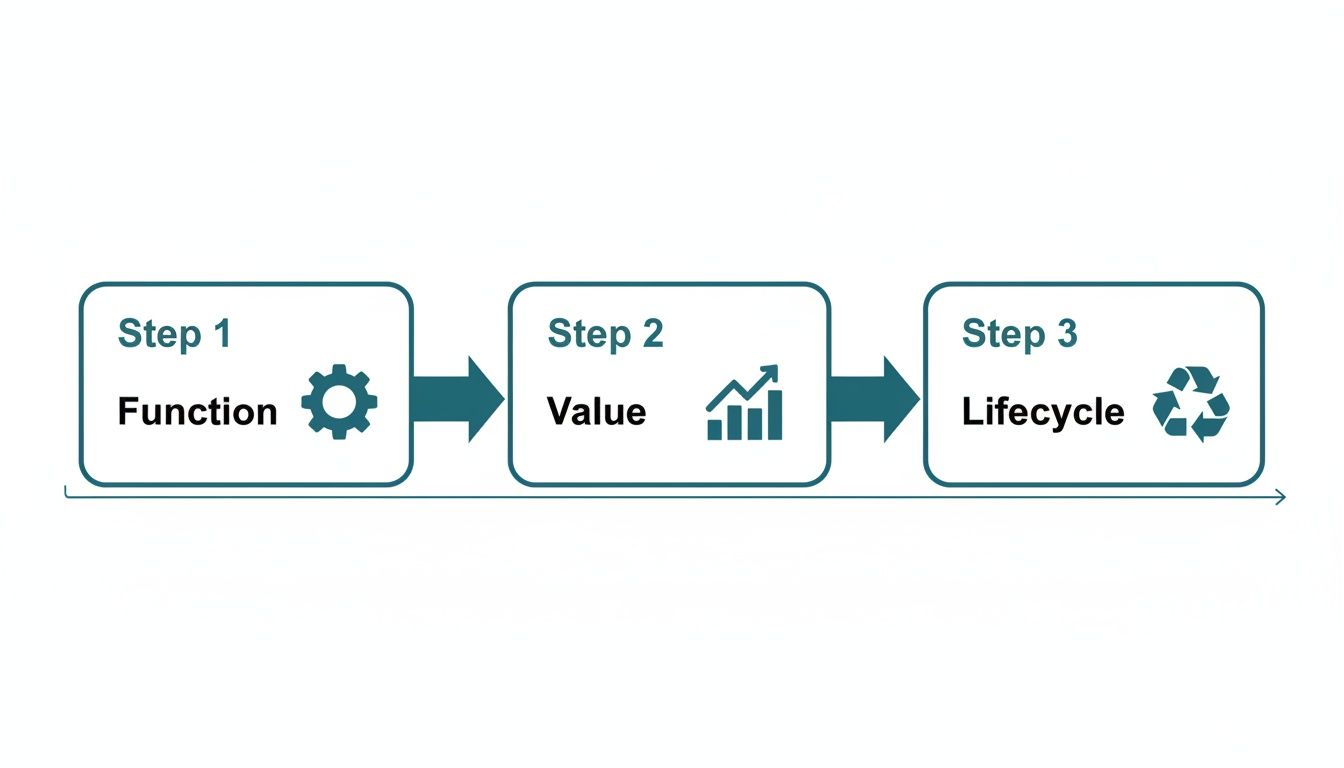
Each stage builds directly on the last, making sure every decision is grounded in solid information and a shared understanding of what you want to achieve long-term.
The Information and Function Analysis Phase
This is where it all begins—the foundation. The whole team gets together: you (the homeowner), the architect, and your general contractor. We pull together all the project documents, from the first napkin sketches and architectural plans to the budget constraints. The mission is to get a deep, almost forensic understanding of the project's goals and the specific function each part is supposed to perform.
For a kitchen remodel, for instance, we’d define the purpose of every single element. The countertops aren't just surfaces; their function is to provide a durable, heat-resistant, and easy-to-clean workspace that also serves as a beautiful centerpiece. The plumbing isn't just pipes; its function is to deliver reliable water pressure quietly and efficiently. Breaking it down like this helps us see what really matters to you.
The Creative and Evaluation Phase
This is where the fun begins. With a crystal-clear understanding of function, the team starts brainstorming alternatives. In this stage, there are no bad ideas. We throw everything at the wall. Could a different layout for the kitchen island not only improve the workflow but also create a better gathering space for family and simplify a complex plumbing run?
From there, we methodically evaluate every idea that has potential. We weigh the pros and cons, looking at initial costs, long-term performance, aesthetics, and any impact on the schedule. Sure, an alternative flooring material might be cheaper upfront, but we’ll dig into its durability and maintenance needs to see if it delivers genuine value over the life of your home.
A well-executed value engineering process doesn't just cut costs; it reallocates your budget toward the features that bring you the most joy and add the most significant value to your property.
The Development and Presentation Phase
Promising ideas now get fleshed out into concrete, actionable proposals. This isn’t just talk; it involves detailed cost comparisons, revised drawings, and specific product information. It’s a meticulous process, but it’s what ensures you aren't overpaying for things you don’t truly need.
Finally, we present these fully researched recommendations to you. We walk you through the "why" behind each suggestion, giving you clear data so you can make confident decisions that feel right and align perfectly with your vision. This transparent, step-by-step approach is a hallmark of how an effective general contractor operates. You can learn more by checking out our guide on what a general contractor does.
Practical Examples of Value Engineering in Luxury Homes
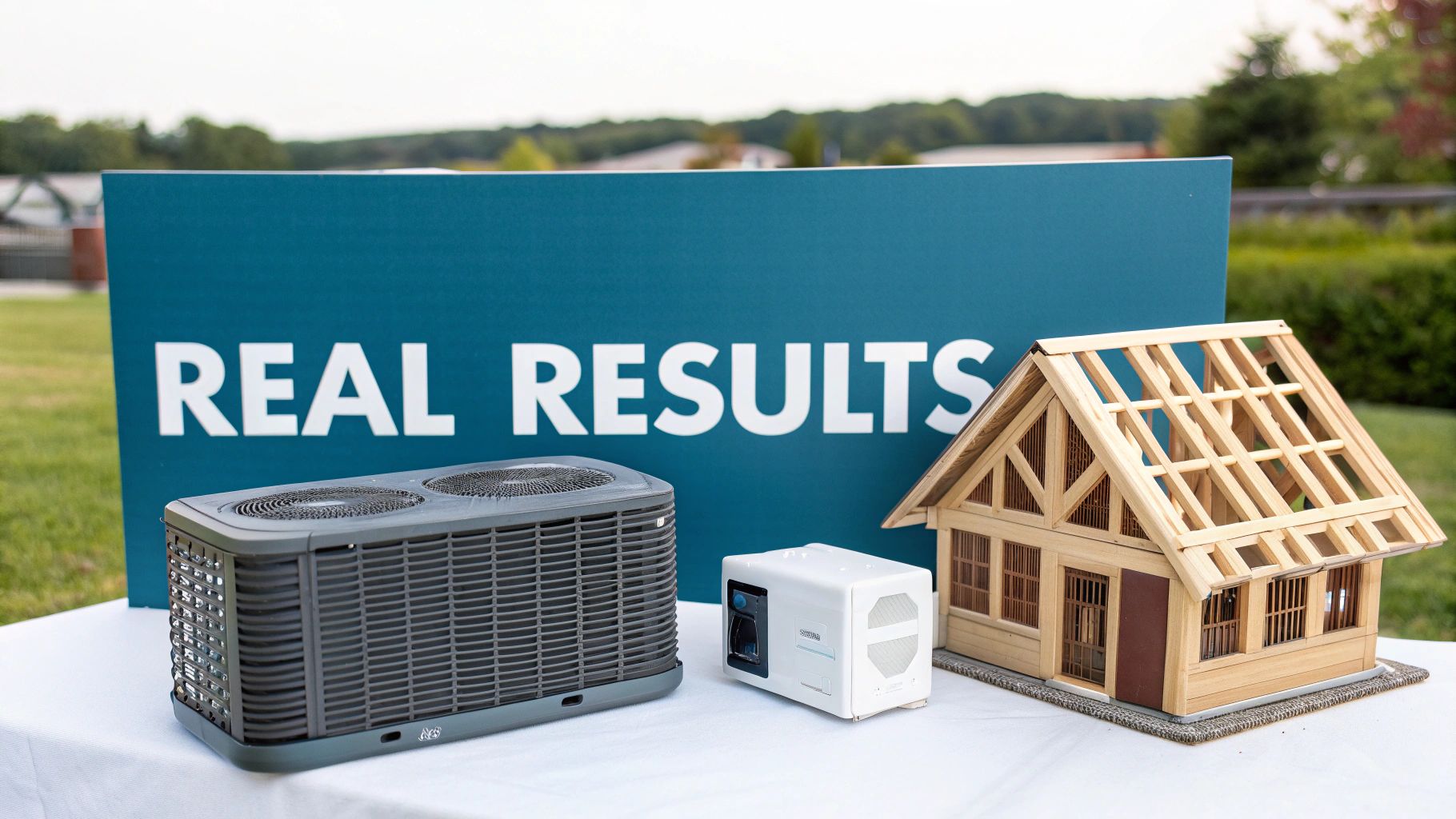
This is where the theory hits the job site. It’s one thing to talk about principles and processes, but seeing how value engineering plays out in the real world is what really makes it click. Let's dig into a few concrete examples of how this strategic mindset transforms luxury custom homes and high-end remodels.
This isn't just about shaving off dollars. It’s about making smart swaps that deliver better function, greater durability, and a home that truly performs for you.
Optimizing Structural Systems
The "bones" of your home are one of the best places to find hidden value. Small changes here can have a huge impact on strength, cost, and the speed of construction.
Initial Plan: The architect's drawings call for traditional stick-framing for the roof. It’s a classic method, but it's slow, requiring skilled carpenters to cut and assemble every single rafter on-site.
Value-Engineered Alternative: Instead, we propose using pre-fabricated, engineered roof trusses. These are designed using sophisticated software and built to exacting specifications in a controlled factory setting.
Benefit to You: While the material cost might be similar, the installation is worlds faster. This reduces on-site labor costs and tightens up the project schedule, getting your home "dried in" and protected from Florida's unpredictable weather that much sooner. You get a stronger, more precise roof, often for a better overall price.
Reevaluating Exterior Finishes
On a coastal home, your exterior finishes are doing triple duty: they need to look stunning, stand up to the elements, and meet tough building codes. Value engineering helps you nail all three without breaking the bank.
In custom homes, reevaluating a lavish specification, like imported hardwoods, against beautiful, locally sourced alternatives can yield significant savings, redirecting funds to refined coastal finishes that thrill homeowners.
Initial Plan: The design specifies a very popular, high-end brand of hurricane-impact windows, known for its heavy marketing and luxury appeal.
Value-Engineered Alternative: Our team does the homework and finds another top-tier manufacturer whose windows have identical (or even better) design pressure ratings, impact resistance, and energy efficiency. They fully comply with Florida's building codes but come from a more efficient supply chain.
Benefit to You: You get the exact same level of storm protection and the same beautiful aesthetic, but at a significantly lower cost. That frees up budget that can be reallocated to things you'll interact with daily, like upgrading your outdoor kitchen appliances or choosing a premium finish for the pool.
Enhancing Mechanical Systems
How a home feels is every bit as important as how it looks. When it comes to mechanical systems like HVAC, smart decisions deliver value day in and day out.
Initial Plan: The default approach might be a single, oversized HVAC unit meant to cool the entire house—a simple, but inefficient, one-size-fits-all solution.
Value-Engineered Alternative: We dive into your family’s lifestyle and the home's specific layout. From there, we propose a high-efficiency, multi-zone HVAC system that lets you control temperatures independently in different areas, like the bedrooms versus the main living spaces.
Benefit to You: The immediate payoff is superior comfort; no more hot and cold spots. But the real win is the long-term reduction in energy bills, since you're no longer paying to cool empty rooms. That's what we call exceptional lifecycle value.
This methodical way of thinking is a key part of the modern construction industry. As the civil construction design market continues to grow, smart engineering that prioritizes function and long-term value is becoming the standard. You can explore the civil construction design market analysis to see just how big this movement is.
When to Apply Value Engineering for Maximum Impact
Timing is everything. If you want to get the most out of value engineering, it has to be part of the conversation from the very beginning. The biggest opportunities to save money and make smart functional upgrades happen during the initial design phases—long before a single shovel hits the ground.
Think of it like planning a cross-country road trip. It’s far easier to pick the most efficient and scenic route before you leave the driveway. Trying to make a major course correction when you're already halfway to your destination? That just means frustrating backtracking, expensive delays, and a lot of missed opportunities along the way.
The Power of Early Collaboration
The absolute best time to bring in value engineering is during the project planning and design stages. At this point, making a change is as simple as moving a line on a piece of paper. It has almost no impact on the budget or schedule. But if you wait until construction is already underway, that same simple change can turn into a costly and disruptive change order that throws everything off track.
By weaving VE into the project from day one, we can:
Analyze Core Functions: We get to question the fundamental purpose of major systems and components before they’re locked into the design.
Explore a Wider Range of Options: Early engagement gives us the time to properly research and compare different materials, systems, and construction methods without being rushed.
Prevent Costly Redesigns: Finding those value opportunities early means we don't have to undo complex design work later, which is always a painful process.
The later you make a change in a construction project, the more disruptive and expensive it becomes. Introducing value engineering during the conceptual or schematic design phase delivers the highest return on investment, often saving 5-10% or more on total project costs.
This proactive approach gets everyone—you, the architect, and the builder—around the same table from the very start. It’s a collaborative model that ensures your project is set up for success from the get-go. This is a core idea behind another powerful project delivery method, which you can learn about in our guide explaining what design-build construction is.
By treating value engineering as a foundational part of the pre-construction process instead of a last-ditch effort to cut costs, we transform it into a powerful tool for innovation. This strategic timing is the key to ensuring your home is a perfect blend of visionary design, flawless function, and smart, long-term value.
Let's Build a Home That Truly Reflects Your Vision and Values
At the end of the day, building a custom home is about bringing a deeply personal vision to life—creating a space that’s not just beautiful, but functional and built with intelligence. For us, value engineering isn't some add-on service or a buzzword we throw around. It's a fundamental part of how we think, built on a foundation of total transparency, integrity, and a genuine passion for craftsmanship. It’s simply the right way to build.
Our approach has resonated with homeowners and design teams all across the Naples area. We know this region, and we use that on-the-ground experience to find smart, value-focused solutions that make sense for Florida’s unique coastal environment. The goal is a home that’s as resilient as it is refined. Every decision becomes a collaborative conversation, all aimed at getting the absolute most out of your investment and making the final home even better.
Build with Confidence and a Clear Plan
We genuinely believe that building your dream home should be an exciting, rewarding journey, not a stressful one. By weaving value engineering into the conversation from the very beginning, we shift the dynamic. It stops being about a long list of costs and becomes a series of smart, strategic investments in your family's future. This philosophy is the heart and soul of our custom home building services, where we work side-by-side with you to create a home of truly lasting worth.
A partnership built on trust and shared goals is the bedrock of any successful luxury construction project. It's what ensures your vision is brought to life with precision, care, and an unwavering focus on delivering exceptional value.
If you’re ready to create a home where stunning design and intelligent value aren't mutually exclusive, we’d love to talk. Let’s build something extraordinary together.
Common Questions About Value Engineering
Let's be honest, "value engineering" can sound a little like corporate jargon. It's natural to have questions about what it really means for your home. We've heard them all, so we've put together some straight answers to the most common ones.
Is Value Engineering Just a Fancy Term for Cutting Corners?
Not at all. This is the single biggest myth out there, and it’s important to clear it up. Value engineering is about finding smarter ways to build, not cheaper ways.
Think of it like this: it's not about swapping a beautiful hardwood floor for cheap laminate. Instead, it might be about discovering a different hardwood species that gives you the exact same look and durability for a better price. Or, it could even mean spending more on something like high-performance windows upfront because the long-term energy savings will deliver far greater value over the life of your home. It’s about the big picture.
Can You Really Apply This to a High-End Custom Home?
Absolutely. In fact, luxury projects are where value engineering makes the biggest impact. It’s how we make sure every dollar in your budget is working hard to create the "wow" factor you're looking for.
For example, we might find a more efficient way to frame a section of the house—something you'll never see once the drywall is up. The savings we find there can then be reallocated to things you will see and touch every day. That could mean upgrading from a great countertop to an absolutely stunning slab of quartzite, or adding the professional-grade gas range you’ve always dreamed of.
In a luxury build, value engineering isn't about taking things away. It's about strategically moving money to the places that matter most to you.
Is It Too Late if We've Already Started Building?
The honest answer is: it's never too late, but it’s always better to start early. The biggest and most impactful opportunities for value engineering are found in the design phase, long before the first shovel hits the ground.
Once construction is underway, our options become a bit more limited. Changes can be disruptive and might affect the schedule. At that point, we're mostly looking at things like construction techniques or sourcing alternative finishes that won't hold up the project. The ideal scenario is to have a builder who makes this part of the conversation from day one.
Ready to build a home where brilliant design and intelligent value go hand in hand? At JVM Construction LLC, we make value engineering a core part of our client-first process, ensuring your vision is realized with integrity and exceptional craftsmanship.