Picture this: you've just bought your dream car, a gleaming new luxury sedan. You wouldn’t just hop in and speed off the lot, would you? Of course not. You’d walk around it, admiring the flawless paint, running your hand over the smooth leather, testing every button and switch to make sure it's absolutely perfect.
A construction punch list is the exact same idea, but for your new custom home or major renovation. It’s that final, detailed quality check before you officially sign off, make the final payment, and get the keys to your beautiful new space. It’s the last step in turning a house into your home.
Unpacking the Construction Punch List
It’s best to think of a punch list as a collaborative to-do list, not a list of complaints. It’s a formal document that tracks all the minor, outstanding tasks that need wrapping up before the project is truly finished. This isn’t the time to spot major structural problems—those should have been caught and corrected long ago. This is all about the little details that make a house feel perfectly polished and ready for you.
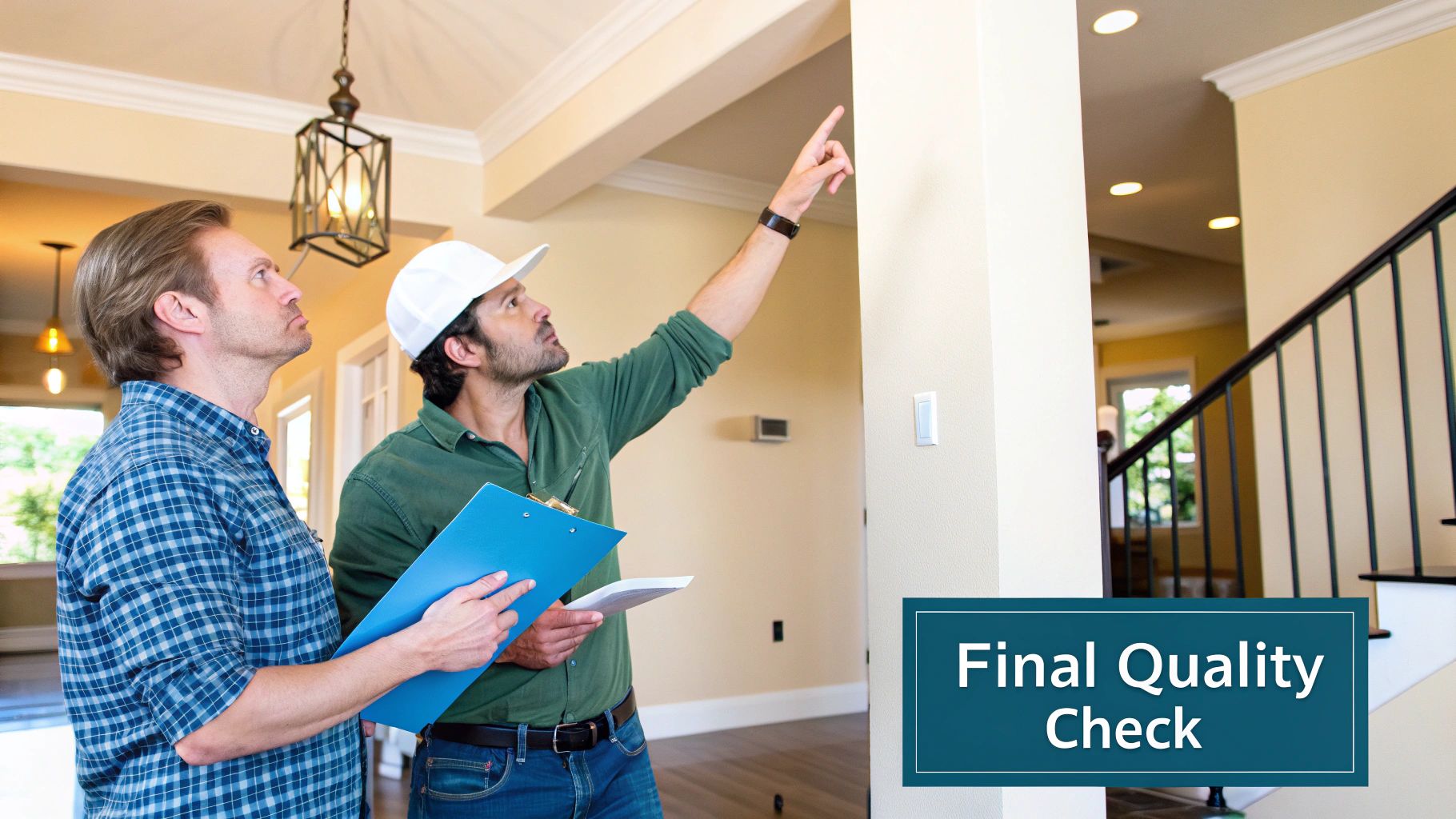
The punch list process kicks off when your builder announces the project has hit "substantial completion." This is a key milestone. It means your home is safe, habitable, and ready for you to move in, even if there are a few cosmetic odds and ends left to handle. This is the moment when you, your builder, and sometimes your architect or designer will walk through the entire property together, eagle-eyed, to create this final list.
What Goes on the List?
So, what kind of things are we talking about? It’s all about the finishing touches.
Here are some practical examples of what a homeowner might spot:
Cosmetic Fixes: A scuff mark on a freshly painted wall from a ladder being moved, a tiny chip in a floor tile hiding behind a door, or a hairline gap in the caulk around the new kitchen sink.
Minor Adjustments: A kitchen cabinet door that doesn't close quite flush, a front door lock that feels a little sticky, or a light fixture that flickers when you first turn it on.
Incomplete Items: A missing handle on a closet door, a forgotten switch plate cover in the guest room, or a small patch of landscaping that still needs sod.
For a quick overview, here are the essential elements of a punch list and why they matter to you as a homeowner.
Key Punch List Elements for Homeowners
Component | Its Role in Your Project's Success |
|---|---|
Substantial Completion | The official starting line. It means the home is safe and usable, allowing the final walkthrough to begin. |
The Walkthrough | Your hands-on opportunity, alongside your builder, to meticulously inspect every room and detail of your new home. |
The List | The formal, written document of all agreed-upon items needing correction, from a paint scuff to a misaligned door. |
Sign-Off & Final Payment | The finish line. Once you’ve confirmed all items on the list are complete, you approve the work and release the final payment. |
This process ensures that you get exactly what you paid for—a home where every detail meets the standard of quality you expect.
This document has become an absolutely critical part of modern project management. In high-end markets like Naples, it’s not unusual for a luxury home’s punch list to have 50 to 200 items, depending on the size and complexity. Data from the construction industry, as highlighted by resources like Construction Coverage, shows that around 65-75% of projects hit some small delays in this final phase. For most residential projects, it typically takes two to four weeks to work through the entire list.
The punch list is your final opportunity to ensure every detail aligns with your vision. It protects your investment and holds the builder accountable for delivering the exceptional craftsmanship they promised. It is the bridge between a nearly finished house and a perfectly completed home.
The Surprising History of the Punch List
The term ‘punch list’ might sound like something straight out of a modern project management app, but its origins are surprisingly low-tech and hands-on. It comes from a time long before digital spreadsheets and cloud storage, and understanding where it started really sheds light on why it’s still such a crucial part of any construction project.
Picture a building site back in the early or mid-20th century. With no tablets or smartphones in sight, how did the architect and builder keep a clear, undisputed record of what was finished and what wasn't? They used a brilliantly simple system that literally gave the punch list its name.
From Paper and Punches to Digital Precision
The name is no metaphor—it's completely literal. Back in the day, the architect or owner’s representative would walk the site and create a paper list of all the outstanding items needing correction. According to historical records, as each task was completed, they would physically punch a hole in the margin next to that item. You can read more about this fascinating old-school process on Wikipedia.
They'd often punch two identical copies of the list at the same time, giving both the architect and the contractor a matching, undeniable record.
That physical act of punching a hole was so much more than a simple checkmark. It was tangible proof of progress. There was no room for debate—either the hole was there, or the job wasn't done.
This simple, manual system built a foundation of trust and a shared understanding of what was finished and what was left to do. It was accountability in its most basic, effective form.
The Evolution into an Industry Standard
As construction projects became more complex over the years, the need for more official processes grew. The humble punch list evolved from a simple paper-and-punch method into a formalized, standard procedure. Esteemed organizations like the American Institute of Architects (AIA) took notice and began to develop standardized contract documents that officially baked the punch list into the project closeout phase.
That was a huge step. It transformed an informal practice into a contractual obligation, legally defining how deficiencies are identified and corrected before the final payment is handed over. But the core principle behind it all—ensuring the finished product meets the agreed-upon standards—hasn't changed one bit.
Today, we’ve swapped paper and hole punchers for sophisticated software, but the spirit of the original punch list is still very much alive. It’s not just a digital file or another piece of paperwork; it’s a time-tested tradition of taking meticulous care. This history shows that aiming for a perfect finish has always been at the heart of quality construction, giving homeowners like you the peace of mind that your vision will be brought to life, right down to the very last detail.
Your Step-by-Step Guide to the Punch List Process
So, how does this whole punch list thing actually play out on a real job site? It might sound a bit formal, but it's really a collaborative, step-by-step process. Think of it less like a scary final exam and more like the final polish you and your builder put on the project together.
The process officially kicks off when the project hits a key milestone called substantial completion. This simply means your home is safe and functional enough to live in, even if there are a few minor cosmetic tweaks still on the to-do list. It’s the green light that says, "Okay, let's do the final walkthrough!"
Preparing for the Walkthrough
A little prep work before this big day can make a world of difference. Being organized helps you spot everything that needs attention and keeps the whole process running like a well-oiled machine. The idea is to be a helpful partner in spotting the details, not to catch anyone in a "gotcha" moment.
Here’s a quick checklist of what to bring along:
Notepad and Pen: Old school, but effective for jotting down notes and questions as you go.
Your Smartphone: Your camera is your best friend here. A quick photo with a note is crystal-clear proof of what needs fixing.
Painter's Tape: A roll of blue tape is perfect for physically marking scuffs or spots that need a touch-up without leaving a mark.
A Small Level: Super handy for a quick check on things like countertops, shelves, and towel bars to make sure everything is perfectly straight.
The way we track these items has come a long way, moving from simple paper lists to the slick digital tools we have today.
This shift to digital has made the entire process faster, clearer, and a whole lot more organized for everyone.
From Finding Flaws to the Final Sign-Off
The punch list journey follows a pretty logical path. While no two projects are identical, these core steps ensure every little detail gets the attention it deserves.
The Initial Walkthrough: This is where you, your builder, and maybe your architect or designer walk through the entire home together. You’ll go room by room, methodically pointing out anything that needs to be addressed.
Creating the Master List: After the tour, your builder takes all the notes and photos and compiles them into a single, organized document. Every item should be specific—"small paint scuff on the west wall of the master bedroom"—to avoid any confusion.
Assigning the Work: The general contractor is the quarterback here. They’ll assign each task on the list to the right subcontractor. The painter gets the paint scuffs, the electrician tackles the faulty switch, the cabinet maker adjusts a sticky drawer, and so on.
Verifying the Fixes: Once the trades have done their work, it’s time for another look. You or your representative will go back through the list to confirm that every single item has been corrected to the agreed-upon standard.
The Final Sign-Off: This is the best part. Once you’ve confirmed that the punch list is complete, you give your final approval. This officially wraps up the project and is usually tied to the release of the final payment.
This collaborative finish is a hallmark of quality construction. When you're looking into custom home building services, you want a partner who sees the punch list not as a chore, but as the final, shared step toward perfection.
What to Look For in Your Luxury Home Walkthrough
Stepping into your nearly finished home for the final walkthrough is exciting, but it can also be a little daunting. Especially in a luxury home, where the smallest details make the biggest impact, knowing what to look for is key. We’ve put together a guide to help you feel confident and prepared.
This isn't just another generic checklist. It's built from years of experience in high-end custom homes and condo renovations, where perfect craftsmanship isn't just a goal—it's the standard.
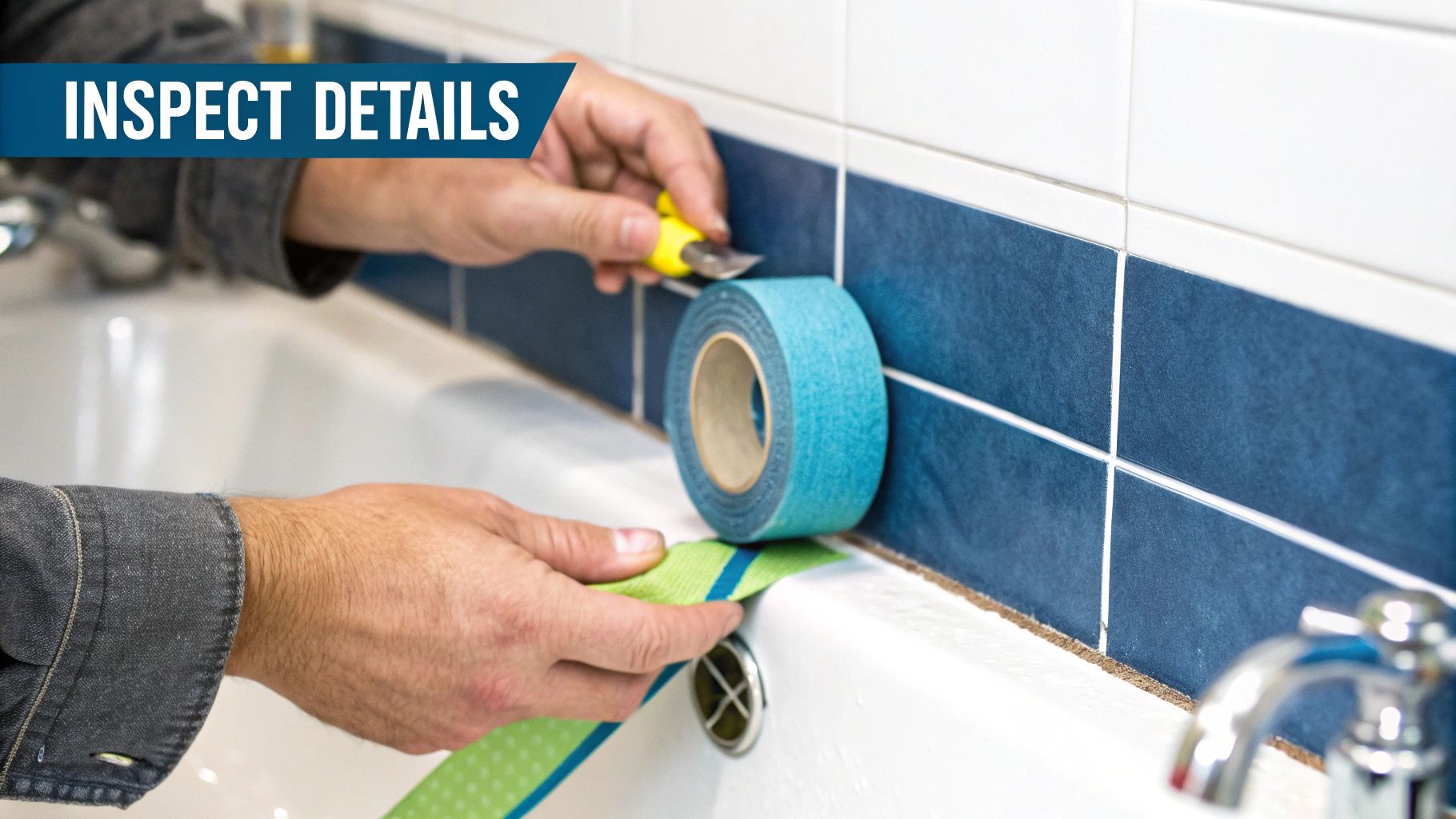
Let's move beyond the obvious stuff. We’ll break down the inspection into a few key areas—finishes, fixtures, systems, and exterior details—so you can methodically check every corner of your new space and spot the little things that matter most.
Flawless Finishes and Surfaces
The quality of the finish work is what truly elevates a home from good to exceptional. You're going to live with these surfaces every single day, so they deserve a very close look. A good trick is to stand back and view walls from different angles; the light will catch any imperfections you might otherwise miss.
Paint and Drywall: Scan for any scuffs, drips, or areas where the paint sheen looks uneven. Look for nail pops (tiny bumps on the wall) and check that the drywall seams are perfectly smooth. The lines where walls meet the ceiling should be crisp and clean.
Flooring and Tile: On hardwood floors, get down low to spot scratches or noticeable gaps between the planks. With tile, you’re looking for chipped corners, inconsistent grout lines, and any “lippage”—that’s when one tile sits a bit higher than the one next to it.
Countertops and Cabinetry: Gently run your hand along the edges of stone countertops; they should feel completely smooth. Check the seams to make sure they’re tight and the patterns match up well. Open every single cabinet and drawer to ensure they glide smoothly and are perfectly aligned.
Fixtures and Hardware Checks
Think of fixtures and hardware as the jewelry of your home. They might seem small, but their proper installation is vital for your daily comfort and the overall feel of quality. Don’t be hesitant to test everything.
A luxury home's promise lies in its details. A dripping faucet or a misaligned cabinet door isn't just a minor annoyance; it's a detail that falls short of the expected standard of excellence.
Plumbing Fixtures: Turn on every faucet and showerhead. You're checking for leaks, drips, and good water pressure. It’s also a good idea to confirm the hot and cold water lines are hooked up correctly—you’d be surprised how often they get reversed!
Lighting and Electrical: Flip every single light switch and use a small tester or a phone charger to check every outlet. If you have dimmer switches, make sure they operate smoothly from low to high.
Doors and Windows: Open and close every door in the house, both interior and exterior. Do they swing smoothly? Do they latch securely? Do the same for all the windows, making sure they create a tight seal when closed.
Systems and Technology Verification
Today’s luxury homes are powered by complex systems that need to be ready to go from day one. In a high-end build, this often includes everything from integrated smart home tech to high-efficiency climate control systems.
HVAC Performance: Feel the airflow coming from each vent to ensure it's consistent throughout the house. Run both the heat and the air conditioning for a few minutes to confirm they respond as they should.
Appliance Functionality: If you can, run a quick test cycle on major appliances like the dishwasher, washing machine, and oven.
Smart Home Integration: Test out any smart features—automated lighting, thermostats, security systems—to make sure everything is connected to the network and responding to your commands.
If you want some inspiration on what a truly flawless finish looks like, take a look at our gallery of custom homes and renovations. This is the level of quality and attention to detail that a successful project closeout is all about.
Your Final Walkthrough Checklist
To make things even easier, here’s a sample checklist you can bring with you. It covers many of the common items we see on punch lists for luxury properties, organized room by room.
Area of Focus | Specific Details to Check |
|---|---|
Kitchen | Appliance functionality, cabinet/drawer alignment, faucet leaks, countertop seams, backsplash grout, under-cabinet lighting. |
Bathrooms | Water pressure in shower/sinks, toilet flushing properly, tile/grout condition, vanity alignment, exhaust fan operation, no mirror or fixture damage. |
Bedrooms & Living | Paint finish (no scuffs/drips), flooring (no scratches/gaps), window/door operation, outlet functionality, light fixtures working correctly. |
Electrical/Mechanical | HVAC system heats and cools, all light switches and dimmers work, breaker panel is clearly labeled, smart home features are responsive. |
Exterior | Siding/masonry condition, paint/stain evenness, proper drainage, outdoor lighting, doors and windows seal tightly, no construction debris left behind. |
This isn't exhaustive, of course, but it's a fantastic starting point. The goal is to be thorough and systematic so you can hand your builder a clear, complete punch list and get to the finish line without any stress.
How a Rolling Punch List Prevents Headaches
Why wait until the finish line to find out there’s a problem? The classic punch list process, while it gets the job done, often feels like a mad dash to fix dozens of little things right before you get the keys. There’s a much better way to handle it: the rolling punch list.
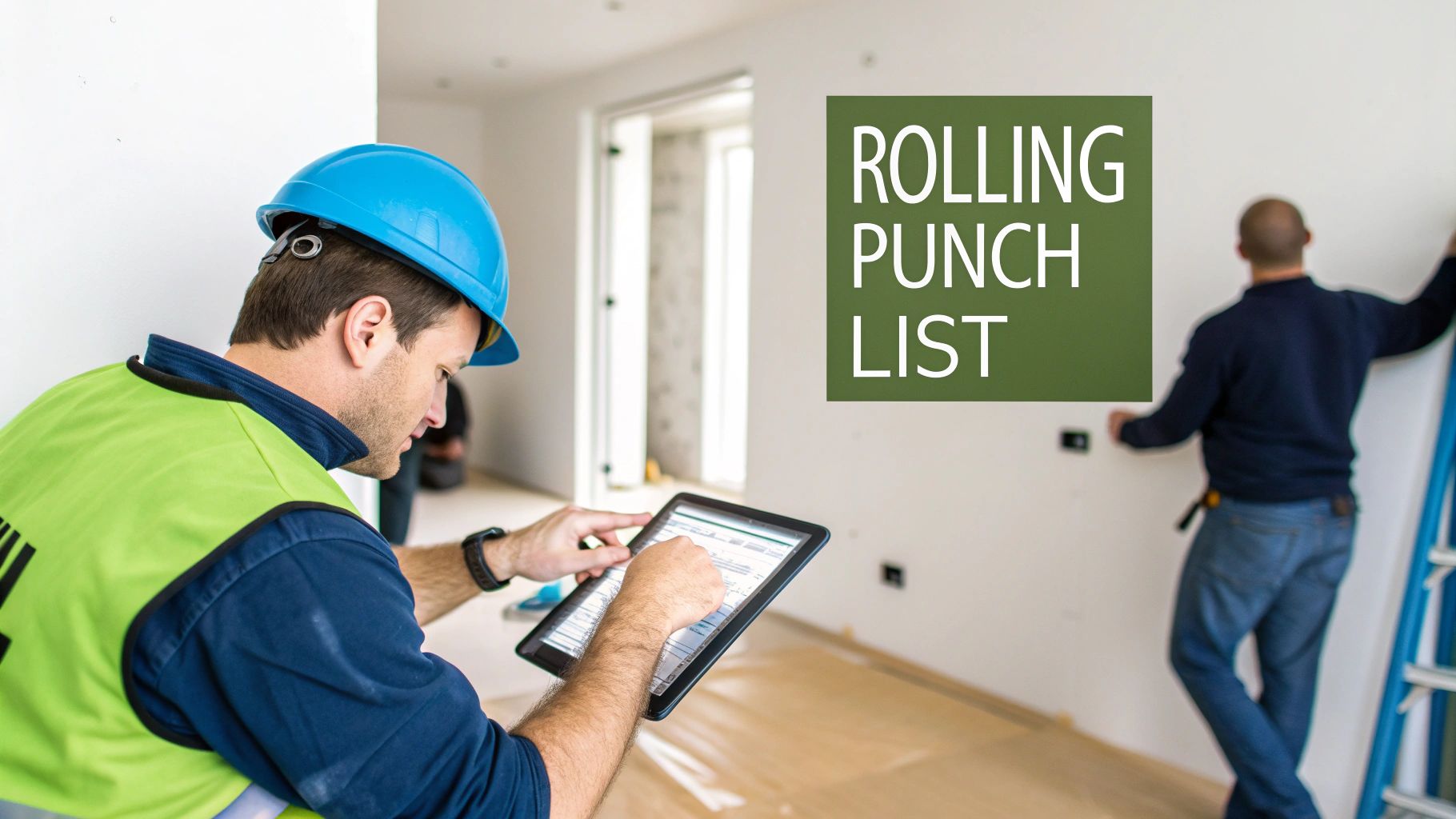
Think of it less like a final exam and more like a series of small quizzes throughout the school year. A rolling punch list is a living, breathing document that your builder keeps from day one. As each phase of the project wraps up, they're spotting and correcting minor issues on the spot.
Shifting from Reactive to Proactive
Instead of waiting for that big, overwhelming list at the very end, the best builders have embraced this continuous quality control approach. It’s a total shift in thinking—from finding problems when it’s almost too late to preventing them from ever piling up in the first place.
Here’s how it works in the real world:
Right after the drywall goes up, the team does a walkthrough to spot any nail pops or uneven seams. Those get fixed immediately, long before a painter ever dips a brush.
The moment the kitchen cabinets are in, someone is there checking for perfectly aligned doors and secure hardware, rather than discovering a wobbly handle on move-in day.
This ongoing attention to detail shows a builder’s commitment to quality at every step, not just as a final box-checking exercise.
A rolling punch list is the difference between a last-minute repair job and a continuous commitment to excellence. It ensures that by the time you reach the final walkthrough, the home is already 99% perfect.
The peace of mind this gives you as a homeowner is huge. Your final walkthrough becomes a much quicker, more pleasant experience because there’s simply less to find. This means a shorter final punch list, way less stress during the project closeout, and a faster path to enjoying your beautiful new home.
This isn’t just a niche idea, either. The industry is catching on. Research shows that around 40% of forward-thinking construction firms are already using "zero punch list" or rolling list strategies. By tackling issues as they go, these builders slash the number of final punch list items by an average of 60-70% compared to the old way. You can explore the data on modern punch list practices to see just how much this impacts project timelines.
At the end of the day, when your builder uses a rolling punch list, it's a powerful signal. It tells you they’re dedicated to getting it right from the very beginning, ensuring you get a top-quality home and a truly seamless handover.
Partnering with Your Builder for a Perfect Finish
Think of the punch list not as a final exam, but as the last victory lap you take with your builder. This final walkthrough is the culmination of the relationship you’ve built with your general contractor throughout the entire project. A great builder doesn't see it as a list of mistakes; they see it as the final polish on a shared masterpiece.
The real goal here is for everyone to walk away proud of the home you’ve created together. For you, the homeowner, that means being detailed and fair. Focus on true defects or things that weren't finished correctly, not on last-minute design changes. For the builder, it’s about listening, being responsive, and showing that their commitment to quality extends all the way to the finish line.
Keys to a Smooth Closeout
A smooth, positive closeout really boils down to good communication and a cooperative mindset from both you and your builder.
Communicate Clearly: Vague feedback is hard to act on. Instead of saying, “The paint looks off,” get specific: “There’s a noticeable paint scuff on the west wall of the living room, about three feet up from the floor.”
Be Realistic: Every construction project, no matter how well-managed, will have a few tiny imperfections. The punch list is for correcting things that don't meet the professional standard of craftsmanship you both agreed on, not for achieving microscopic perfection.
Trust the Partnership: Remember, a quality builder wants you to be thrilled with your new home. They view the punch list as their final opportunity to make good on their promise and ensure every last detail is just right.
When it's all said and done, a well-handled punch list does more than just fix a few scuffs—it solidifies the trust and respect between you and your builder. To learn more about what makes this partnership so crucial, take a look at our guide on what a general contractor does.
Your Punch List Questions, Answered
Got questions about the punch list? You're not alone. It's a critical part of the process, but one that many homeowners haven't encountered before. Let's clear up some of the most common points of confusion so you can walk into your final inspection with confidence.
So, What Exactly Is a Punch List in Construction?
Think of the punch list as the project's final "to-do" list. It’s a formal document we create together near the very end of your project, specifically when we reach what’s called “substantial completion.”
This just means your home is functionally complete and safe to live in, but there might be a few small, often cosmetic, things that need a final touch. It's the last hurdle before we can call the project 100% done and dusted.
Who’s in Charge of Creating and Managing It?
This is absolutely a team effort. You, as the homeowner, are the most important set of eyes. You’ll walk through the space with your general contractor (and sometimes the architect or designer) to point out anything that doesn't seem quite right.
From there, your contractor takes the lead. They'll compile the official list, delegate the fixes to the right tradespeople—the painter for a scuff, the electrician for a flickering light—and make sure every last item gets checked off.
How Long Does It Take to Finish Everything on the List?
This really depends on what's on the list. For most custom home or renovation projects, wrapping up the punch list items usually takes anywhere from one to four weeks.
A good builder will have been working from a "rolling punch list" all along, fixing minor issues as they pop up. This proactive approach means the final list is much shorter and the closeout process is way faster.
When Do I Make the Final Payment?
This is the key part for homeowners. Your final payment, often a percentage held back called retainage, is directly tied to the punch list. You should only release these final funds after you’ve personally verified that every single item on the list has been addressed to your satisfaction.
Once you’re happy and formally sign off, the project is officially complete, and the final payment is made.
At JVM Construction LLC, we don’t see the punch list as a chore; we see it as the final, satisfying step in our shared commitment to perfection. It’s our last chance to prove we've built a home that meets not just the plans, but your highest expectations.
If you’re ready to build a custom home in Naples with a team that sweats the small stuff, we're here to bring your vision to life.