So, you own a piece of land in Naples. That's more than just a plot of earth—it's the blank canvas for a home that's uniquely you. The process of building on your land is a special kind of journey, one that turns an empty lot into a personal sanctuary. But let's be honest, it takes some serious planning to get from a patch of dirt to your dream doorstep without any costly headaches along the way.
Your Custom Home Journey Starts Now
Think of this guide as your personal roadmap for building a custom home from the ground up. We're going to walk through every critical step together, from checking out your lot and nailing down the budget to understanding Naples' specific coastal building codes. The goal here is to give you the confidence and know-how to make this project a resounding success.
Why Build On Your Own Lot
When you build on land you already own, you have a level of freedom that you just can't get with a pre-built or spec home. You're in the driver's seat, designing a space that fits your life, not someone else's.
Here’s what that really means for you:
Total Customization: From the architectural style and the flow of the floor plan down to the cabinet pulls and light fixtures, every single detail is your call. Imagine designing a kitchen with a massive island for family gatherings or a home office with a perfect view of your garden—that's the kind of personalization we're talking about.
Location Control: You've already chosen the perfect spot. Whether it's a stunning waterfront view in Port Royal or a quiet, tree-lined street in The Moorings, your home will be exactly where you want it.
Built-in Equity: When done right, a custom home can be a powerful financial asset from the moment you move in. By thoughtfully selecting your finishes and features, you're not just building a home; you're creating a legacy and a smart financial future for your family.
By choosing this path, you’re also part of a larger movement. Landowners are increasingly opting for custom builds instead of settling for what’s already on the market. Globally, residential construction is a massive industry, with revenues projected to hit around US$4.25 trillion in 2025.
For a family in Naples, this means you get to benefit from incredibly sophisticated supply chains, modern building technologies, and a deep pool of talented, high-end tradespeople.
The most rewarding part of building a custom home is watching a space designed specifically for your family come to life. It’s a process that ensures the final product isn’t just a house, but a home tailored to your every need.
Ultimately, having the right team in your corner makes all the difference. When you partner with seasoned professionals who live and breathe custom home building services, you'll have the expert guidance you need to navigate every stage with confidence.
Vetting Your Land: The Crucial First Step
So you’ve found the perfect piece of land in Naples. Congratulations! Before you get lost in tile samples and paint swatches, there's a crucial first step that will set the stage for your entire custom home project: getting to know your property inside and out.
This upfront homework, what we in the industry call due diligence, is honestly the most important part of the process. It's about uncovering any potential surprises before they become expensive problems, ensuring your dream home is built on a solid, predictable foundation.
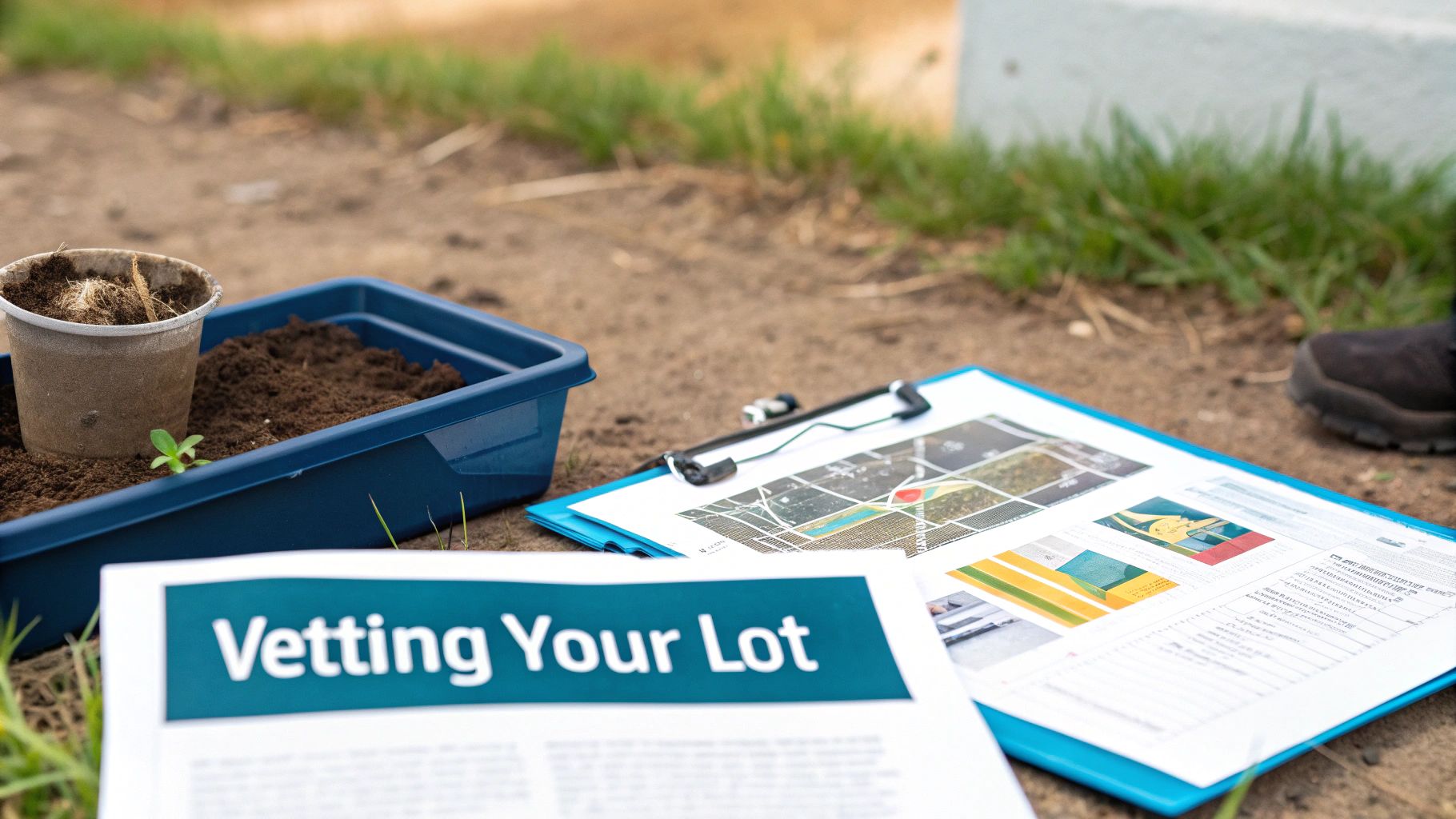
Think of it this way: you wouldn't design a masterpiece without first understanding the canvas. Vetting your lot is how you ensure that canvas is ready for what you have in mind. A little bit of investigation now can save you a world of headaches and unforeseen costs later on.
Uncovering Your Land’s Legal Identity
First things first, let's talk about the rulebook. Every single property in Naples falls under specific zoning laws and land use regulations set by Collier County. These rules are the law of the land, dictating what you can build, how big it can be, and where it has to sit on your lot.
Trying to sidestep these regulations is a recipe for disaster, leading to frustrating delays and expensive redesigns. For example, you might envision a sprawling one-story home, but the "setback" rules for your specific lot might require the house to be a certain distance from the property lines, making a two-story design a better fit. That’s why working with a local builder who lives and breathes these codes is so critical. They’re the ones who can translate your vision into a plan that the county will actually approve.
Understanding these dynamics is key for homeowners who are building on their land in desirable coastal cities.
A thorough property survey is your project's official map. It prevents boundary disputes with neighbors and tells your architect exactly what canvas they have to work with, ensuring your home design fits perfectly within its legal confines.
Assessing the Physical Realities of Your Site
Once you've got the legal side sorted, it's time to look at the land itself. The physical characteristics of your lot will have a huge impact on your home's design, its foundation, and the site prep budget. A gorgeous view is fantastic, but what’s happening underground is what really counts.
For instance, a beautiful waterfront lot in a community like Port Royal will have sandy, coastal soil that behaves very differently than a property further inland. This is where a geotechnical report, or a soil test, is non-negotiable. This analysis tells us everything we need to know about the soil's stability and strength, which directly informs how we engineer the foundation. It's not just a good idea—it's essential for safety and structural integrity.
This due diligence process is all about asking the right questions before a single shovel hits the ground. To help you stay organized, we’ve put together a checklist of the essential assessments you and your builder should tackle.
Your Essential Naples Land Due Diligence Checklist
Assessment Task | What You Will Uncover | Why It Matters in Naples |
|---|---|---|
Zoning Verification | Confirms the property is designated for single-family residential use and identifies any special overlays (like historic districts) or specific restrictions on size, height, or use. | Naples has diverse and strict zoning. This check ensures your architectural plans are feasible from day one, avoiding costly redesigns to meet local code. |
Boundary & Topo Survey | A licensed surveyor marks exact property lines, locates any easements (e.g., for utility access), and maps the land's contours and elevation changes. | Prevents disputes with neighbors and is the foundational document for site planning. The topography dictates drainage, foundation design, and overall home placement. |
Deed & Title Search | Ensures a clean title with no outstanding liens, ownership disputes, or legal claims against the property that could prevent you from building. | A clear title is required for financing and permitting. You can't get a construction loan or a building permit without it. This is a must-do to protect your family's investment. |
Geotechnical Report | A soil test that reveals the composition, density, and load-bearing capacity of the soil. It identifies things like sand, clay, or rock layers. | Coastal Naples soil can be sandy and unstable. This report is critical for engineers to design the correct foundation (piles, slab, etc.) to ensure your home's long-term stability. |
Flood Zone Determination | Uses official FEMA maps to identify your property's flood zone and the required Base Flood Elevation (BFE)—the minimum height for your home's lowest floor. | This is non-negotiable in a coastal area. The BFE dictates your home's finished floor height, heavily influencing design, insurance rates, and construction costs. |
Utility Availability | Confirms access to water, sewer, electricity, gas, and internet. It determines if services are at the property line or if expensive extensions are needed. | Don't assume utilities are ready to go. The cost to run new lines can be tens of thousands of dollars, a significant and often overlooked budget item. |
Environmental Review | Identifies protected species (like gopher tortoises) or sensitive vegetation (like mangroves) that could be on the lot and require special permits or mitigation plans. | Florida has strong environmental protections. Discovering these issues early prevents massive delays from state and federal agencies and avoids potential fines. |
Working through this checklist might seem like a lot, but it's the professional approach that separates a smooth, successful project from a stressful one. A great luxury builder will guide you through every step, making sure nothing is overlooked.
Nailing Down Your Custom Home Budget
Building a custom home is an incredible journey, but let's be honest—it all starts with the numbers. Before you get lost in the fun of picking out finishes and designing your dream kitchen, getting a firm grip on your budget is the single most important thing you can do. It's the foundation for a smooth, stress-free build.
The final price tag for building on your land is always more than a simple price-per-square-foot guess. To do this right, you have to look at the whole picture, including all the costs that aren't quite as obvious as lumber and concrete.
Looking Beyond the Obvious "Hard Costs"
When most people think about a construction budget, they immediately jump to hard costs. These are the tangible things you can see and touch—the foundation, framing, roofing, and the skilled labor needed to assemble it all.
But the real secret to a successful budget lies in understanding the soft costs. These are all the essential services and fees that happen behind the scenes, both before and after the first shovel hits the dirt. For a luxury home in the Naples area, these can easily make up 20-30% of your total project cost, so ignoring them isn't an option.
Here are the key soft costs you absolutely need to plan for:
Architectural & Engineering Fees: This is what you pay the creative and technical pros who design your home’s blueprints and make sure it’s engineered to last.
Permit & Impact Fees: Collier County and the City of Naples have a series of permits required to ensure your home is built to code. You'll also encounter impact fees, which help fund the public infrastructure your new home will rely on.
Landscaping & Hardscaping: A beautiful home needs a beautiful setting. Your budget has to include everything from sod and irrigation to a pool, patio, and driveway.
Utility Hookups: Even if utilities run along your street, you’ll have to pay fees to get them connected directly to your new house.
The Power of a Contingency Fund
Here's a piece of advice from years in the field: no matter how perfect the plan is, something unexpected will happen. It could be a surprise soil issue, a supply chain hiccup, or even just a last-minute design change you fall in love with. This is exactly why a contingency fund isn't just a good idea—it's essential.
A contingency fund isn't a sign of poor planning; it's a mark of smart, experienced planning. We always recommend setting aside 10-15% of your total construction cost. This buffer ensures a small surprise doesn’t turn into a major project crisis.
Think of it as your financial safety net. It gives you the breathing room to handle challenges without cutting corners on quality or adding a ton of stress to the process.
How Construction Loans Work
Financing a custom build is a different ballgame than buying an existing home. You won't be getting a standard mortgage right away. Instead, you'll need a construction loan.
This is a short-term loan designed to cover the building process itself. The bank releases the money in stages, known as "draws," as your builder hits specific construction milestones. Lenders will want to see everything—detailed architectural plans, a line-by-line budget from your builder, and proof that you’ve hired a qualified team. Once your home is finished and you have the certificate of occupancy, the construction loan is usually rolled over into a normal, long-term mortgage. Working with a builder who has solid relationships with local lenders can make this whole process a lot less intimidating.
Finally, we have to talk about cost inflation. It's a major factor for anyone building on their own land today. Construction costs are projected to climb by about 3.9% worldwide in 2025. What does that mean for you? A luxury home that might have had $2 million in hard costs just a few years ago could easily cost $150,000–$200,000 more today. A great general contractor can help you navigate this by locking in supplier bids early and managing the procurement schedule like a hawk. You can read the full intelligence report on global construction costs to get a better sense of these market forces.
By carefully planning for hard costs, soft costs, and a healthy contingency fund, you can build a realistic budget that turns your vision into a reality without the financial headaches.
Assembling Your Project Dream Team
Once you’ve done your homework on the land and have a realistic budget, it’s time to tackle what I believe is the single most important part of your project: building your team. The relationship between you, your architect, and your builder is where the magic happens. When you’re building on your land, this partnership is what transforms a stack of drawings into your dream home.
Think of it this way: a great team works like a well-oiled machine, solving problems and keeping everything on track. A team that isn't in sync? That’s where you run into costly miscommunications, frustrating delays, and budget blowouts. Getting this right from the start is everything.
Architect First Or A Design-Build Firm?
One of the first forks in the road is deciding how to structure your team. There are really two main ways to go about it, and both have their merits.
The Architect-Led Path: This is the traditional route. You hire an architect who works closely with you to design every detail of your home. With a finished set of plans in hand, you then shop those plans around to different general contractors for bids. The big win here is total design control and the potential for competitive pricing.
The Design-Build Approach: With this model, you hire a single firm that has both the architect and the builder under one roof. They’re a unified team from day one. This integration is fantastic for streamlining communication and can often speed up the entire process because the practicalities of construction are considered alongside the design from the very beginning.
Here’s a practical example: an architect designs a gorgeous, cantilevered balcony. In a design-build setting, the builder is right there to say, "Okay, that's beautiful, and here's what it will take structurally and what it will cost," allowing for immediate tweaks. In the architect-led model, that same design might get to a builder who then has to break the news that it requires a complex engineering solution that wasn't in the original budget.
Choosing your builder is about more than just their portfolio; it’s about finding a partner who shares your commitment to quality, transparency, and craftsmanship. This relationship will last for over a year, so trust and clear communication are non-negotiable.
Vetting Your Naples Custom Home Builder
Finding the right builder in Naples is a whole other ballgame, thanks to our unique coastal environment. You need someone who doesn't just know construction, but who lives and breathes the specifics of building by the water.
When you start interviewing builders, you have to dig deeper than the bottom-line price. You're looking for an advocate—a true partner who will protect your investment and obsess over every detail as if it were their own home.
To find that person, you need to ask the right questions. You want to understand their process, their communication style, and their deep-seated expertise. This means covering everything from their fluency in local hurricane codes to how they manage the skilled tradespeople who will actually build your home. For a comprehensive checklist, take a look at our guide on questions to ask a general contractor before hiring.
Here are a few things I’d zero in on during those conversations:
Local Coastal Experience: Don't just ask if they've built on the coast. Ask for specific examples in communities like Port Royal or Aqualane Shores. How do they approach building to Base Flood Elevation (BFE)? What are their go-to methods for wind-resistant construction?
Subcontractor Relationships: A builder is only as good as their team. You want to hear that they have long-standing, loyal relationships with the best electricians, plumbers, and finish carpenters in town. That loyalty pays off in quality.
Communication & Project Management: How are you going to stay in the loop? Ask them to show you the project management software they use. How often can you expect to have meetings on-site?
Ultimately, you’re looking for a team that feels like a genuine partnership. When your architect and builder are perfectly in sync, they don't just build a house—they anticipate challenges, find creative solutions, and bring the home you’ve been dreaming of to life.
Step 6: Permitting, Site Prep, and Pouring the Foundation
Alright, you've got your dream team lined up and the numbers make sense. Now the real action begins. This is the exciting part where your custom home starts shifting from paper plans to a physical reality on your land. First up: navigating the world of building permits.
Honestly, dealing with permitting in Collier County can feel like a maze if you go it alone. This is one of those times you'll be incredibly glad to have an experienced local builder on your side. They'll take the lead, managing all the paperwork and acting as your point person with the county officials. It turns a potential headache into a managed, predictable step.
Getting the Green Light from Collier County
Before a single shovel hits the dirt, your complete architectural and engineering plans are submitted to the building department. This isn't just a bureaucratic rubber stamp; it's a vital safety check. They're making sure your home is designed to meet Florida's incredibly tough building codes.
Here in Naples, that review is especially rigorous. Inspectors are laser-focused on a few key things:
Hurricane Code Compliance: They'll scrutinize everything from the roof structure to the impact rating on your windows to ensure the design can stand up to hurricane-force winds.
Base Flood Elevation (BFE): Your plans must prove the home's finished floor will be at or above the minimum required height for your flood zone. This is a non-negotiable for safety and for getting flood insurance.
Structural Integrity: The engineers' calculations for the foundation get a close look to confirm they’re right for our local soil and can handle the environmental stresses of the coast.
How long does this take? I always tell clients to plan on several weeks, and sometimes a couple of months, for the whole process. A builder who has good working relationships with the local plan reviewers can often anticipate their questions, which helps smooth out the process and avoid frustrating delays.
Think of permitting as the final quality control check before the build starts. It's the system's way of confirming that what looks beautiful on paper is also strong, safe, and ready for our unique coastal climate.
Getting Your Land Ready for Construction
Once you have that permit in hand—a huge milestone!—your builder will start mobilizing on-site. This is when you'll see the first real, tangible changes to your property. It’s an amazing feeling to see the footprint of your future home finally take shape.
The first order of business is site clearing, which means carefully removing any unwanted trees, old debris, or rocks. Right after that comes grading. This is where heavy equipment reshapes the land to create a perfectly level pad for the foundation and, just as importantly, to ensure water drains properly away from your home.
This is also when the essential services get hooked up. Your contractor will be coordinating with the utility companies to bring in water, sewer, and temporary electricity. You can't build a house without them, so getting this done early is key.
Laying a Foundation Built for the Coast
With a clean, level site, all attention turns to the single most critical part of your home: the foundation. Here in Naples, pouring a foundation is a serious science. Our sandy soil and high water table mean you can't just pour a simple concrete slab and call it a day. It requires specialized engineering to guarantee stability for the long haul.
Based on the soil tests from your geotechnical report, your builder will use a proven method for our coastal environment. This almost always involves driving deep pilings down into the ground until they hit a stable layer of earth, anchoring the home securely. A web of concrete-grade beams is then built on top of those pilings, forming a super-strong framework to support the entire house.
It's a meticulous, powerful process. It’s what ensures your home will stand firm against soil settlement and whatever Mother Nature throws at it for generations to come.
Pouring the foundation is a day of celebration. It's the moment your home's form is permanently set in the ground, marking the official start of the vertical build. It’s really happening now
Watching Your Custom Home Take Shape
This is the moment everything starts to feel real. After all the planning, paperwork, and site preparation, your home finally begins to rise from the ground. With the foundation poured, you're about to witness the most exciting phase of building on your land—the transformation from a flat blueprint into a structure you can actually walk through.
The whole construction process is a beautifully complex dance of timing and coordination.
From Skeleton to Shelter
The first jaw-dropping moment is the framing. It’s incredible how quickly it happens. One day you’re looking at a concrete slab, and what feels like the next, the entire wooden skeleton of your home is standing tall. This is when you truly grasp the scale of your rooms and the flow of the floor plan.
Right after framing, the crew gets to work creating a weathertight shell. They'll install sheathing, house wrap, windows, and doors, all culminating with the roof. Once the roof is on, your home is officially "dried in"—a massive milestone. It means the interior is protected from the elements, allowing the detailed inside work to begin without weather delays.
Bringing Your Home to Life
With the exterior sealed, the focus shifts inward to the veins and arteries of your home. This is the "rough-in" stage, where all the complex systems are installed by licensed pros before the drywall goes up.
HVAC: Technicians will run all the ductwork for your heating, ventilation, and air conditioning through the open walls and ceilings.
Plumbing: Plumbers carefully install the supply and drain lines that will serve your kitchens, bathrooms, and laundry areas.
Electrical: Electricians are busy running wires to every switch, outlet, and light fixture you meticulously planned with your designer.
This phase is a whirlwind of activity, followed by a series of crucial inspections. City or county officials must sign off on all this work to ensure it’s safe and up to code before anything gets covered up by drywall.
Staying engaged is important, but it’s about smart involvement, not micromanagement. I always recommend scheduling weekly site meetings with your project manager. This gives you a dedicated time to ask questions and get updates without disrupting the crew's workflow.
The Final Stretch to Move-In Day
Once the walls are insulated and drywall is hung, the personality of your home really starts to shine through. This is when all those finishes you chose months ago—the flooring, tile, cabinets, and countertops—finally get installed. It’s also why making those selections on time is so important; a delayed decision on a light fixture can create a domino effect of delays down the line.
One of the last steps is the final walkthrough with your builder. Together, you'll create a punch list, which is just a detailed list of any small items needing adjustment or a final touch-up. A meticulous builder will have a very short list. If you want to know what to look for, this construction quality control checklist is a great resource.
After the punch list is complete and the final inspections are passed, you'll receive your Certificate of Occupancy. This is the official document from the county declaring your home safe and ready. It’s the moment you've been dreaming of—the day you finally get the keys to your custom Naples home.
Common Questions About Building on Your Land
Even the most meticulously planned custom home project will have its share of questions. It's a huge undertaking! To give you a clearer picture of what to expect, here are a few of the most frequent questions we get from clients getting ready to build in the Naples area.
Think of this as a bit of insider knowledge to help you navigate the journey of creating your home.
How Long Does It Really Take?
There’s no one-size-fits-all answer, but for a luxury custom home in Naples, you should realistically plan for 12 to 18 months from the moment we break ground.
Of course, this can stretch a bit depending on a few key factors. An incredibly intricate design, the speed of the local permitting office, or long lead times for one-of-a-kind materials can all influence the final timeline. For example, custom-milled flooring from Europe or a specialty marble countertop might add a few weeks to the schedule, but are often well worth the wait.
What Are the Biggest Budget Surprises?
If there's one area that catches people off guard, it's site preparation. We've seen it all—from tricky soil conditions that demand more complex foundation work to unexpected hurdles getting utilities connected from the street to the home.
The best defense against these surprises is a thorough due diligence process upfront. Investing a little more in surveys and soil tests before you start can save you tens of thousands of dollars down the road.
Can I Make Changes Mid-Construction?
Absolutely. It’s your home, after all. When a change comes up after construction is underway, we handle it with a formal document called a "change order." This clearly lays out the new work and any impact it has on the budget and schedule.
Just keep in mind that making changes later in the game is almost always more expensive than finalizing them during the design phase. For instance, deciding to move a wall after the electrical and plumbing are already installed is far more complicated and costly than adjusting a line on the blueprint. Our best advice? Lock in as many decisions as you can before the foundation is poured. It’s the single best way to keep your project running smoothly and on budget.
Ready to turn your vision into a reality with a team that values transparency and craftsmanship? At JVM Construction LLC, we're here to guide you through every step of building on your land. Let's start the conversation about your dream home today.