Embarking on a luxury custom home or a high-end remodel in a place like Naples, Florida, is more than just a project; it's the creation of your personal sanctuary. You've hand-picked every material and agonized over every design detail to craft a home that reflects your vision. But how do you guarantee the final result is as flawless in execution as it is in your mind? The secret lies not in hope, but in a robust, phase-by-phase quality control process.
A generic, one-size-fits-all checklist simply won't suffice for a high-caliber build. For discerning homeowners, the difference between a good project and an exceptional one is found in the meticulously documented and verified details that occur at every stage. This is where a builder's commitment to a systematic construction quality control checklist becomes the most critical tool in their arsenal, ensuring every element meets exacting standards.
This comprehensive guide is your roadmap, designed specifically to navigate the complexities of luxury residential projects in our unique coastal environment. We'll break down the 10 critical checkpoints that safeguard your investment, ensure long-term durability against Florida's humidity and storms, and transform your architectural dreams into a tangible, breathtaking reality. From the pre-construction planning to the final punch list, you'll see how a proactive approach to quality, like the process we champion at JVM Construction, protects your investment and delivers peace of mind every step of the way. Let's dive in.
1. Foundation and Structural Integrity Inspection
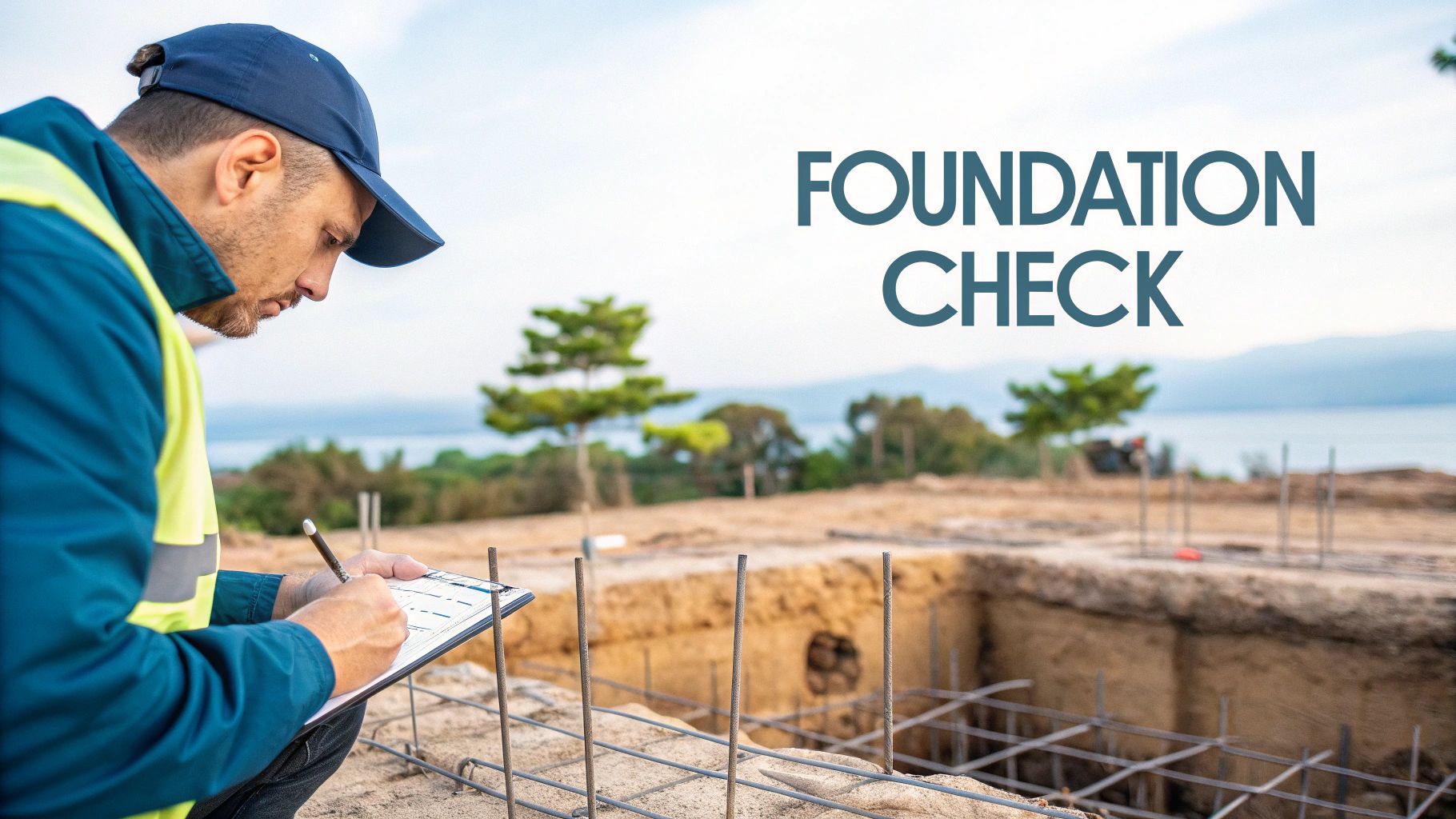
Think of your home’s foundation as its anchor. If it isn't perfect, everything built on top of it will be compromised. A rigorous foundation and structural integrity inspection is the first and most critical checkpoint in any high-end build, ensuring the entire structure is sound, stable, and ready to withstand the unique challenges of Southwest Florida’s coastal environment. This step verifies that the groundwork matches the engineered blueprints to the millimeter.
This inspection isn't a single event but a multi-stage process. For example, it happens after excavation to check soil conditions, again after rebar and formwork are set (pre-pour), and finally after the concrete has cured to confirm strength. For a coastal property in Port Royal, this is where we would verify specialized elements like hurricane tie-downs and the precise depth of pilings, which are non-negotiable for safety and longevity.
Why It's a Top Priority
In luxury construction, "good enough" is never an option. We've seen multi-million dollar waterfront homes require extensive, costly repairs down the line because initial foundation work was rushed. A proper inspection prevents this by catching subtle issues—like improper rebar placement or an incorrect concrete mix—before they become permanent, expensive problems. This is a cornerstone of any effective construction quality control checklist.
Pro-Tip: For homes in high water table areas like Old Naples, we often recommend bringing in a third-party geotechnical engineer. Their independent verification provides an invaluable layer of assurance that pilings and footers are correctly installed to handle soil saturation and hydrostatic pressure.
Actionable Tips for a Flawless Foundation:
Pre-Pour Verification: Schedule a thorough inspection with the structural engineer before the concrete truck is even on its way. This is the last chance to easily correct rebar spacing, formwork alignment, and vapor barrier installation.
Document Everything: Use a detailed checklist to document every aspect of the inspection. Take high-resolution photos and videos of the rebar grid, tie-downs, and formwork, and have the engineer sign off in a formal report.
Test Your Materials: Don't just trust the batch ticket. Insist on field testing of the concrete to verify its slump (workability) and take cylinder samples for compressive strength testing later on.
Florida-Specific Checks: Ensure all fill materials are certified for coastal use and that waterproofing measures are robust, meeting or exceeding the strict standards of the Florida Building Commission.
2. Material Inspection and Certification Documentation
Using premium materials is a promise in luxury construction, but verifying that promise is where true quality control shines. This critical checkpoint ensures that every single component, from structural steel to Italian marble, meets the exact specifications detailed in your architectural plans. It's about confirming performance, safety, and aesthetics before materials are ever installed, safeguarding your investment and the integrity of your home.
This process involves a meticulous review of all supplier documentation—mill certificates, testing reports, and product data sheets—against the project requirements. We physically inspect materials upon arrival for damage, consistency, and correctness. A practical example for a coastal Florida home is confirming that the windows have the specified hurricane-impact ratings and that exterior finishes have the necessary salt-spray resistance, ensuring durability against the elements.
Why It's a Top Priority
In high-end projects, the specified materials define the home's character and performance. Imagine discovering after installation that the imported wood flooring wasn't properly acclimated for Florida's humidity, causing it to warp. Proper upfront inspection prevents such costly and frustrating setbacks. This step in our construction quality control checklist ensures that you receive precisely the quality you paid for, preventing substitutions that could compromise aesthetics or structural safety. This is distinct from value engineering, which is a formal process of finding functional alternatives. You can learn more about value engineering here.
Pro-Tip: For unique, high-value finishes like custom-ordered stone slabs or exotic woods, always request a "control sample" that is approved by you and your interior designer. This physical sample becomes the benchmark against which the actual delivered material is judged for color, veining, and overall quality.
Actionable Tips for Flawless Material Verification:
Pre-Delivery Certification: Require suppliers to submit all necessary certifications and test reports for approval before materials are shipped to the site. This prevents delays and costs associated with rejecting a non-compliant delivery.
Establish a Digital Log: Create a centralized digital folder for all material documentation, linking each certificate to the corresponding section in the architectural plans. This creates a clear and traceable record.
Immediate On-Site Inspection: Inspect every delivery immediately upon arrival. Check for shipping damage, verify quantities, and compare product labels and serial numbers against the approved submittals.
Florida-Specific Checks: For any product with a hurricane or impact rating, physically locate the permanent label or etching on the product itself (e.g., on windows or doors) to confirm it matches the NFRC certification documents.
3. Mechanical, Electrical, and Plumbing (MEP) Systems Testing
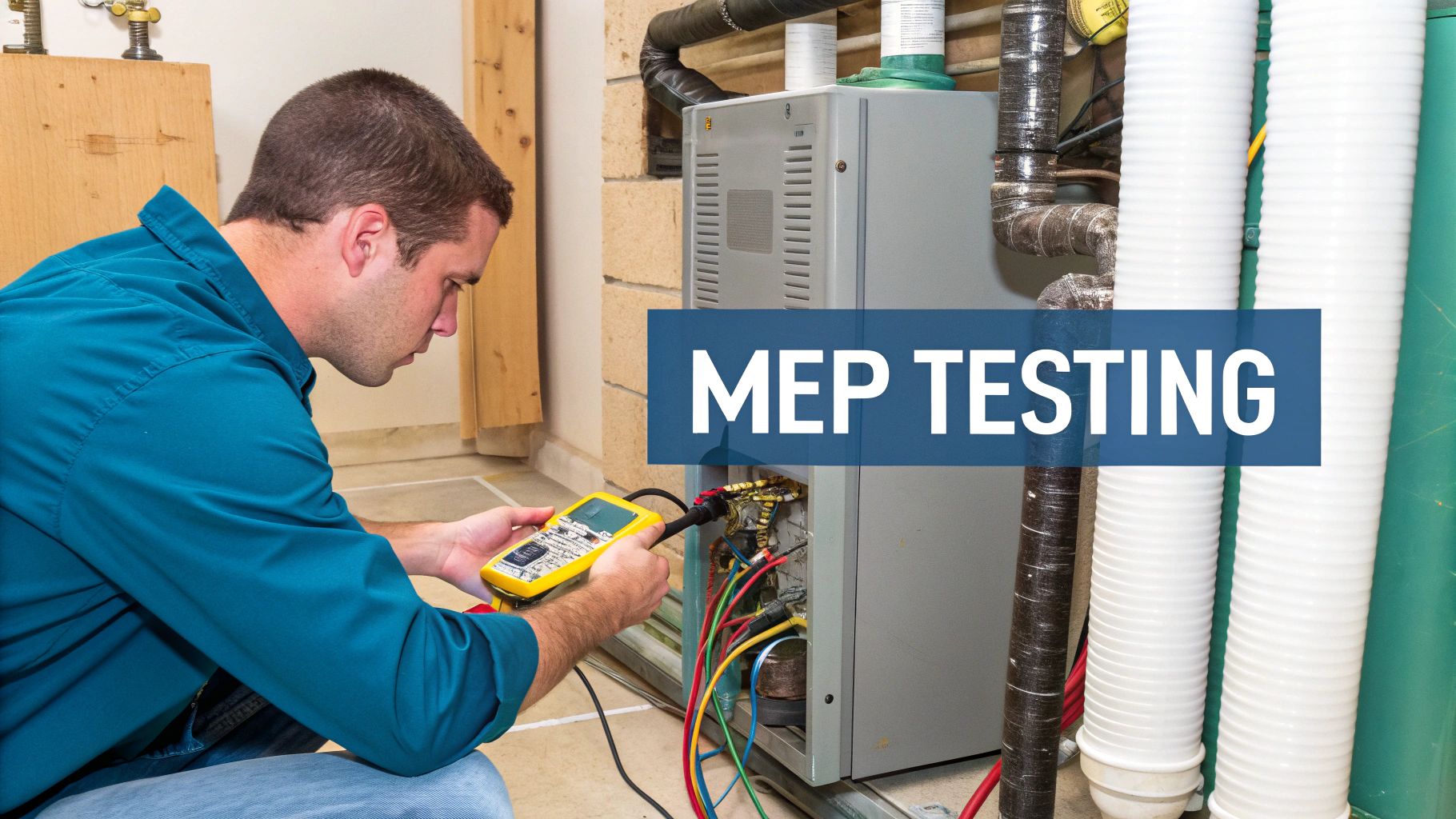
Consider your home’s MEP systems as its central nervous system and arteries. If the electrical wiring, plumbing lines, and HVAC ducts aren't flawlessly installed and tested, the comfort, safety, and functionality of your luxury home are at risk. A comprehensive MEP systems inspection is a non-negotiable checkpoint that validates every wire, pipe, and duct before the walls are closed up, ensuring all systems perform to the highest standards of efficiency and reliability.
This is where we go beyond a simple visual check. It involves practical steps like pressure testing water lines to detect microscopic leaks, verifying electrical circuit integrity to prevent future hazards, and balancing HVAC ductwork to ensure every room maintains the perfect temperature. For a high-end smart home, this stage also includes verifying that the HVAC zoning, automated lighting, and security systems communicate seamlessly.
Why It's a Top Priority
In the world of high-end construction, the performance of hidden systems defines true quality. We've seen projects where improper HVAC balancing led to persistent moisture issues—a critical failure in Florida's humid climate. Thorough rough-in and final testing prevents these costly and disruptive problems, ensuring systems are not just installed correctly but are also optimized for peak performance and longevity. This rigorous validation is a crucial part of any serious construction quality control checklist.
Pro-Tip: For homes with extensive automation, insist on a full systems integration test before drywall is installed. This allows your technology integrator, electrician, and HVAC contractor to troubleshoot communication protocols between systems while access is still easy, preventing major headaches later on.
Actionable Tips for Flawless MEP Systems:
Inspect Before Concealment: The "rough-in" inspection is your golden opportunity. Before any insulation or drywall is installed, walk the site with licensed MEP trades to verify placement, connections, and support for all wiring, plumbing, and ductwork.
Pressure Test Plumbing: Insist on a documented water or air pressure test for the entire plumbing system. The system should hold a specified pressure for a set period with zero loss, confirming a leak-free installation.
Document All Test Results: Create a formal record for every test performed, including pressure tests, electrical circuit tests, and HVAC airflow readings. These documents, signed by the licensed technician, are vital for your records and warranty.
Florida-Specific Checks: Verify that all exterior electrical components are hurricane-rated and properly sealed. Ensure HVAC units and ductwork are specified to handle the high humidity and salt-air corrosion common in coastal areas like Naples.
4. Concrete Quality and Curing Verification
In high-end construction, concrete is both a structural workhorse and a key aesthetic element. It’s not just about strength; it’s about the flawless finish of a polished floor, the perfect texture of a luxury pool deck, or the sharp lines of an architectural feature. Concrete quality and curing verification ensures that every pour meets both the engineered strength requirements and the visual standards expected in a luxury home. This critical step guarantees that what’s specified in the design is exactly what’s delivered on site.
This process begins long before the concrete arrives, starting with the approval of the specific mix design tailored for its purpose—for instance, a salt-resistant mix for a waterfront property. During the pour, independent technicians perform tests on-site to verify the mix’s properties. The work doesn’t stop there; monitoring the curing process for days or even weeks afterward is essential to prevent cracking and ensure the concrete reaches its full design strength and durability.
Why It's a Top Priority
We’ve seen driveways in beautiful Port Royal homes that start to spall and crack years early because the curing process was rushed in the Florida sun. Proper verification prevents this. It ensures the structural columns can handle hurricane-force winds and the decorative hardscapes will look pristine for decades. This attention to detail is a non-negotiable part of any construction quality control checklist, protecting your investment from premature deterioration and ensuring lasting beauty and safety.
Pro-Tip: Always specify the exact finishing standards and curing methods directly in your contract documents. For visible surfaces like countertops or patios, ask for a small sample "mock-up" to be poured and approved before the main installation. This sets a clear visual benchmark for the final product.
Actionable Tips for Perfect Concrete:
Verify the Mix Design: Before any concrete is ordered, confirm the approved mix design from the structural engineer matches the delivery ticket from the concrete plant. Pay close attention to additives for water resistance or strength.
On-Site Testing is a Must: Have a certified testing lab on-site during every significant pour. They should perform slump tests to check workability and take multiple concrete cylinders for 7-day and 28-day compressive strength tests.
Control the Cure: Proper curing is critical in the Southwest Florida heat. Ensure the contractor has a clear plan to keep the concrete moist and at a stable temperature, using methods like wet burlap, curing compounds, or plastic sheeting to prevent rapid drying.
Hire Finishing Artisans: For high-visibility areas like polished floors or architectural walls, the skill of the concrete finisher is paramount. Vet your contractor’s finishing team to ensure they have experience with the high-end aesthetic you desire.
5. Drywall, Framing, and Insulation Quality Control
Think of your home's framing, insulation, and drywall as its skeleton, skin, and final canvas. If these elements aren't perfectly executed, the structural integrity, energy efficiency, and the beauty of your finished surfaces will suffer. This critical checkpoint ensures that every wall is plumb and true, insulation is gap-free for optimal thermal performance, and drywall is hung with precision, creating a flawless base for luxury finishes.
This inspection phase is a crucial "pre-concealment" step. It happens after the mechanical, electrical, and plumbing rough-ins are complete but before the drywall is installed. This allows a clear view of the framing quality, insulation installation, and any necessary air or vapor barriers, verifying everything meets the architect’s specifications and Florida’s stringent building codes for moisture and energy management.
Why It's a Top Priority
In high-end construction, the final finish is everything. A flawless paint job or expensive wall covering will look terrible on poorly installed drywall. We've seen projects where rushed framing led to wavy walls, or gaps in insulation caused "hot spots" and high energy bills. A thorough inspection at this stage prevents these issues, ensuring acoustic privacy in a master suite, preventing moisture intrusion in a coastal kitchen, and guaranteeing the long-term comfort and efficiency of your home. It’s a non-negotiable step in a robust construction quality control checklist.
Pro-Tip: For homes in coastal areas like Port Royal, insist on a review of vapor barrier placement. In Florida's hot, humid climate, the vapor barrier should be on the exterior side of the insulation to prevent moisture from being trapped within the wall cavity, which can lead to mold and structural rot.
Actionable Tips for a Flawless Interior:
Pre-Drywall Walkthrough: Schedule a formal inspection with the project manager after framing and insulation are complete. Check that all studs are plumb, level, and properly braced.
Insulation Verification: Use a thermal camera or a simple visual check to ensure insulation batts fit snugly within each cavity without compression or gaps. Voids can drastically reduce R-value and energy efficiency.
Specify Your Substrate: For areas receiving tile or heavy wall coverings, ensure the correct substrate is used, such as moisture-resistant drywall in bathrooms and kitchens. Verify screw patterns and spacing for a secure installation.
Florida-Specific Checks: Confirm that all exterior wall assemblies include a properly installed weather-resistive barrier and that window and door openings are correctly flashed before insulation is installed to prevent water intrusion during a hurricane.
6. Roofing System Installation and Weatherproofing
In Southwest Florida, the roof is more than just a cover; it’s the primary shield against relentless sun, torrential rain, and hurricane-force winds. This critical inspection checkpoint verifies every layer of the roofing system, from the deck attachment to the final tile, slate, or membrane. It ensures the entire assembly is installed not just to code, but to a higher standard of resilience demanded by luxury coastal living.
This inspection is a multi-phase validation. It begins by confirming the roof deck is properly fastened and prepared. Next, we meticulously review the installation of the underlayment and flashing, especially around penetrations like vents and skylights. Finally, we oversee the installation of the finished roofing material, ensuring it meets the manufacturer's and Florida's High-Velocity Hurricane Zone (HVHZ) requirements.
Why It's a Top Priority
A compromised roof is one of the quickest ways to cause catastrophic damage to a high-end home. For luxury estates in areas like The Moorings, where premium tile or metal roofs are common, an improperly installed underlayment or incorrectly flashed chimney can lead to widespread water intrusion and interior damage. This step in a construction quality control checklist prevents these disasters by ensuring every component works together to create an impenetrable, weatherproof barrier.
Pro-Tip: Always request the full documentation package for your roofing system, including the wind and impact ratings (like those from UL) and the manufacturer's specific installation guide. This documentation is not only vital for insurance purposes but also serves as the definitive guide for our quality control inspections.
Actionable Tips for a Flawless Roof:
Pre-Cover Inspection: Schedule a mandatory "in-progress" inspection after the underlayment and flashing are installed but before the final roofing material is laid. This is your last chance to spot and fix tears, unsealed penetrations, or improper overlaps.
Document Before Concealment: Take detailed photos of the roof deck nailing pattern, the underlayment seams, and the flashing details around every vent, pipe, and wall transition. This creates an invaluable record of what lies beneath the finished surface.
Verify Fastener Details: Confirm that the nails or screws used, and their spacing, match the manufacturer’s specifications and the engineer's wind-load calculations. This is a small detail that makes a huge difference in a hurricane.
Florida-Specific Checks: Ensure the roofing system has a current Florida Product Approval and that all components, from the underlayment to the adhesive, are rated for our high-wind and high-moisture environment.
7. Interior Finishes and Millwork Quality Inspection
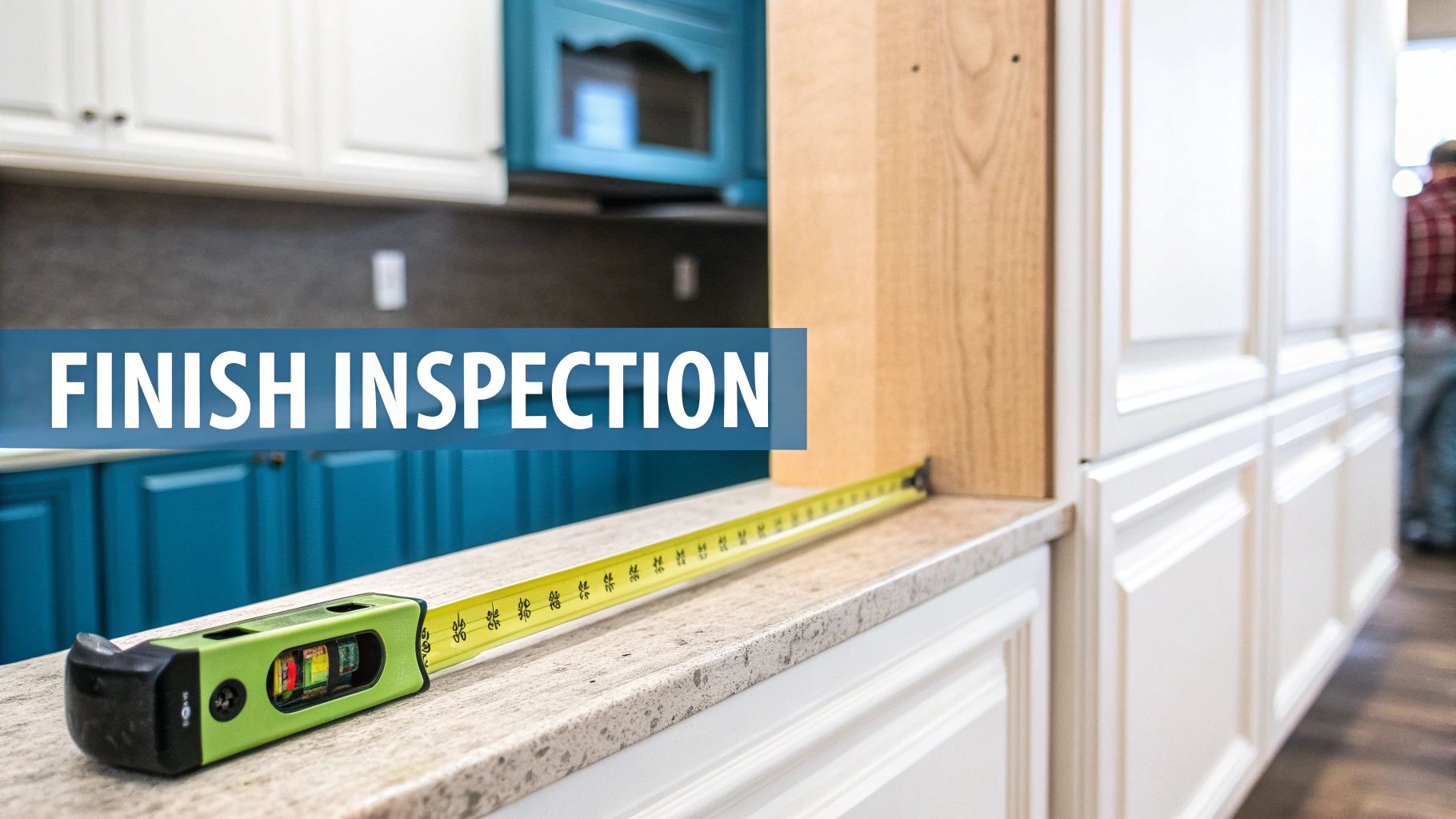
The interior finishes are where a house transforms into a bespoke home, reflecting your unique style and taste. This inspection phase focuses on the tactile and visual elements that you and your family will interact with daily: the flooring underfoot, the custom cabinetry in your kitchen, and the elegant trim work that frames each room. It’s a meticulous review to ensure that the craftsmanship meets the highest luxury standards and every detail aligns perfectly with the architectural vision.
In a high-end build, this is where artistry meets precision. We are verifying that the grain on the custom millwork flows seamlessly, that the mitered corners on the crown molding are flawless, and that the imported marble for your primary bath is installed with impeccable care. This step ensures the final product is not just built well, but is also beautifully and flawlessly executed, which is a hallmark of any robust construction quality control checklist.
Why It's a Top Priority
For luxury homes in communities like Port Royal or Aqualane Shores, the perceived value is intrinsically tied to the quality of the finishes. A poorly hung cabinet door, a sloppy paint job, or a misaligned tile can detract from an otherwise magnificent space. We’ve seen projects where rushed finish work required costly and disruptive tear-outs. A rigorous inspection at this stage protects your investment by ensuring every surface, joint, and fixture is perfect before you move in.
Pro-Tip: Always establish a "control sample" or mock-up for complex finishes, like a custom wall treatment or a multi-step wood stain. This physical example becomes the undisputed quality standard that all subsequent work must match, eliminating any ambiguity for the craftsmen.
Actionable Tips for Flawless Finishes:
Pre-Installation Review: Inspect materials like flooring, tile, and stone before they are installed. Check for color consistency, defects, and damage from shipping to avoid discovering a flawed piece after it's been permanently set.
Verify Cabinetry Pre-Countertop: Ensure all base cabinets are perfectly level, plumb, and securely fastened before the countertop templating and installation. This prevents alignment issues and ensures a perfect fit.
Lighting is Crucial: Conduct inspections under various lighting conditions, both natural daylight and the home’s installed artificial lighting. Different light sources can reveal imperfections in paint, drywall, and other surfaces that might otherwise go unnoticed.
Document and Correct: This stage is critical for developing the final what is a punch list in construction. Walk through with your builder and interior designer to meticulously document every touch-up needed, from minor paint scuffs to adjusting cabinet hardware.
8. Permit and Building Code Compliance Documentation
Navigating the web of permits and building codes is the unsung hero of a smooth construction project. This isn't just about paperwork; it's about systematically verifying that every nail, wire, and beam complies with the latest regulations. It ensures your luxury home is not only beautiful but also legal, safe, and insurable, especially under the stringent requirements of the Florida Building Code and local Naples ordinances.
This process involves more than just getting the initial permit. It's an ongoing effort to document every municipal inspection, approval, and certification throughout the build. For example, for a waterfront property in Port Royal, this includes specialized coastal construction control line (CCCL) permits. For historic renovations in Old Naples, it means tracking architectural review board approvals. This step guarantees that every decision is officially sanctioned, leaving no room for costly compliance issues down the road.
Why It's a Top Priority
In high-end construction, a missed inspection or an unapproved change can bring the entire project to a grinding halt, causing significant delays and financial penalties. We’ve seen projects where a seemingly minor change required a complete permit amendment, which wasn't filed, leading to failed final inspections and a delayed move-in date. A diligent focus on compliance documentation is a core component of a professional construction quality control checklist, protecting your investment and ensuring a seamless path to your certificate of occupancy.
Pro-Tip: For complex renovations in high-rise condos like those in Park Shore, always start by coordinating with the HOA's management company before submitting plans to the city. Their internal rules on work hours, noise, and structural changes often exceed municipal codes and must be integrated into the project plan from day one.
Actionable Tips for Flawless Compliance:
Centralize Your Documents: Create a digital and physical binder at the project's start to house all permits, inspection reports, engineering justifications, and approvals. This becomes your project's official legal record.
Proactive Scheduling: Don't wait until a phase is complete to schedule the required municipal inspection. Book it in advance to avoid waiting on an inspector's availability, which can create unnecessary downtime.
Track All Changes: Any deviation from the original plans, no matter how small, must be documented. Ensure that all change orders are reviewed for potential permit or code implications and that necessary amendments are filed immediately.
Florida-Specific Checks: For coastal builds, keep all flood-related compliance paperwork, like elevation certificates and flood vent specifications, meticulously organized. This documentation is crucial for both final approval and future flood insurance rates.
9. Schedule Management and Progress Documentation
In luxury construction, time is just as valuable a resource as any high-end material. Schedule management isn't just about hitting a deadline; it’s about orchestrating a complex ballet of dozens of trades, suppliers, and inspectors with precision. This checkpoint ensures your project moves forward efficiently, transparently, and predictably, whether it's an 18-month custom estate in Port Royal or a complex condo renovation in a high-rise.
This process involves more than just a calendar with a finish date. It’s a dynamic system of tracking progress against a master plan, documenting every step, and proactively managing the inevitable challenges that arise. Practical examples include holding weekly site meetings where progress is verified against the schedule and creating daily logs that capture weather delays or material deliveries. This systematic documentation provides a clear, factual record of the project’s journey and keeps you, the homeowner, informed and aligned.
Why It's a Top Priority
A well-managed schedule is a direct reflection of a builder’s competence and respect for the client's investment. We've seen projects stall for months due to poor coordination, leading to budget overruns and immense frustration. Meticulous progress documentation protects you from this by creating accountability and providing the data needed to make smart decisions. It’s an essential part of any construction quality control checklist because it ensures the entire project team is working in sync toward the same goal.
Pro-Tip: For intricate projects like a full home remodel in The Moorings where you might remain on-site, a phased schedule is non-negotiable. Breaking the project into distinct zones and timelines allows for careful coordination of everything from dust-barrier installation to utility shutdowns, minimizing disruption to your family's daily life.
Actionable Tips for Flawless Scheduling:
Collaborative Master Schedule: Build the initial master schedule with direct input from your key trade partners (plumbers, electricians, HVAC). Their real-world timelines are more valuable than any software estimate.
Document Delays Immediately: If a hurricane watch shuts down the site or a custom-ordered Italian marble is delayed at the port, document it that day with photos, supplier emails, and a formal note in the project log. This creates a clear, undisputed record.
Weekly Progress Photos: Designate a specific time each week to take photos from the exact same vantage points. This creates a visual timeline that powerfully illustrates progress and aligns perfectly with weekly schedule updates.
Transparent Client Communication: Don't wait for your client to ask for an update. Proactively share a summarized weekly progress report, including photos and a look-ahead to the next week’s activities. This builds trust and manages expectations. It's important to understand what to ask a general contractor about their communication and scheduling practices from the start.
10. Safety and Environmental Compliance Monitoring
A luxury home is only as good as the safety and integrity of the site it was built on. Beyond the materials and craftsmanship, a true mark of quality is a project executed with an unwavering commitment to safety and environmental stewardship. This checkpoint ensures that from day one, all operations adhere to strict OSHA standards and local environmental regulations, protecting the crew, the property, and the surrounding natural beauty of Southwest Florida.
This isn't about simply hanging a few safety signs. It’s an active, ongoing process that includes daily site inspections, hazardous material management, and meticulous waste disposal protocols. For example, a luxury waterfront build in Port Royal requires robust erosion control and stormwater management plans to protect our pristine waterways. It’s a core component of a responsible construction quality control checklist that demonstrates respect for both people and place.
Why It's a Top Priority
A safe site is an efficient and professional site. Neglecting safety and environmental compliance not only puts workers at risk but can also lead to costly stop-work orders, fines, and significant project delays. We’ve seen competitors face massive setbacks on high-rise condo renovations due to a single preventable safety lapse. Proactive monitoring prevents these issues, ensures continuous insurance coverage, and maintains a positive reputation in discerning communities.
Pro-Tip: For occupied renovations, establish a "clean zone" and "work zone" with physical barriers and dedicated HEPA air filtration. This protects your family from dust and fumes and demonstrates a level of care and respect that defines a high-end construction experience.
Actionable Tips for a Safe and Compliant Site:
Kickoff with a Safety Plan: Before any work begins, hold a mandatory meeting with all trade partners to review the site-specific safety and environmental plan. Ensure everyone signs off.
Daily Safety Briefings: Start each day with a "toolbox talk" to discuss the day's tasks, potential hazards, and required safety measures. This keeps safety top-of-mind for every person on site.
Verify Subcontractor Compliance: Require all subcontractors to provide current safety certifications (e.g., OSHA 10/30) and valid certificates of insurance before they are allowed on the property.
Document Everything: Maintain a detailed log of all safety inspections, incidents, training sessions, and corrective actions. This documentation is crucial for accountability and continuous improvement.
Construction Quality Control: 10-Point Comparison
Checkpoint | 🔄 Implementation Complexity | ⚡ Resource / Time Requirements | 📊 Expected Outcomes | ⭐ Key Advantages | 💡 Ideal Use Case & Tip |
|---|---|---|---|---|---|
Foundation and Structural Integrity Inspection | High — staged inspections, licensed engineer required | High — geotechnical tests, lab fees, possible schedule delays | Verified foundation strength, compliance, early defect detection | Prevents structural failure, meets code, protects property value | New builds and coastal/hurricane sites — schedule immediately after excavation and before pour |
Material Inspection and Certification Documentation | Medium — documentation-heavy, multiple suppliers | Moderate — admin time, document storage, possible lead-time waits | Traceable material compliance, valid warranties, fewer defects | Prevents non-compliant or defective installs; supports claims | Luxury finishes and imported materials — request certifications before delivery |
Mechanical, Electrical, and Plumbing (MEP) Systems Testing | High — multi-trade coordination, licensed testers | High — specialized testing equipment, balancing, possible re-tests | Functional, code-compliant systems and baseline test records | Catches hidden defects, optimizes performance, reduces water/fire risk | Rough-in phase before concealment — document tests with technician certification |
Concrete Quality and Curing Verification | Medium‑High — lab protocols, weather-sensitive timing | Moderate — testing lab presence, multiple samples, daily monitoring | Confirmed compressive strength, durable finishes, reduced cracking | Ensures structural integrity and finish quality for critical pours | Structural slabs, pools, waterfront work — have testing lab on site during pours |
Drywall, Framing, and Insulation Quality Control | Medium — multiple trades but standard checks | Moderate — pre-drywall inspections, verification of insulation | Plumb walls, correct insulation R-values, reduced moisture/mold risk | Improves energy efficiency, finish quality, and sound control | Pre-drywall inspections in humid climates — use moisture-resistant drywall in wet areas |
Roofing System Installation and Weatherproofing | High — specialized techniques for flashing and wind resistance | Moderate‑High — skilled crews, weather-dependent scheduling | Weather-tight roof, validated warranty, enhanced storm resistance | Prevents water intrusion and costly interior damage | Coastal/high-wind properties — verify flashing, fastener spacing, and underlayment before final roofing |
Interior Finishes and Millwork Quality Inspection | Medium — subjective aesthetics, skilled trades | Moderate — skilled finishers, punch-list time, touch-ups | High-quality finishes that match design intent and tolerances | Preserves luxury aesthetics and resale value | Final fit-out, custom cabinetry — approve samples and tolerances before installation |
Permit and Building Code Compliance Documentation | Medium — ongoing administrative complexity | Ongoing — permit filings, municipal coordination, record keeping | Legal compliance, timely permit sign-offs, CO readiness | Avoids fines/work stoppages; protects insurability and title | All projects, especially waterfront or historic — centralize permit tracking from project start |
Schedule Management and Progress Documentation | Medium — requires dedicated PM and coordination | Ongoing — weekly reports, meetings, photo documentation | On-time delivery tracking, dispute evidence, proactive mitigation | Coordinates multi-trade activities; reduces delay claims | Large or complex builds — maintain realistic master schedule and weekly updates |
Safety and Environmental Compliance Monitoring | Medium‑High — continuous oversight and training | Ongoing — safety officer, audits, training, environmental controls | Fewer injuries, regulatory compliance, protected site/environment | Lowers liability, insurance exposure; demonstrates responsible practice | Sites with height, hazardous materials, or coastal protections — conduct daily toolbox talks and regular audits |
Partnering for Perfection: Your Next Step Towards a Flawless Build
We’ve journeyed through the critical phases of a high-end residential build, from the unseen strength of a meticulously poured foundation to the final, flawless polish on custom cabinetry. The detailed construction quality control checklist we've outlined isn't just a list of tasks; it's a comprehensive roadmap to achieving enduring excellence. It’s the blueprint for transforming architectural drawings and design dreams into a tangible, breathtaking reality that stands strong against the tests of time and the unique challenges of our beautiful coastal Florida environment.
The core lesson is this: true luxury construction is not defined by opulence alone. It’s defined by the integrity of what lies beneath the surface. It’s found in the verified rebar placement, the precision of the MEP rough-ins, and the seamless integration of hurricane-rated windows. These are the elements that ensure your home is not just a masterpiece of design but a sanctuary of safety, comfort, and lasting value. Ignoring this disciplined process is like building a masterpiece on a foundation of sand; it’s a gamble you simply can’t afford to take.
Key Takeaways for Your Naples Home
Let's distill the most crucial insights from our deep dive into construction quality:
Proactive, Not Reactive: Quality control is a forward-thinking discipline. It’s about anticipating potential issues, like moisture intrusion in a coastal climate, and implementing preventative measures during the envelope phase, rather than fixing leaks after the first major storm.
Documentation is Your Assurance: A verbal confirmation is not enough. Demanding documented proof, from material certifications to passing pressure test reports for plumbing, creates a transparent and accountable process. This detailed project history is invaluable for future maintenance and protects your investment.
Quality is a Team Sport: The responsibility for quality doesn’t fall on one person. It's a collaborative effort between you, your architect, your builder, and every single subcontractor. A great General Contractor acts as the team captain, ensuring everyone understands and adheres to the high standards set from day one.
Making Your Checklist Actionable
So, what's next? You are now armed with the knowledge to be a more empowered and engaged participant in your construction journey. The next step is to move from understanding to implementation. Before breaking ground on your custom home or high-end remodel, sit down with your potential builder and use this framework as a guide for your conversation.
Ask them directly: "Can you show me your construction quality control checklist?" Inquire about their specific processes for material verification, their system for documenting MEP inspections, and how they manage the punch list and closeout phases. Their ability to confidently and thoroughly answer these questions, providing examples and templates, will speak volumes about their commitment to quality. A builder who embraces this level of detail is a builder who respects your vision and your investment.
Ultimately, building a custom home in a place like Naples is an act of creation, a legacy for your family. This process shouldn't be a source of stress and uncertainty. By championing a culture of quality control, you ensure the journey is as rewarding as the destination. You’re not just overseeing a project; you are actively partnering in the pursuit of perfection, creating a home built not just with the finest materials, but with foresight, integrity, and an unwavering dedication to getting every single detail right.
Ready to partner with a builder who lives and breathes this level of meticulous quality control? The detailed processes in this article are the foundation of every project we undertake at JVM Construction LLC. We invite you to contact JVM Construction LLC for a consultation to see how our commitment to a documented, transparent, and rigorous construction quality control checklist can bring your vision for a perfect Naples home to life.