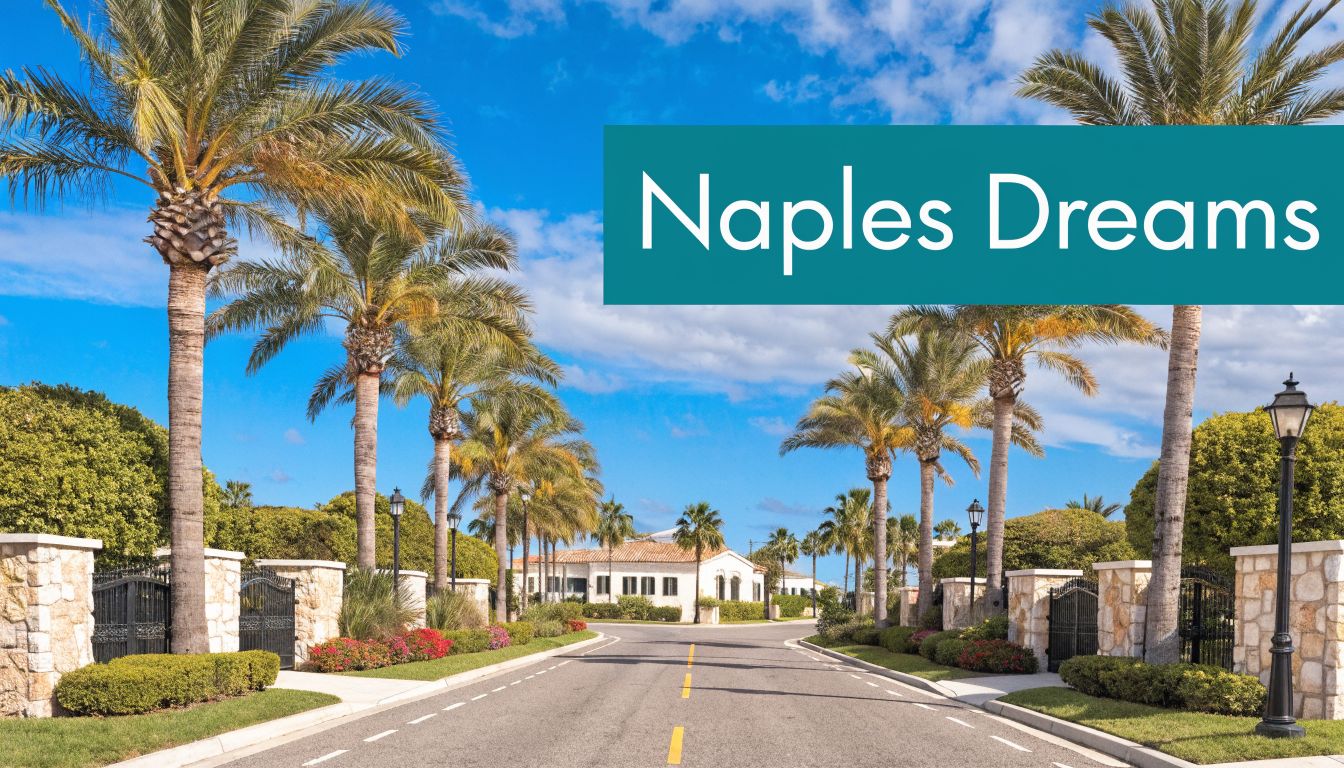
You’re probably in one of two places right now. You’ve either visited Naples, driven past a guarded entrance lined with palms and perfect landscaping, and thought, “That’s the life I want.” Or you already own in Naples, love the area, and you’re tired of compromising with a house that doesn’t quite fit how you want to live.
That’s where the true conversation starts. Buying into a gated community in Naples Florida isn’t just about a gate, a guard, or a prettier street. It’s about choosing a controlled, amenity-rich environment where your home has to work with the community, the codes, the lot, and your long-term plans.
Painting the Picture of Naples Gated Living
A lot of buyers come to Naples chasing the obvious things. Sunshine. Gulf water. Golf. Clean streets. Privacy. Then they spend a few days here and realize the bigger draw is how easy good living feels when the neighborhood is well run.
That’s why gated living dominates this market. Naples has over 150 gated neighborhoods, and they make up the majority of residential neighborhoods in Collier County. Current Zillow results show 2,946 homes for sale in gated communities, and these neighborhoods have posted 28% appreciation over the past three years, while luxury gated properties have appreciated 195.16% over the past decade, according to Naples gated community market data.
That kind of demand changes how you should think about the process. Don’t start with a floor plan. Start with the community. The gate, the amenity package, the lot rules, the street feel, and the approval standards will shape everything that comes after.
What most buyers miss
People often focus on the listing photos and clubhouse. Fair enough. But if you’re building or doing a serious remodel, the practical side matters more:
Access rules matter: Delivery windows, contractor parking, and gate entry procedures affect schedule.
Design review matters: Most communities won’t let you build whatever you want, even if the lot can physically support it.
Standards matter: Exterior materials, rooflines, landscaping, lighting, and even driveway details often face scrutiny.
Practical rule: If you love the lifestyle of a gated neighborhood, you need to be just as comfortable with its rules as its amenities.
If you’re curious how modern access control fits into these communities, modern gate entry systems are worth reviewing. They give helpful context on how today’s communities handle entry, visitor management, and day-to-day security expectations.
The Allure of Exclusivity What Naples Gated Communities Offer
A strong gated community feels less like a subdivision and more like a private resort where residents happen to own their property. That’s the appeal. You’re not only buying a house. You’re buying a daily environment.
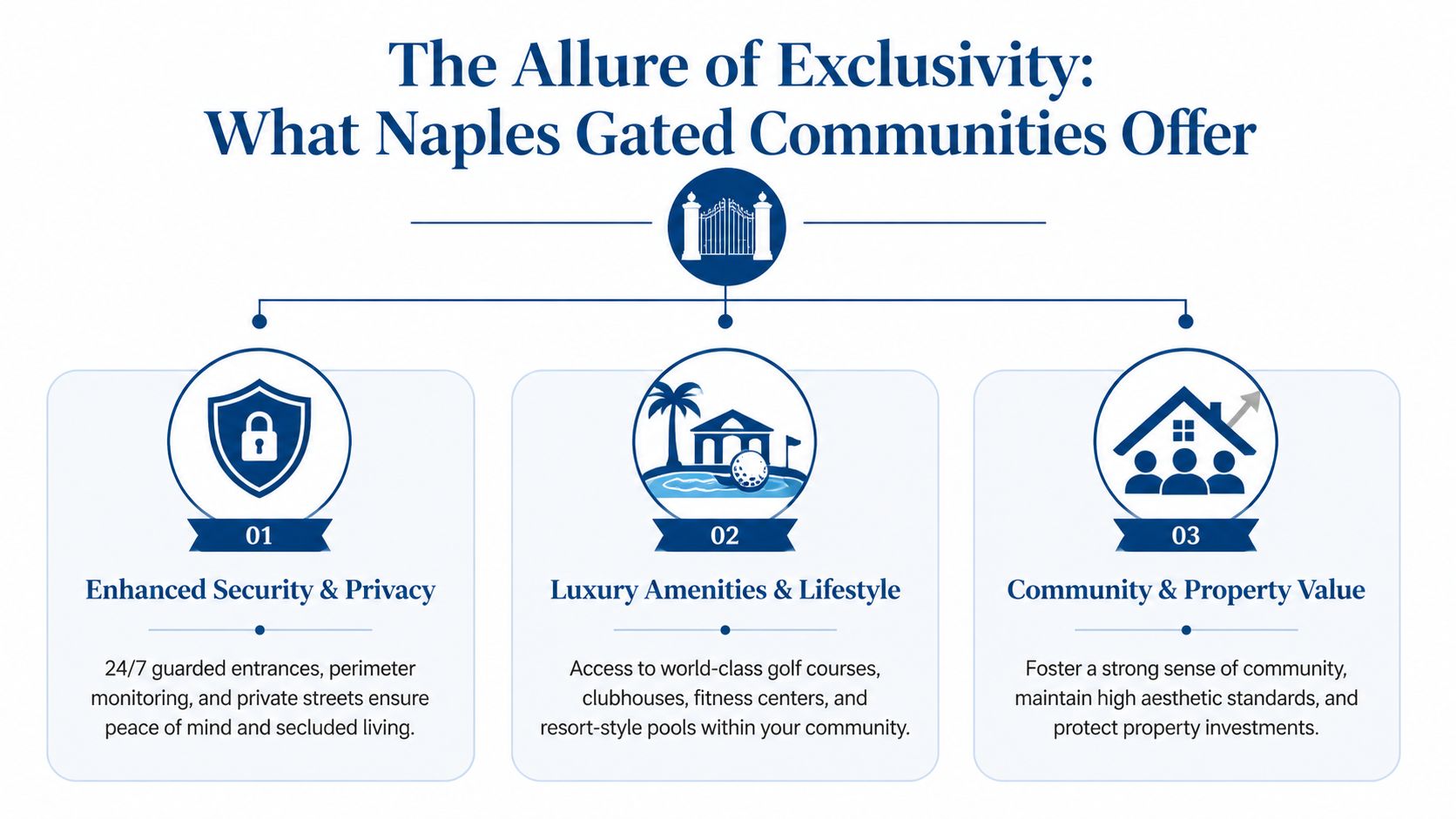
Security and privacy
The first draw is simple. Controlled access cuts down on random traffic and creates a calmer neighborhood rhythm. Residents know who belongs there. Guests are expected. Vendors are screened. That alone changes how the community feels when you drive in, walk the dog, or leave for a few weeks.
Privacy matters just as much as security. In a well-run community, homes feel tucked away. Streets stay quieter. Common areas stay maintained. That consistency is a huge part of why buyers gravitate to gated addresses in Naples.
Lifestyle without constant driving
The second pillar is the lifestyle package. In Naples, that often means golf, tennis, fitness centers, clubhouses, pools, dining, and social events. Some communities lean golf-first. Others lean beach access, walkability, or broader social programming.
If you’re planning to use a golf cart inside the neighborhood or nearby permitted routes, Solana EV's Florida golf cart guide is a practical read. It helps you understand where golf cart use makes sense and where assumptions can get you into trouble.
Living in the right gated community means your best parts of the day start closer to home.
A real sense of community
The third pillar is the least talked about and often the most valuable. Good communities create repeated, low-friction interaction. You see neighbors at the fitness center, on morning walks, at the tennis courts, at dinner, or heading to an event. That rhythm builds familiarity fast.
Here’s how these three pillars usually show up in daily life:
Focus | What it feels like |
|---|---|
Security | A predictable environment with controlled access and less through traffic |
Amenities | Recreation, wellness, and dining close enough to become part of your routine |
Community | Shared spaces and standards that encourage connection without forcing it |
Not every buyer wants the same version of exclusivity. Some want quiet streets and privacy. Others want a packed social calendar. The smart move is knowing which one you are before you buy.
A Tour of Notable Naples Gated Neighborhoods
Not all Naples communities serve the same lifestyle. That’s where people waste time. They tour neighborhoods that are beautiful, but wrong for how they want to live.
The better approach is to sort communities by vibe first. Then look at houses.
Golf centered living
If golf is part of your weekly routine, build around it instead of treating it like a bonus. Talis Park stands out for its championship golf club and custom estate options. It attracts buyers who want a polished, club-oriented lifestyle and a home that feels tied to that experience.
Then there are buyers who want prestige and a broad amenity environment with serious golf culture. Communities like Grey Oaks often fit that mindset, especially for people who care about a full private-club atmosphere, formal curb appeal, and homes that carry a stronger architectural presence.
A golf-first buyer usually wants:
Convenient play: Easy access to the course, practice, and clubhouse life
Architectural consistency: Homes that sit well within a more refined visual standard
A social calendar: Events, dining, and resident interaction built into club life
Active and social neighborhoods
Some buyers don’t want their community identity tied to golf. They want activity, variety, and an easy day-to-day setup. Pelican Marsh works well in that lane. Zillow describes it as one of the largest communities, with extensive amenities and proximity to North Naples shopping in its Naples gated listings overview.
That kind of location matters. A community can be beautifully designed, but if every errand feels inconvenient, you’ll notice fast. Pelican Marsh tends to appeal to residents who want strong internal amenities and practical access outside the gates.
Gulf access and coastal prestige
Then there’s the coastal buyer. This person wants the Naples feeling at full strength. Gulf proximity, beach privileges, mature landscaping, and a more established luxury setting usually lead them toward Pelican Bay and nearby legacy areas.
Pelican Bay offers unique gated Gulf privileges across multiple sub-communities. It feels broader and more layered than a typical single-entry neighborhood. Buyers who like options within one larger ecosystem often respond well to that.
If your top priority is coastal lifestyle, don’t let a cheaper inland option distract you. Buy for how you want to spend your time, not just what looks good on paper.
For a wider look at where these communities fit into the local map, this guide to the best Naples neighborhoods helps compare the larger lifestyle zones around the city.
One more point matters here. Naples’ luxury market remains strong, with a median luxury home price of $3.9 million and homes selling at 94% of list price in the Zillow market data linked above. That tells you buyers are still paying for quality, location, and community fit.
Understanding the Investment Costs and Market Trends
Let’s keep this practical. The cost conversation around a gated community in Naples Florida has two parts. First, the home itself. Second, the cost of belonging to the community.
On the purchase side, current gated inventory stretches from entry points around $379,999 up to $3,595,000 in new home communities, based on the Zillow Naples gated listings data already cited earlier. The broader market also spans from more accessible family-oriented options to ultra-luxury estates, so it’s a mistake to think every gated neighborhood sits in the same pricing band.
What the community fees actually buy
Most buyers complain about HOA fees before they understand them. That’s backwards. You need to know what the fee removes from your plate.
In many communities, HOA costs support things such as:
Entry operations: gate staffing, access control, and visitor management
Common area care: landscaping, lakes, lighting, and street presentation
Amenity upkeep: pools, fitness spaces, club areas, and shared facilities
Standards enforcement: architectural consistency and neighborhood appearance
If you want a plain-English overview of common HOA responsibilities, Access Management Group has a useful breakdown.
How to evaluate value instead of just cost
Don’t judge fees in isolation. Judge them against what the neighborhood protects. A lower-fee community with weak maintenance and loose standards can cost you more in frustration and weaker long-term appeal. A higher-fee community can make sense if the streetscape, amenities, and oversight match the lifestyle you’re paying for.
Use this filter before you buy:
Walk the common areas and look for deferred maintenance.
Review the rules for renovations, exterior changes, and contractor access.
Match the fee to your lifestyle. Don’t pay for a club structure you won’t use.
Think beyond year one. Good communities tend to hold their appeal because they don’t let standards drift.
Building Your Dream Inside the Gates
This is where glossy real estate articles usually stop being helpful. Buying in a gated community is one decision. Building a custom home or taking on a major renovation inside one is a different level of complexity.
You need the lot to work. You need the community to approve the design. You need the county permits to line up. You need deliveries, trades, and inspections to happen without creating a war with the gate staff, neighbors, or management team.
The ARB is not a formality
Most gated communities have an Architectural Review Board, often called the ARB. Treat it seriously. If you don’t, your timeline gets longer and your design team starts revising things they should’ve solved upfront.
The ARB usually cares about:
Roof form and massing
Exterior materials and colors
Window and door consistency
Grounds design
Driveway, lighting, and screening details
This is where experienced planning pays off. A beautiful design that ignores neighborhood standards is not a strong design for that lot. A smart design gets approved, fits the streetscape, and still feels personal.
Site logistics can make or break the job
Inside a gated community, construction doesn’t operate like a free-for-all. Crews may need approved access lists. Delivery trucks may have restricted hours. Noise rules may be tighter. Dumpster placement, parking, and staging often need coordination.
Here’s what owners should insist on before work starts:
Priority | Why it matters |
|---|---|
Access plan | Prevents gate delays for trades and deliveries |
Site protection | Helps protect roads, landscaping, and neighboring property |
Communication rhythm | Keeps management, neighbors, and vendors aligned |
Material scheduling | Reduces clutter and avoids avoidable disruptions |
A smooth project inside a gated community usually looks boring from the outside. That’s the point. Good planning keeps the drama off the street.
Coastal code is now part of the design language
Post-Ian building in Naples isn’t just about aesthetics. Resilience has become part of the baseline. According to post-Hurricane Ian Naples gated home guidance, Collier County ordinances now require many custom homes to exceed FEMA standards, often by elevating structures 2 to 4 feet above base flood elevation.
That has real design and budget consequences. For a 4,000 square foot estate, that foundation approach can add $150,000 to $250,000. It also carries long-term upside through 40% lower insurance premiums and 15% higher resale values in communities such as Mediterra or Talis Park, as described in the same source.
Those numbers should reset how you think about “extra” construction cost. In this market, resilient foundations aren’t a luxury add-on. They’re a practical decision.
My blunt advice on new builds and major remodels
If you’re going custom, do these four things early:
Choose the community before the design style is finalized. The neighborhood standards will shape the architecture.
Get lot-specific information fast. Grade, flood conditions, setbacks, and view lines should drive the plan.
Budget for approvals and resilience. If you ignore these, you’ll end up redesigning under pressure.
Build with logistics in mind. A stunning house is still a problem if the project can’t move efficiently inside the gates.
A major remodel needs the same discipline. People assume renovations are easier because the house already exists. Sometimes they’re harder. You’re working around existing structure, current code requirements, HOA limits, and often a tighter construction footprint.
If you want a house that feels effortless when it’s done, accept that the planning phase has to be disciplined.
How a Custom Builder Simplifies the Process
The right builder acts like a project quarterback. That means the homeowner doesn’t have to chase architects, engineers, permit reviewers, trades, gate staff, and community management one by one.
On gated community work, that role matters even more because the project has more layers than a typical neighborhood build. Someone has to coordinate design intent with ARB requirements, line up site access with community rules, and keep the work moving without turning the jobsite into a nuisance.
A capable custom builder should handle several things in one flow:
Preconstruction review: lot constraints, feasibility, and scope alignment
Approval coordination: ARB packages, revisions, and community submissions
Permit tracking: county review, engineering coordination, and scheduling
Field management: trade sequencing, delivery timing, and quality control
If you want to understand how that sequence should work from first meeting to final completion, this overview of the custom home building process is a solid place to start.
For owners comparing firms, ask direct questions. Who manages ARB comments? Who communicates with property management? Who updates the schedule when access rules change? Who catches conflicts between design documents and site conditions?
JVM Construction LLC handles custom homes, whole-home remodels, and high-end renovations in Naples, including gated neighborhoods, by coordinating design, permitting, subcontractors, and scheduling under one process. That’s the type of scope management you want from any builder you hire, whether you choose JVM or another qualified local team.
Is a Naples Gated Community Right for You
A gated community is the right choice if you want structure, privacy, visual consistency, and amenities that shape your daily routine. It’s not the right choice if you want total freedom to make exterior changes on your own timeline with minimal oversight.
That’s the trade. You accept standards in exchange for order, upkeep, and a stronger shared environment.
Use a simple decision test:
Choose gated living if security, amenity access, and neighborhood presentation matter to you every day.
Be cautious if HOA rules are going to irritate you.
Go custom or remodel confidently only if you’re ready to treat approvals, codes, and logistics as part of the project, not obstacles to complain about later.
If you’re still deciding whether Naples itself fits the life you want, this guide on relocating to Naples Florida can help you think through the move at a broader level.
The buyers who do best here are the ones who get clear fast. They know how they want to live. They pick the right community. Then they plan the house to fit the place, not the other way around.
If this vision of gated living fits what you want from Naples, take the next step with JVM Construction LLC. Schedule a conversation about your custom home or major renovation, talk through your target community, and get a practical plan for turning the move into a finished home that works for the way you live.