
A large-scale home remodel usually takes 4 to 6 months of construction, while an extensive gut rehab can take 9 to 12 months or longer. If you're planning a luxury remodel in Naples, that timeline can stretch further because permitting, hurricane code requirements, custom finishes, and condo or HOA work windows all shape the schedule.
That’s the part many homeowners feel right away. There’s excitement about reworking the house you love, but there’s also uncertainty about how long life will feel disrupted, when decisions need to be made, and whether the schedule you hear at the start will hold up. In the Naples market, those questions matter even more because luxury projects rarely move like generic online remodel guides suggest.
If you're searching how long does a home remodel take, the honest answer is that scope drives everything. A clean cosmetic update moves very differently than a full reconfiguration of a coastal residence in Old Naples or a high-end condo renovation with seasonal restrictions. The right timeline starts with the scope of work involved, not a hopeful number.
Remodel Timelines from Minor Updates to Major Overhauls
The biggest mistake homeowners make is asking for one remodel timeline as if every project follows the same path. It doesn’t. A light refresh, a focused condo update, and a whole-home transformation all involve different trades, different approvals, and different risk points.
For broad planning, whole-home remodels typically require 4 to 6 months of construction time, while extensive gut rehabs can extend to 9 to 12 months according to Productive Builders’ remodel timeline guide. In Naples, that range is influenced by hurricane-resistant features and condo or HOA restrictions that can limit interior work to the off-season from May 1 to October 31, especially in seasonal buildings.
Typical remodel timelines by project type
Project Type | Typical Construction Duration | Key Considerations |
|---|---|---|
Cosmetic interior refresh | Shorter end of the schedule | Paint, flooring, trim, and surface-level updates can move faster when layouts stay intact and materials are chosen early |
Bathroom remodel | Moderate schedule | Plumbing fixture lead times, tile decisions, and whether plumbing locations change will affect pace |
Kitchen remodel | Moderate to longer schedule | Cabinetry, appliance coordination, countertop delivery, and electrical changes often place kitchens on the critical path |
Condo renovation | Varies by building rules | Elevator reservations, delivery windows, noise rules, parking, and HOA approvals can slow even a straightforward design |
Whole-home remodel | 4 to 6 months | Best for substantial work that updates most rooms without becoming a full gut project |
Whole-home gut rehab | 9 to 12 months or longer | Structural changes, code upgrades, hidden damage, and custom finishes make these the most time-intensive remodels |
A table like this is helpful, but it still only tells part of the story. The shorter end of any range depends on one condition. The project must be well defined before construction starts.
What pushes a remodel toward the longer end
Three variables usually determine whether a project feels efficient or drawn out.
Scope of change: Keeping walls, plumbing runs, and core systems where they are usually saves time. Reworking layouts, opening structural walls, or updating older framing adds coordination and inspection points.
Level of finish: Stock materials move differently than custom millwork, imported stone, specialty lighting, or impact-rated assemblies.
Site conditions: Older coastal homes can hide water damage, outdated wiring, framing inconsistencies, or previous work that doesn’t meet today’s standards.
Practical rule: If your selections are still fluid when demolition starts, your schedule probably is too.
In Naples, windows and exterior openings can also affect timing more than homeowners expect. If your design includes replacement fenestration or larger openings to capture water views, it helps to understand the warning signs early. This guide on signs you need new windows is useful for spotting issues before they become part of a bigger structural or waterproofing conversation.
What works and what doesn’t
What works is a remodel with defined drawings, a settled finish direction, and realistic expectations about local approvals. What doesn’t work is assuming luxury work should move fast because the budget is strong. Premium projects often take longer because clients care about detail, and detail requires sequencing.
A family updating a primary residence may accept a phased approach. A condo owner in a seasonal building may have no choice but to build around access rules. Both can succeed, but neither benefits from a generic promise that “we’ll figure it out as we go.”
Deconstructing the Custom Build Process Phase by Phase
Most homeowners think about the remodel in terms of demolition and visible progress. The schedule starts much earlier than that. For a luxury home or condo renovation in Naples, the work is really divided into design and planning, permitting and procurement, then construction.
For luxury custom projects in Naples, Carlson Harris notes that pre-construction can take 4 to 12 months, followed by 3 to 6 months for rough-ins and 5 to 12 months for high-end finishes, pushing total timelines to 1.5 to 2.5+ years on complex projects. That doesn’t mean every remodel belongs in that full range, but it does show why high-end work requires patience before construction even begins.
Design and planning
This phase is where schedules are either protected or put at risk.
Architects, designers, engineers, and the builder work through layout changes, structural implications, finish direction, and feasibility. In a Naples residence, that can include coastal considerations, opening sizes, elevation-related concerns, and details tied to wind resistance or water exposure. If the project is in a condo, building rules become part of planning from day one, not after drawings are complete.
Homeowners sometimes worry this phase feels slow because the house doesn’t look different yet. In practice, this is the phase that keeps the field team from stalling later.
Best use of this phase: finalize room layouts, cabinetry concepts, plumbing fixture locations, appliance requirements, and finish standards.
Common mistake: approving only enough to start demolition, then trying to design the rest in real time.
Who needs to be decisive: homeowner, architect, interior designer, and builder together.
Permitting and procurement
Permitting is not clerical work. It’s part of the build strategy. Plans must align with local code, structural requirements, and the conditions of the existing property.
Procurement happens alongside this effort. Long-lead materials, specialty fixtures, custom doors, stone slabs, millwork, and impact-related products all need attention before the site is ready for them. If you wait until framing is complete to order key finish items, the schedule can lose momentum fast.
A smooth construction phase usually reflects disciplined pre-construction, not luck.
This is also when smart teams define owner decision deadlines. If the tile, plumbing trim, hardware, and lighting package aren’t selected early enough, trades can’t sequence cleanly. That’s why experienced builders often insist on locking in the big-ticket selections before the first wall comes down.
For homeowners unfamiliar with end-stage closeout, it also helps to understand what happens after most of the visible work is done. This overview of what is a punch list in construction gives a clear picture of the final correction and completion phase.
Construction
Construction gets the attention because it’s visible. It’s also only one piece of the total project timeline.
A typical sequence moves from demolition into structural work, then rough plumbing, electrical, HVAC, inspections, insulation, drywall, flooring, cabinetry, trim, painting, and fixture installation. In luxury homes, the finish stage often takes longer than homeowners expect because custom work demands tighter tolerances, more site coordination, and more owner review.
Here’s the part that matters most. A fast start doesn’t guarantee a fast finish. Remodels stay on track when the field team receives complete information at the moment they need it.
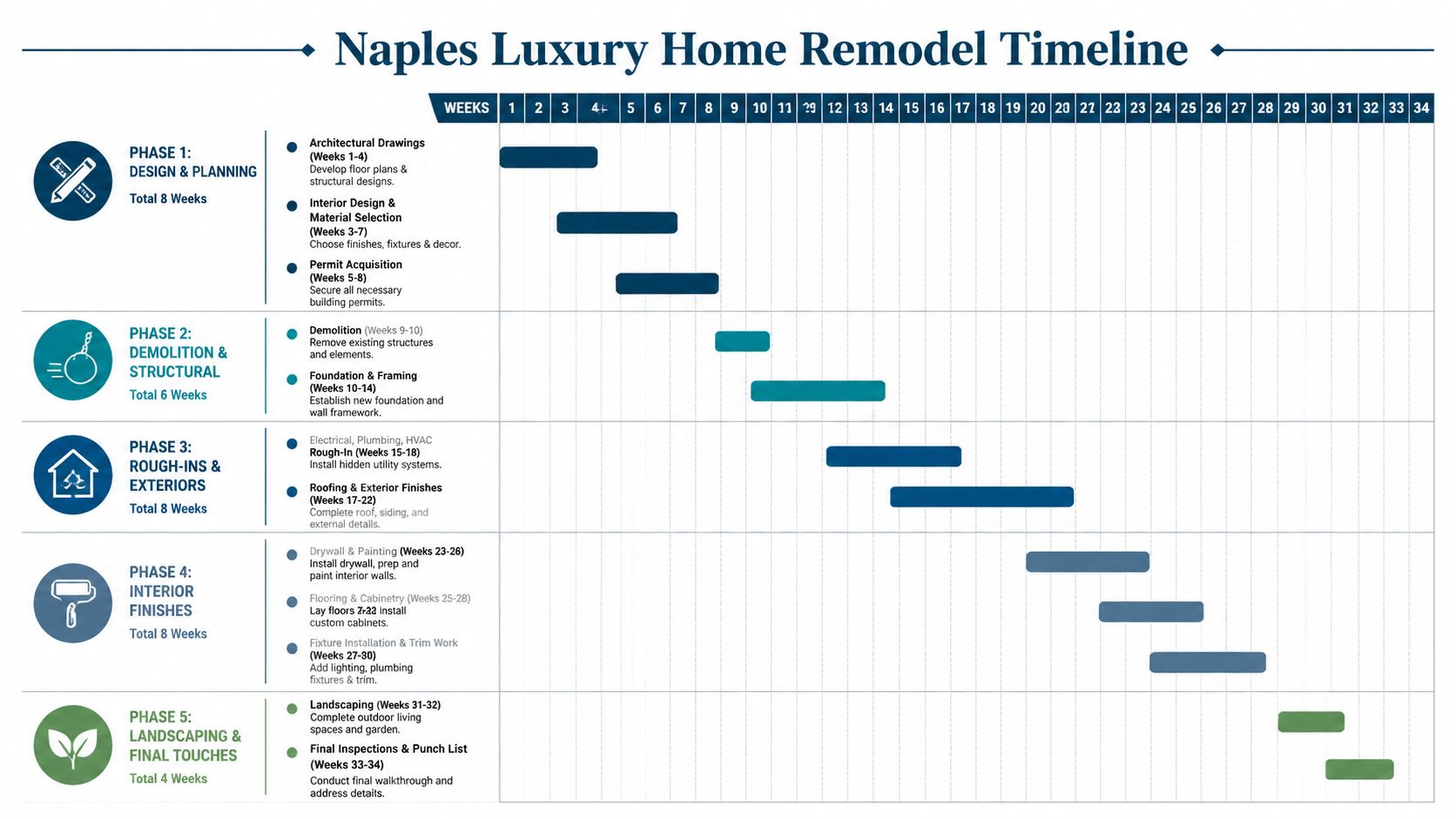
A Sample Remodel Timeline for a Naples Luxury Home
A sample schedule makes this easier to understand. Think of a luxury whole-home remodel in The Moorings or Old Naples where the homeowner wants a major interior transformation, upgraded systems, refined finishes, and some exterior envelope improvements. The house isn’t being rebuilt from the ground up, but it also isn’t a cosmetic update.
The timeline below shows how phases can overlap without becoming chaotic.
A realistic sequence on paper
In a well-planned project, architectural drawings begin first. Interior selections start before those plans are fully finished because the builder needs information early for pricing, coordination, and ordering. Permit acquisition overlaps the later portion of planning. That overlap is healthy when the team is aligned.
Once permits and approvals are in hand, demolition begins. This stage often feels dramatic, but it’s usually the shortest visible portion of the build. After that, framing and structural corrections determine the pace for every trade that follows.
Where Naples conditions shape the calendar
The importance of local experience becomes clear. A condo project may need building management approval, elevator scheduling, delivery windows, and work-hour limitations before subcontractors can even mobilize. A single-family residence may move more freely, but exterior changes can still involve added review if the neighborhood has architectural oversight.
There’s also the homeowner side of planning. During a major remodel, many families revisit temporary housing, furnishings, and insurance questions. If your property will be vacant or under active construction, it’s worth reviewing Florida homeowners insurance coverage so you understand how your policy may apply during the renovation period.
Some remodel delays don’t come from the jobsite. They come from decisions and approvals that should have happened before crews arrived.
Sample narrative of the critical path
Here’s how that hypothetical Naples luxury home often unfolds in real life:
Weeks devoted to planning and permits: floor plan revisions, structural input, finish selections, and approval coordination happen before the house is opened up.
Demolition and structural phase: walls come down, framing is corrected, and any hidden conditions discovered during demo are addressed before rough trades proceed.
Rough-ins and exterior work: electrical, plumbing, and HVAC teams install behind-the-wall systems while roofing, envelope work, or exterior finishes move in parallel where possible.
Interior finish stage: drywall, painting, flooring, cabinetry, trim, and fixture installation require the most patience because luxury standards become visible at this stage.
Closeout: final inspections, owner walkthroughs, corrections, and punch list completion wrap the project.
This kind of timeline looks clean in a chart, but real jobs depend on trade handoffs. Tile installers can’t start too early. Cabinet installers need floors and walls ready. Finish electricians need millwork and paint progression to be in the right place. The strongest schedules are built around those dependencies, not around wishful dates.
Common Causes of Remodel Delays and How to Navigate Them
Delays aren’t always a sign of poor management. Some are predictable risks built into high-end remodeling. The problem comes when no one identifies them early or explains them clearly.
According to JS Brown Company’s remodel timeline breakdown, 70% of timeline overruns are traced to indecision on finishes and material shortages. The same source notes that indecision on finishes can cause 4 to 8 week halts, and in Naples, Florida code requirements tied to hurricane-resistant upgrades can add 2 to 4 weeks for specialized engineering reviews.
Delay source one: finish indecision
Luxury clients want options. That’s understandable. But when cabinetry style, slab selection, plumbing trim, hardware finish, or lighting direction stays unsettled too long, trades lose their sequence.
This is especially true for custom millwork and specialty stone. A homeowner may feel they’re refining the design, while the field team sees install dates slipping because dimensions, backing, electrical placement, or shop drawings can’t be finalized.
Delay source two: material lead times
Not every beautiful product is available when your project needs it. Some items fit the design but not the schedule.
What works is balancing aesthetics with delivery certainty. If one appliance line, plumbing collection, or slab source introduces risk, the builder should say so early. Good teams don’t just ask what you want. They also explain what that choice does to the calendar.
Delay source three: hidden conditions
Older coastal homes can reveal problems only after demolition starts. Water intrusion, outdated wiring, framing modifications from earlier renovations, or code issues behind finished walls can all change the sequence.
Best response: pause, document the condition, price the correction, and revise the schedule clearly.
Worst response: patch over it to preserve the original date.
What homeowners should expect: transparency, photos, and a direct explanation of whether the issue affects structure, safety, or finish quality.
If a builder never mentions the possibility of hidden conditions in an older Naples property, the conversation probably isn’t candid enough.
Delay source four: code and review requirements
Naples remodels often involve impact-related upgrades, engineering input, and local approval steps that generic online timelines ignore. Those items aren’t “extras.” They’re part of building correctly in a coastal environment.
Inspection timing matters too. A project can have strong trade coordination and still lose momentum if a required approval isn’t cleared at the right moment. That’s why experienced teams protect the schedule by thinking several steps ahead rather than focusing only on the current week.
Proven Strategies to Keep Your Remodel on Schedule
Homeowners have more control over timing than they think. The schedule isn’t just something the contractor manages in the background. It’s shaped by decisions, communication, and discipline from everyone involved.
Lock your selections before demolition
The closer your design package is to complete before construction begins, the stronger your schedule will be. That applies to plumbing fixtures, flooring, appliances, tile, hardware, lighting, and cabinetry details.
If you’re expanding the footprint or reworking the structure, it can help to study how professionals plan the best extension. The project context is different, but the planning lesson is the same. Early technical clarity protects the build.
Keep one clear decision path
Projects drift when too many people give direction. A spouse, designer, family member, and friend may all have input, but the field team needs one approved answer.
A strong remodel usually has:
One primary client contact: someone who can approve selections and respond quickly.
One communication system: email chains, shared software, or scheduled update meetings, but not scattered messages across multiple channels.
One understanding of change orders: if a decision changes scope, everyone should know that schedule impact is part of that change.
Respect the schedule as a construction tool
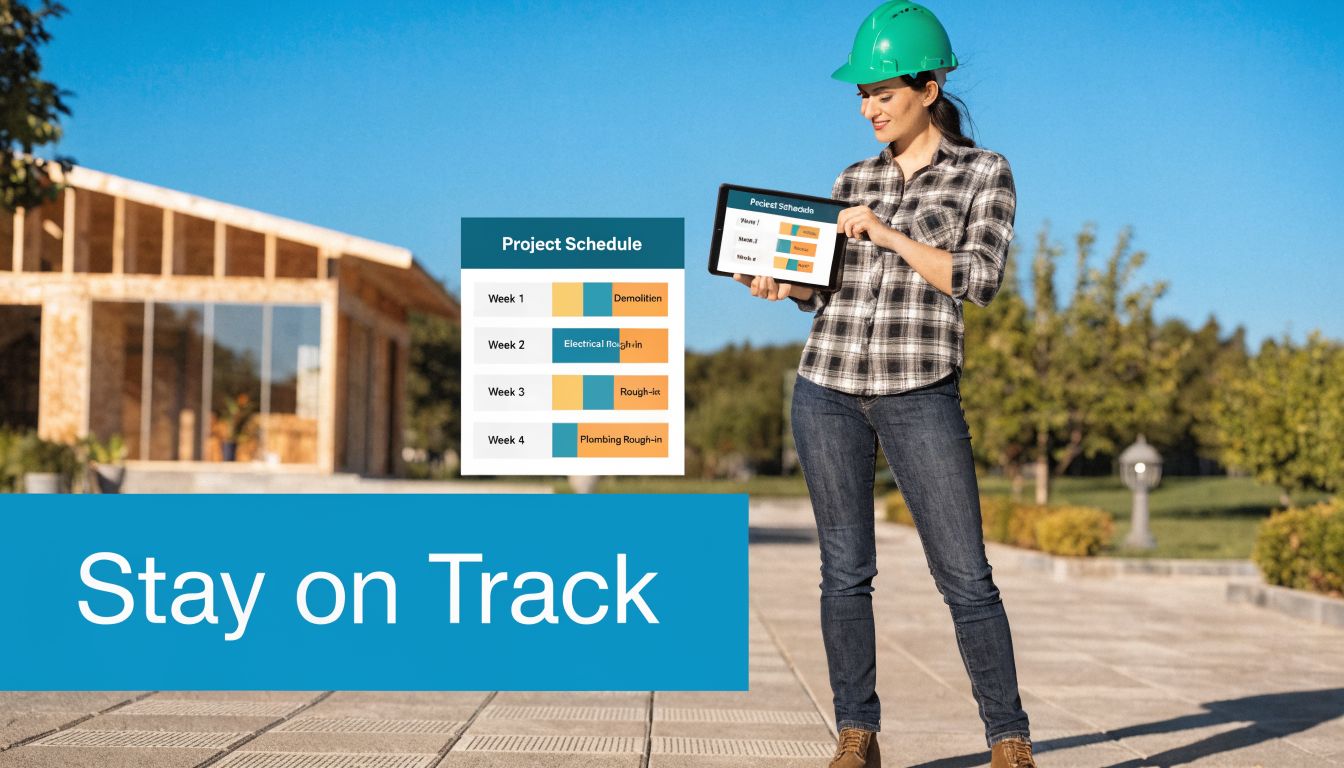
A schedule is not marketing language. It’s an operating document. Trades depend on it to reserve labor, stage materials, and plan site access.
That’s why homeowners should ask how the builder manages sequencing. Do they use scheduling software? Do they issue look-ahead schedules? Do they identify long-lead items early? This article on what is construction scheduling is a helpful primer if you want to understand what disciplined scheduling should look like before you hire a team.
Owner advice: The fastest way to lose time is to treat every in-process choice as reversible.
Hire for process, not just portfolio
Beautiful photos matter, but the process behind those photos matters more when you’re living through a remodel. Ask how the builder handles procurement, approvals, finish deadlines, and client communication. Ask who updates the schedule and how often.
Homeowners searching for custom home planning in Naples, FL, Naples custom home builder timelines, or luxury home renovation Naples often focus first on design taste. That matters. Still, schedule control usually comes from systems, not style.
How JVM Construction Delivers Your Vision on Time
A luxury remodel stays on schedule when the builder treats time as part of craftsmanship. That means planning thoroughly before work begins, coordinating trades with discipline, and keeping the client informed in a way that reduces uncertainty instead of adding to it.
In Naples, that approach matters because custom homes and high-end condo renovations rarely have forgiving conditions. Coastal requirements, access limitations, finish expectations, and design complexity all demand organization. A builder can’t react their way through a project of this caliber.
The process that supports timing
JVM Construction approaches custom homes and remodels with a client-first process that starts before the first permit submission. That includes thoughtful pre-construction coordination, realistic scheduling, and close communication with the homeowner, architect, and designer so decisions are made when they need to be made.
The benefit isn’t just a cleaner calendar. It’s a better experience. Homeowners can make informed choices without feeling rushed, while the field team can execute with fewer interruptions and fewer avoidable surprises.
Why relationship-driven building matters
High-end projects don’t succeed on technical skill alone. They also depend on trust. Clients need to know what’s happening, what’s changing, and what decisions are coming next.
That’s where relationship-driven construction stands apart. When the builder communicates clearly, protects the schedule, and explains trade-offs transparently, the project becomes more collaborative and far less stressful. The home still takes time to build well, but the experience feels organized rather than uncertain.
For homeowners considering a ground-up residence instead of a renovation, JVM also offers custom home building services in Naples with the same level of detail, transparency, and craftsmanship.
What discerning Naples homeowners should look for
If you’re comparing builders for a whole-home remodel or condo renovation, ask questions that go beyond finish quality.
How is pre-construction handled? A serious builder should have a clear process for design coordination, budgeting, procurement, and scheduling.
How are local conditions managed? Naples projects require attention to approvals, codes, seasonal patterns, and building-specific rules.
How will communication work? You should know who your point of contact is and how updates will be shared.
What happens when conditions change? The answer should include documentation, options, and schedule impact, not vague reassurance.
A good timeline isn’t just shorter. It’s more believable. It reflects the actual work, the actual constraints, and the standards you expect in a luxury home.
If you’re ready to discuss a high-end remodel, condo renovation, or custom home in Naples, JVM Construction LLC offers the kind of thoughtful planning, transparent communication, and refined execution that make complex projects feel manageable. Reach out to start a conversation about your vision, your priorities, and the timeline that makes sense for your home.