You are somewhere between inspiration and sticker shock right now.
You have saved images of airy great rooms, deep lanais, floor-to-ceiling glass, a proper primary suite, and maybe a dock behind the house. Then you type one simple question into Google: cost to build luxury home. What comes back is a mess. National averages. Builder calculators. Articles written for generic suburbs instead of coastal Southwest Florida.
That is where people get misled.
A luxury home in Naples is not priced like a luxury home in a typical inland market. The lot behaves differently. The codes are stricter. The engineering is tougher. The finishes are often imported or highly customized. Even the structure below the slab can shift the budget in ways most online estimates never capture.
Dreaming of Naples: A Discussion of Your Budget
The dream is easy to understand.
You want mornings with water views, open living space that feels calm, and a home built for the way you live now. Not a spec house with upgraded countertops. A custom home. Something that fits your family, your routine, and the Naples lifestyle.
Then the practical question hits. What will this cost?
Here is the straight answer. Generic online averages are not good enough for Naples. Regional pricing across Florida is flattened into broad Southeast numbers, and those ranges can hide the specific coastal premium tied to hurricane-resistant construction and flood-proofing. One Naples-focused estimate notes that Southeast averages of $300 to $600 per square foot can mask what happens locally, where a 5,000-square-foot custom luxury home in Naples might start at $400 to $700 per square foot, or about $2 million to $3.5 million, before adding another 15% to 25% for FEMA-compliant elevations and wind-rated engineering (diditangroup.com).
That gap matters.
A family who budgets from a national article may think they are being conservative. They are not. They are underestimating the cost of the very things that make a Naples home durable and insurable. Elevated foundations. Impact-rated assemblies. Corrosion-resistant materials. Site preparation on a premium lot. None of that is optional if you want to build well here.
Why buyers get caught off guard
Most first-time custom clients focus on visible luxuries first. They ask about wide-plank flooring, a scullery, home automation, a floating staircase, or a negative-edge pool.
Those matter, but they are not the first budget drivers.
The budget moves first because of the land, the structure, the code requirements, and the systems hidden behind the walls. In Naples, those early decisions shape everything that comes after.
Tip: If you want a reliable budget, start with the lot and the code environment, not the lighting package.
What a smart budget conversation looks like
A serious budget conversation in Naples should answer these questions early:
What lot conditions exist: Water table, soil conditions, access, clearing, and elevation needs all change real costs.
What level of resilience is required: Wind-rated engineering and flood-related design choices affect the shell before finishes ever enter the picture.
What finish level you want: “Luxury” is too broad to price until you define the standard.
How much flexibility you need: If you want room for custom millwork, integrated lighting, or imported stone, that needs to be built into the plan from the start.
If you get those answers early, the process becomes clearer. If you skip them, the budget will keep surprising you.
The Anatomy of a Luxury Home Budget
Clients come into this conversation expecting finishes to control the number. They picture the kitchen, the stone, the ceiling detail, the glass wall facing the water.
The budget is built in layers, and the expensive layers show up early.
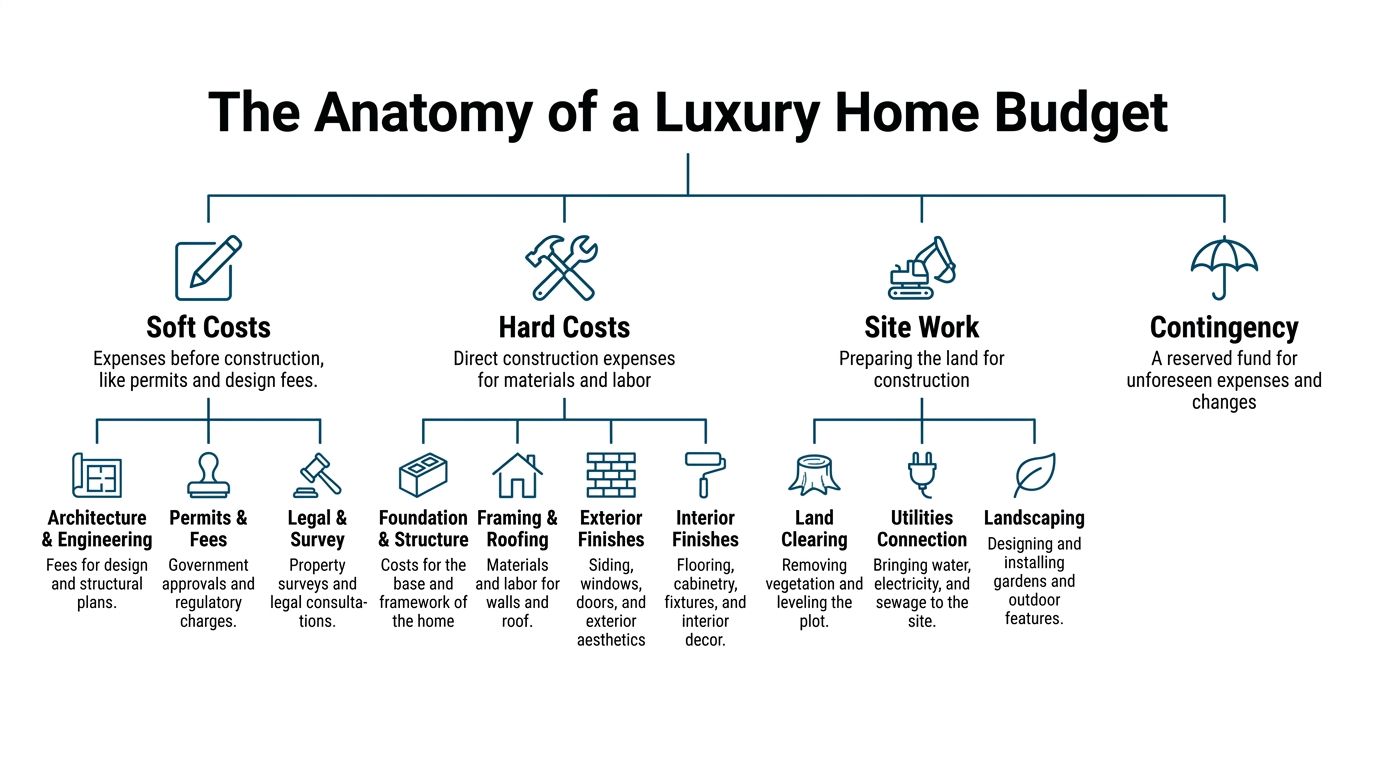
Soft costs come first
Before construction starts, you are paying for the decisions that make the house buildable. That includes architectural design, engineering, surveys, legal work, permitting, and pre-construction coordination.
First-time custom home clients underweight this category because they cannot walk through it. You cannot see a survey in the finished foyer. You do not photograph structural engineering for the listing. But these early documents and decisions control accuracy, schedule, and how many expensive revisions you face later.
A complete design package protects your budget because trades can price real information instead of assumptions. It also reduces change orders caused by coordination problems between framing, HVAC, lighting, cabinetry, glazing, and finish details.
If long-term operating cost matters to you, review understanding the costs of building an energy-efficient home. The market is different, but the budgeting lesson holds. Performance choices are cheaper to solve in design than after work is underway.
Hard costs carry the build
Hard costs are the physical house. Foundation. Structure. Framing. Roofing. Windows and doors. Mechanical, electrical, and plumbing systems. Insulation. Drywall. Millwork. Finishes.
Many budgets get misread at this point.
Clients assume the visible selections drive the project. In reality, structure and systems usually absorb a large share of the investment, especially in a custom Naples home with large spans, heavy glass, complex mechanical planning, and high expectations for quiet, comfort, and durability. Countertops matter. The shell and systems matter more because they determine how the house performs for years after move-in.
Use this practical order of importance when reviewing hard costs:
Foundation and structural base: The lot, engineering approach, and house design all start here.
Framing and roof structure: Ceiling heights, long spans, and architectural complexity push this category quickly.
Mechanical, electrical, and plumbing rough-ins: Integrated lighting, climate zoning, ventilation, automation, and water quality all increase coordination and cost.
Exterior assemblies: Roofing, glazing, waterproofing, cladding attachment, and envelope detailing protect the entire investment.
Interior finishes: These shape the look and feel, but they sit on top of decisions that had to be solved first.
Site work and associated costs finish the picture
Site work is not a side note. It is a budget category with real weight, especially on premium Naples lots where access, drainage, utilities, grading, paving, outdoor integration, and pool coordination all need to work together.
Associated costs sit just outside the main construction contract, but they still affect your total number. Home automation, security, audio, decorative lighting, window treatments, appliance upgrades, outdoor kitchens, and specialty features can move the final price fast if they are treated like afterthoughts.
If you want a broader explanation of how these pieces interact during planning, that guide is a useful next read.
A clean mental model for budgeting
Use this framework when reviewing any proposal:
Budget Layer | What it covers | Why it matters |
|---|---|---|
Soft costs | Design, engineering, permitting, surveys, legal | Defines the project before money gets spent on site |
Hard costs | Structure, systems, envelope, finishes | Builds the physical house |
Site work | Clearing, utilities, exterior prep | Makes the lot buildable and functional |
Associated costs | Technology, specialty features, owner selections | Personalizes the home |
Contingency | Unknowns and owner-driven changes | Protects quality and schedule |
If a proposal blurs any of these layers, press for detail. Clear categories create clear decisions. Vague categories create expensive surprises.
Naples-Specific Cost Drivers You Cannot Ignore
A Naples budget goes off track when the first draft treats this market like a generic luxury build.
That mistake shows up early. A buyer buys a strong lot, prices the house using a national square-foot shortcut, then discovers the actual number is being pushed by flood design, approvals, coastal materials, access limits, and finish procurement long before furniture and décor enter the conversation.
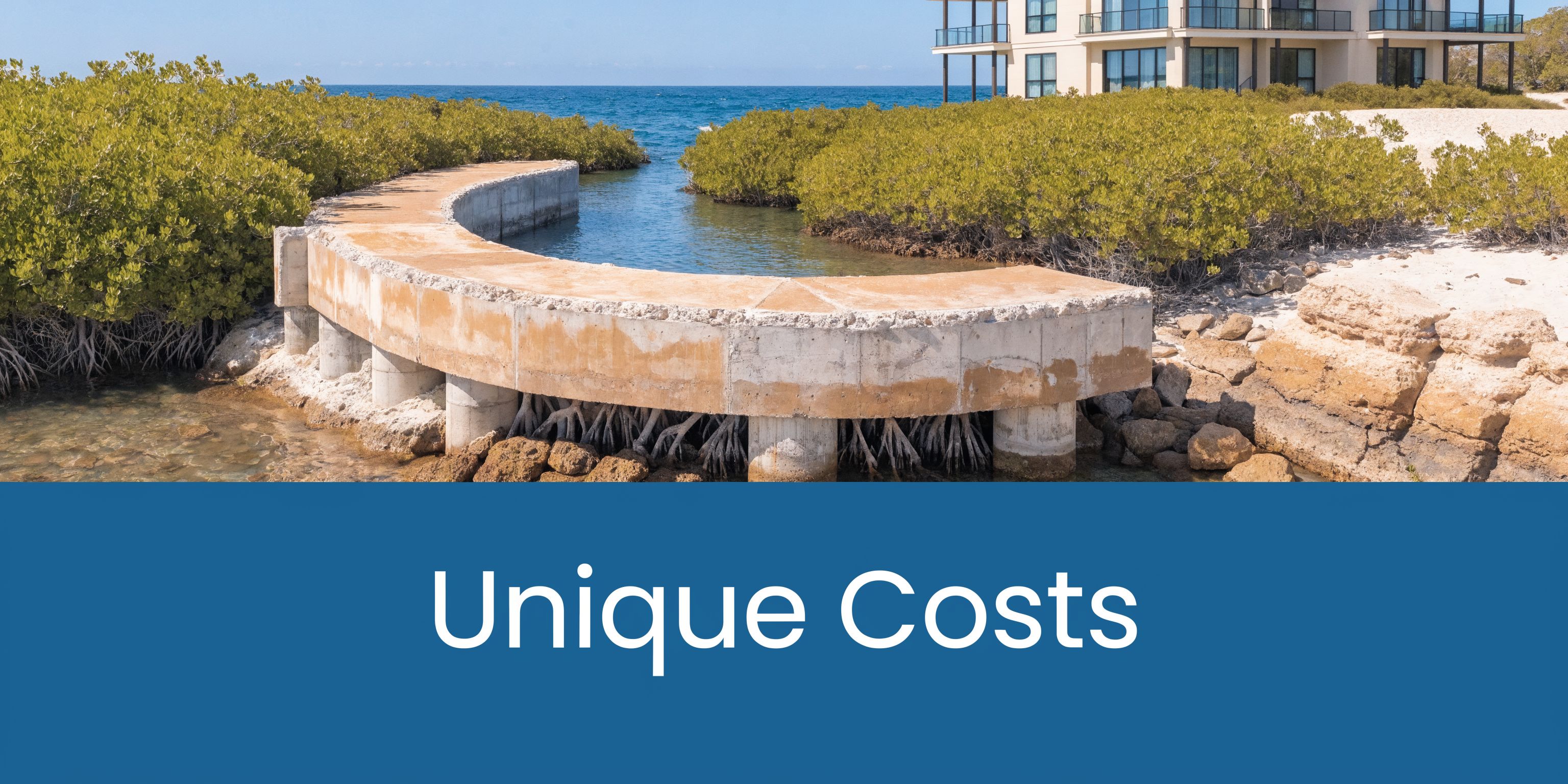
In Naples, the premium is tied to local conditions. You are paying for a house that can be permitted, built correctly near the coast, and finished to the standard expected in this market.
Coastal construction changes the budget at the engineering level
The coastal premium is not about prestige. It starts with performance.
Wind exposure, flood requirements, salt air, moisture, and corrosion affect structural design, exterior materials, window and door packages, mechanical choices, and long-term durability. Elevated foundations and impact-rated assemblies are part of responsible planning here. They are not cosmetic upgrades you can strip out later without consequences.
Cut corners in this category and the project gets more expensive, not less. You either pay for the right solution in design and construction, or you pay later in revisions, delays, maintenance, and replacement.
Fees and approvals belong in the first real budget
Local approvals hit earlier than many first-time Naples buyers expect.
Impact fees, permit costs, surveys, engineering coordination, and jurisdictional review do not feel exciting, but they are real dollars tied directly to getting the project approved and started. Online calculators miss these categories because they focus on the house as an object. In Naples, the approval path is part of the cost to build.
Prospective owners regularly ask whether these line items can be reduced or skipped. They cannot. The productive question is whether your builder and design team have carried them from the beginning instead of dropping them on you after design decisions are already made.
Lot conditions can change your budget before interior selections start
Two Naples lots with the same sale price can produce very different construction budgets.
A straightforward inland parcel may allow cleaner access, simpler preparation, and fewer structural complications. A waterfront lot may bring tighter staging, more clearing, more drainage work, a different elevation strategy, and more demanding foundation decisions. Those factors affect labor, equipment, sequencing, and risk before you choose tile, appliances, or cabinets.
Here, experienced pre-construction earns its fee. Good planning does not erase site costs. It exposes them early enough for you to make smart decisions while they are still affordable.
Luxury procurement is a budget driver, not a decorating issue
Buyers building in this tier want specific products and finish quality. Larger-format tile. Custom millwork. Better hardware. Premium appliances. Specialty stone. Large glass openings. Cleaner drywall and trim details.
Those choices affect more than allowance numbers. They affect lead times, freight, storage, installation requirements, field dimensions, and trade coordination. A delayed slider package or a late stone decision can squeeze the schedule fast. Once the schedule tightens, labor efficiency drops with it.
My recommendation is simple. Decide early where daily experience matters most. Kitchen function, primary bath quality, glass, flooring, cabinetry, lighting, outdoor living. Lock those categories early and protect them.
Skilled labor costs more because poor execution costs even more
High-end homes in Naples require trades who can hit tight tolerances, coordinate with architects and designers, and deliver consistent finish quality under inspection pressure and schedule pressure.
You are paying for judgment as much as labor hours. The tile setter who lays large-format material correctly, the framer who keeps the envelope true, and the superintendent who sequences complex work cleanly protect the budget in ways a low bid never will. Cheap labor often shows up later as rework, callbacks, damaged materials, and finish quality that never looks quite right.
Respect these five cost drivers from day one:
Coastal code requirements: They shape structure, envelope, and exterior packages from the start.
Lot-specific conditions: Access, drainage, elevation, and foundation strategy can shift the number quickly.
Local fees and approvals: These costs belong in early planning, not as late surprises.
Luxury material procurement: Product availability and lead times affect both budget and schedule.
Trade quality and supervision: Strong execution protects the finish standard you are paying for.
Once you account for those forces, Naples pricing stops feeling inflated and starts feeling explainable.
From Vision to Reality Two Naples Case Studies
Abstract numbers help. Lived scenarios help more.
Below are two fictional but realistic examples that show how different priorities shape the cost to build luxury home projects in Naples. They are not promises or fixed bids. They are planning models that reflect the kinds of tradeoffs buyers face.
Case study one The waterfront family home
A couple buys a canal-front lot and wants a new home that feels open, durable, and easy to live in every day. Their priorities are strong indoor-outdoor flow, a large kitchen, a practical prep space, a generous pool area, and finishes that feel warm rather than flashy.
The house is 4,500 square feet. The target build budget is about $2.25 million.
That puts the working range at roughly the middle of the Naples luxury conversation. Not entry-level custom. Not ultra-estate. A serious luxury home with clear priorities.
Here is a sample planning breakdown.
Cost Category | Estimated Percentage | Estimated Cost |
|---|---|---|
Soft costs and pre-construction | Qualitative planning allocation | Qualitative planning allowance |
Site work and lot preparation | Qualitative planning allocation | Qualitative planning allowance |
Foundation and structure | Qualitative planning allocation | Qualitative planning allowance |
Framing and roofing | Qualitative planning allocation | Qualitative planning allowance |
Mechanical electrical and plumbing | Qualitative planning allocation | Qualitative planning allowance |
Exterior envelope and openings | Qualitative planning allocation | Qualitative planning allowance |
Interior finishes and millwork | Qualitative planning allocation | Qualitative planning allowance |
Outdoor living and pool features | Qualitative planning allocation | Qualitative planning allowance |
Technology lighting and specialty items | Qualitative planning allocation | Qualitative planning allowance |
Contingency | Qualitative planning allocation | Qualitative planning allowance |
Why keep this table qualitative when the total is estimated? Because once you move away from the verified structural allocations covered earlier, the exact percentages depend heavily on design and selection choices. Pretending otherwise would be misleading.
In this example, the budget pressure points are easy to predict:
waterfront site preparation
structural requirements tied to the lot
expansive glass and exterior openings
pool and outdoor living integration
custom cabinetry and finish carpentry
This client keeps control by being disciplined. They choose fewer showpiece moments, but they execute them well. Instead of over-designing every room, they put money into the kitchen, the lanai, the primary suite, and the exterior shell. That is a smart luxury move.
Case study two The design-driven estate home
Now take a different client.
They want a larger residence in a premium Naples neighborhood with more formal entertaining space, a separate lounge, a dedicated office, extensive custom millwork, a high-end automation package, and a stronger architectural statement throughout. The design includes more ceiling detail, more built-in cabinetry, more custom stonework, and a more elaborate exterior composition.
This home is larger and more customized than the first one. The planning approach changes immediately.
The total budget climbs not just because of square footage, but because complexity compounds. More custom detailing means more coordination. More unique finishes mean more procurement risk. More integrated systems mean tighter sequencing with electricians, low-voltage specialists, HVAC teams, finish carpenters, and trim installers.
What separates these two budgets
The first home is luxury through restraint.
The second is luxury through customization.
That difference matters more than homeowners realize. Two homes can share a similar square-foot benchmark and still end up feeling far apart in total cost because one home asks the trades to repeat proven details while the other asks them to invent, adapt, and perfect highly custom ones.
Here is the advice I give buyers when they start comparing inspiration photos to their budget:
Decide where you want complexity Complexity is expensive. Use it where it has emotional payoff, not in every corner of the house.
Separate must-haves from ego items Clients rarely regret spending on layout, comfort, storage, and outdoor living. They regret spending heavily on features they hardly use.
Choose a finish philosophy A calm, cohesive material palette often looks more expensive than a house full of competing statement materials.
Protect the shell first If the budget gets stressed, do not strip quality out of structure, windows, waterproofing, or mechanical systems.
Practical rule: Spend first on what you cannot easily change later. Structure, layout, envelope, and core systems come before decorative layering.
A better way to use case studies
Most homeowners read examples like these looking for a perfect match to their own project.
You do not need a perfect match. You need a framework.
Ask yourself:
Is my project more like the waterfront family home, where value comes from strong fundamentals and selective splurges?
Or is it more like the design-driven estate, where customization is a core part of the goal?
That answer will tell you more than a generic national average ever will.
Navigating Your Build Timeline and Financial Buffers
You buy a lot in Naples, approve a beautiful plan, and assume the budget is now mostly a construction question.
It is also a time question.
First-time luxury clients separate schedule from cost. That is a mistake. Every extra week can trigger labor reshuffling, longer equipment rentals, material storage, price increases on unfinished selections, and more site supervision. On a coastal custom home, delays rarely stay isolated. They show up in the final number.
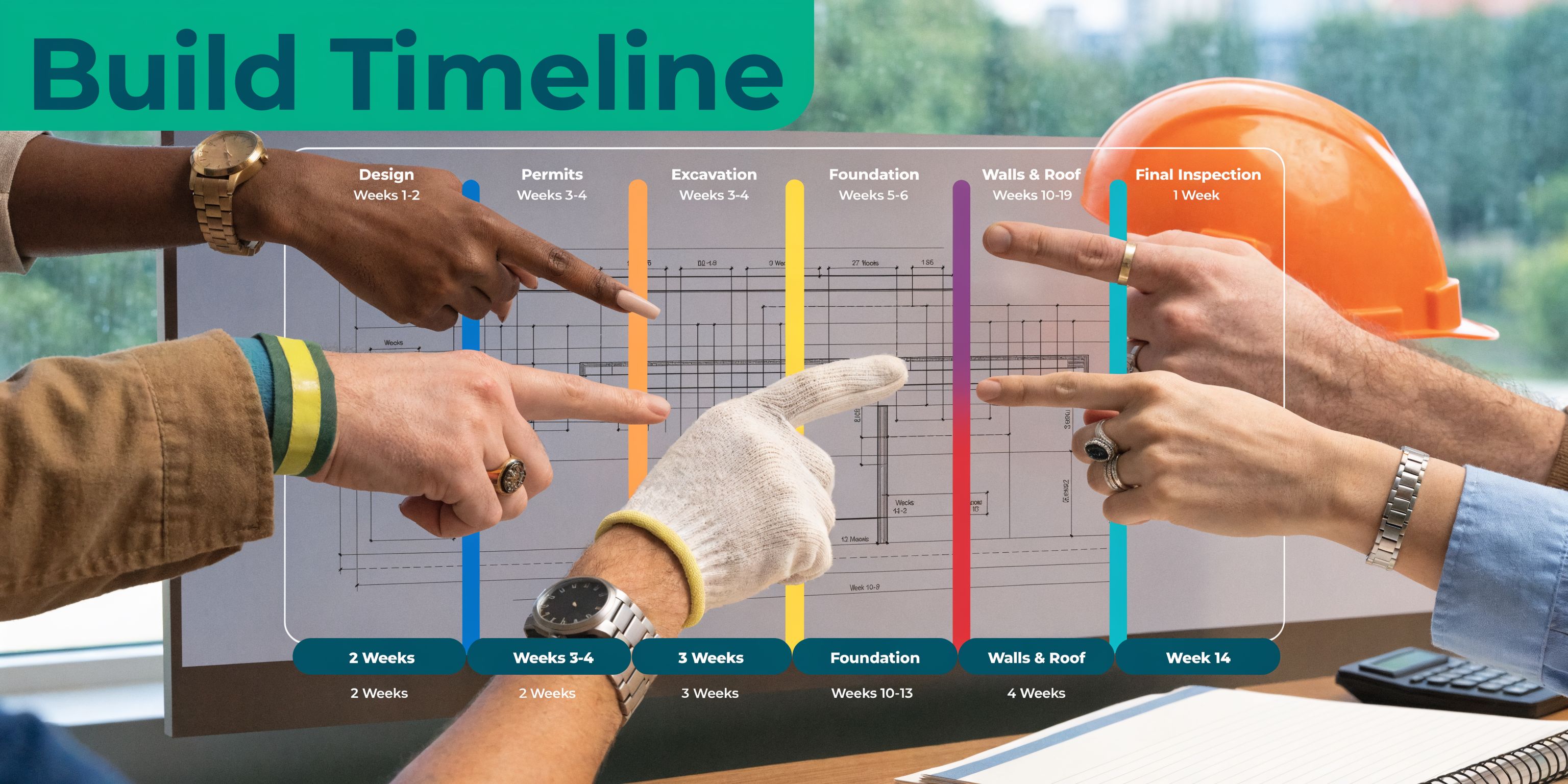
In Naples, the full process is longer than many buyers expect. Design, engineering, permitting, procurement, construction, inspections, and closeout all carry their own timing risks. Waterfront sites, flood-zone requirements, hurricane-rated assemblies, and long-lead imported finishes add more pressure than a generic national timeline suggests. If you want a clearer picture of the full sequence, review this guide on how long it takes to build a custom home.
The timeline you should budget for
A healthy luxury build runs in phases, not as one uninterrupted block on a calendar.
Pre-construction planning: design refinement, engineering, scope alignment, pricing updates, and early selections
Permitting and approvals: municipal review, revisions, and documentation
Site and structural work: clearing, grading, foundation, block or framing, and structural coordination
Envelope and systems: roofing, windows, waterproofing, mechanicals, electrical, and plumbing
Interior completion: drywall, millwork, cabinetry, tile, flooring, lighting, fixtures, and paint
Final detailing and closeout: punch work, inspections, startup, and occupancy readiness
That sequence looks clean on paper. In the field, it depends on hundreds of decisions landing at the right time. Custom steel, stone slabs, specialty lighting, window packages, elevator components, and built-in cabinetry can all affect the schedule. So can owner revisions after fabrication starts.
Why I tell clients to protect a real buffer
A contingency line belongs in the budget from day one.
Naples projects face real variables. Material pricing moves. Lead times shift. Coastal detailing can change after engineering review. Site conditions become clearer once work begins. Even disciplined clients make a few changes once they see rooms framed in real scale.
Keep that reserve protected. Do not treat it as a design shopping fund.
The buffer gets used in predictable places:
Material volatility: especially on premium finishes, imported products, and custom fabrications
Owner changes: revised selections, upgraded details, or added scope
Site conditions: drainage, fill, utility coordination, or subsurface surprises
Schedule protection: storage, resequencing, temporary protection, and remobilization
What keeps the job tighter
Clients who control costs well share the same habits.
They make decisions early. They approve submittals quickly. They avoid redesigning details after trades have priced, ordered, or fabricated them. They also understand that a delayed answer from the owner can cost just as much as a delayed shipment.
My recommendation is simple. Budget for time the same way you budget for finishes, structure, and systems. In Naples, a realistic schedule and a protected contingency are part of the total cost to build a luxury home, not side notes after the fact.
Your Builder The Most Important Financial Decision
A Naples luxury build does not stay on budget because the spreadsheet looked good in month one.
It stays on budget because the right builder manages details, communication, procurement, sequencing, and expectations from the first meeting through final punch.
That is the fundamental financial decision.
What a strong builder protects you from
The right builder does more than construct the house.
They protect you from vague allowances, incomplete pricing, late-stage coordination failures, and avoidable schedule drift. They ask hard questions early. They challenge drawings when details are unresolved. They make sure the pretty rendering can become a durable home on a coastal lot.
That kind of builder is not “more expensive.” That kind of builder is usually cheaper than a poorly managed project.
What to look for before you sign
You do not need polished sales language. You need evidence of process.
Look for these traits:
Transparent budgeting: Clear explanations matter more than low initial numbers.
Pre-construction discipline: The builder should push for decisions before field work starts.
Local fluency: Naples permitting, inspections, and coastal build conditions are not beginner topics.
Communication habits: You want updates, accountability, and direct answers.
Finish quality backed by structural seriousness: Beautiful trim means little if the shell and systems were handled casually.
A useful starting point is to review a practical checklist like https://jvmbuilds.com/blogs/what-to-ask-a-general-contractor before interviewing firms.
The cheapest bid is usually the most expensive lesson
Luxury homeowners assume every builder can produce roughly the same result if they are given the same plans.
That is not how custom construction works.
One team prices carefully, coordinates trades tightly, and flags conflicts before they become field problems. Another team leaves gray areas in the estimate, reacts late, and blames the drawings when costs rise. The home may look similar in a listing photo years later. The primary difference lies in the experience of getting there.
Bottom line: In Naples, the builder is not just a contractor. The builder is your budget manager, schedule manager, quality filter, and problem solver.
Choose accordingly.
Frequently Asked Questions About Building in Naples
Is it cheaper to remodel or build new in Naples
Sometimes. Not always by as much as homeowners expect.
A full luxury home remodel in Naples can run $200 to $600 per square foot, and a 3,000-square-foot project can land between $600,000 and $1.8 million. For historic Old Naples homes, costs can exceed $650 per square foot because of specialized labor and materials (patagoniadevelopment.com).
The primary issue is not just cost. It is fit.
If the existing structure, layout, elevation, or systems fight your goals, a remodel can become a very expensive compromise. If the house already has strong bones and the right footprint, remodeling can make sense. You need an honest feasibility review before assuming either path is the bargain.
What is the difference between hard costs and soft costs
Hard costs are the direct construction costs of the house itself.
That includes things like foundation work, framing, roofing, mechanical systems, windows, doors, drywall, cabinetry, flooring, and finish materials. Soft costs happen around the build rather than in the house. Think architecture, engineering, permits, surveys, legal work, and design coordination.
Homeowners usually focus on hard costs because they are easier to visualize. Soft costs are less visible but just as important because they shape how cleanly the project gets executed.
How do I control the cost to build luxury home projects without making the home feel cheap
Start with design discipline.
A house feels expensive when the layout works, the natural light is good, the proportions are right, and the materials feel consistent. It does not need a different statement finish in every room.
These strategies usually help:
Simplify where complexity adds little daily value: Save custom detailing for feature areas.
Lock the material palette early: Fewer late changes mean fewer expensive adjustments.
Spend on permanence: Structural integrity, windows, doors, and core systems should win over trendy add-ons.
Be realistic about custom work: Bespoke millwork and specialty fabrication look great, but they need to earn their place.
How long does permitting take in Collier County or Naples
It varies with the project, the jurisdiction, and how complete the documents are when submitted.
The biggest mistake is assuming permitting is a quick admin step. It is part of the construction strategy. A clean set of drawings and coordinated engineering work make the process smoother. Incomplete plans invite delays, revisions, and frustration.
The clients who handle permitting best are the ones who understand that speed comes from preparation, not optimism.
Should I budget for smart home features now or later
If you know you want them, plan for them now.
Even if you phase some finish-level technology later, the rough-in pathways, equipment spaces, electrical planning, and coordination should happen early. Retrofitting high-end systems after walls are closed is messy and expensive.
That applies to audio, lighting control, security, shading, and other integrated systems. The right time to think about them is before framing and rough-ins are complete, not after.
If you want a straight conversation about your lot, your priorities, and what your project may realistically require, talk with JVM Construction LLC. Their team builds and renovates luxury homes in Naples with the kind of transparency most clients wish they had from day one.