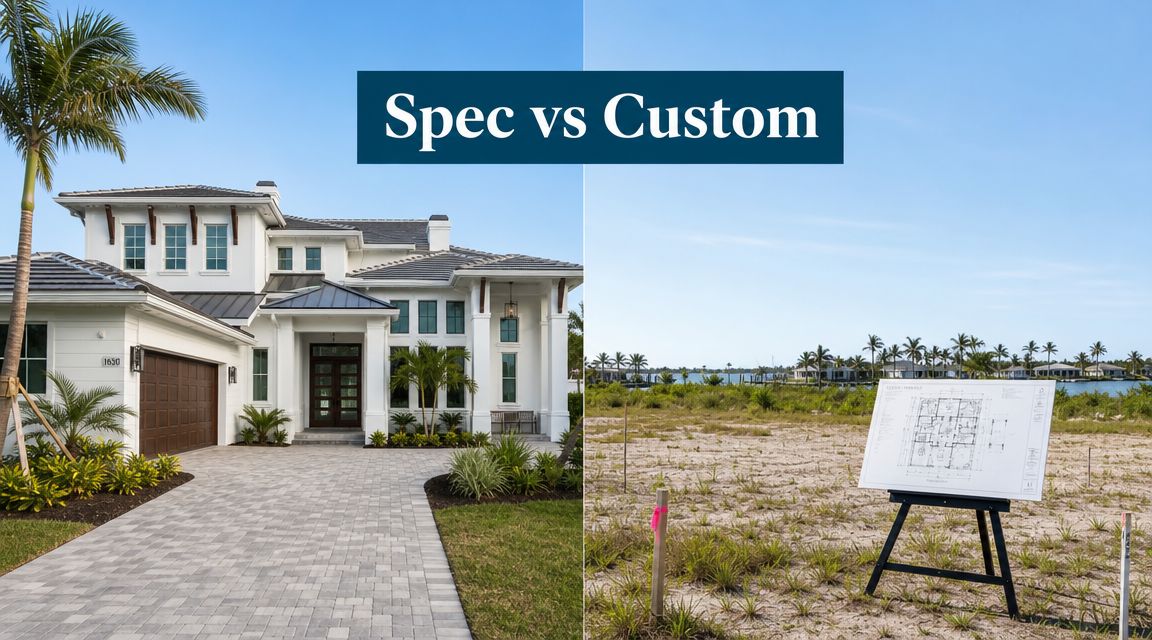
You may already have the Pinterest board, the saved photos, and a clear sense of how you want life in Naples to feel. Morning light across the pool. A kitchen that works when family is in town. A primary suite that feels calm, private, and easy to live in. On paper, that sounds simple.
Then questions start. Is the lot even suited for the home you want? How do flood requirements affect the first floor? When should engineering begin? Who is coordinating the architect, interior designer, permitting, and pricing? What looks elegant in a rendering can become expensive or impractical if the team doesn't resolve those questions early.
That's where custom home design services matter. Good design isn't just about style. It's the structured process of turning ideas into a buildable home that fits your property, your priorities, and the realities of construction in coastal Southwest Florida. It gives shape to the dream, but it also protects the project from avoidable mistakes.
That's not a small side industry, either. The global interior design market was estimated at $137.93 billion in 2024, and the new construction segment accounted for 75.92% of revenue in 2023, according to Grand View Research's interior design market report. In other words, design is a core part of new home construction, not a decorative add-on after the important decisions are made.
Introduction
In Naples, the gap between vision and execution can be wide if the process isn't managed carefully. Luxury homes here often involve waterfront conditions, strict review standards, demanding finish selections, and a level of craftsmanship that leaves very little room for vague instructions. The earlier those details are organized, the smoother the build tends to go.
Why homeowners feel overwhelmed
Most clients aren't worried about having ideas. They're worried about making the wrong decision too early, or finding out too late that a choice affects structure, budget, schedule, or permitting. That concern is reasonable.
A staircase location changes framing. Window sizes affect engineering and lead times. Cabinet layouts influence electrical, lighting, and HVAC coordination. If no one is connecting those dots, the project starts to drift.
Practical rule: The expensive mistakes in a custom home rarely begin with the final finish. They usually begin with an early assumption that nobody tested.
What a solid process does for you
A disciplined design process gives you three things right away:
Clarity on priorities: You separate must-haves from nice-to-haves before the drawings go too far.
Coordination between trades: Structure, systems, and interior choices start aligning before they collide in the field.
Better decisions under less pressure: You're choosing from organized options, not reacting to problems during construction.
That's the true value of custom home planning in Naples, FL. It brings order to a project that can otherwise feel fragmented.
What Custom Home Design Services Really Mean
A lot of homeowners hear the phrase and think it means floor plans, elevations, and finish selections. That's part of it, but not the whole picture. Custom home design services are really the combined planning work that turns your lifestyle, site conditions, architectural goals, and construction requirements into a complete home.
The core players and what each one does
The easiest way to think about the team is this. The architect shapes the home's form, layout, and overall design intent. The interior designer refines how the home lives from the inside, including circulation, materials, lighting intent, cabinetry concepts, and finish cohesion. The builder or design-build team pressure-tests the design against cost, constructability, sequencing, and local building realities.
When these roles work well together, the home feels intentional. When they work in silos, you get conflict. That usually shows up as redesign, substitutions, pricing surprises, or field fixes that nobody wanted.
The profession itself is established and technical, not informal styling advice. The U.S. Bureau of Labor Statistics says interior designers make indoor spaces functional, safe, and beautiful, and reports a median annual wage of $63,490 in May 2024 for the role in the United States, as shown in the BLS interior designers occupational overview. That matters because luxury custom homes rely on professional judgment across function, code awareness, and material coordination.
This is bigger than choosing finishes
A complete scope often includes:
Site response: How the home sits on the lot, where views and privacy come from, and how arrival feels.
Space programming: What rooms you need, how often they're used, and which spaces should connect.
Technical coordination: Structural thinking, mechanical planning, electrical intent, plumbing routing, and buildability.
Interior integration: Cabinetry, flooring transitions, millwork, appliance planning, lighting layers, and finish consistency.
A helpful way to preview layout ideas before formal drawings are complete is a consumer-facing visualization tool such as Longwood FL interior design, which shows the kind of consultation support many homeowners look for when they're trying to connect furniture scale, room flow, and finish direction. It's not a substitute for a project team, but it reflects how early design thinking shapes the whole home.
The strongest custom homes don't separate architecture from livability. They solve both at the same time.
What doesn't work
What usually fails is treating design as a sequence of disconnected approvals. One person draws. Another person prices. A third person discovers something won't fit. Then everyone backs up. That wastes time and strains trust.
In Naples, where homes often combine architectural ambition with coastal performance demands, fragmented planning tends to get exposed quickly.
The Journey from Vision to Blueprint
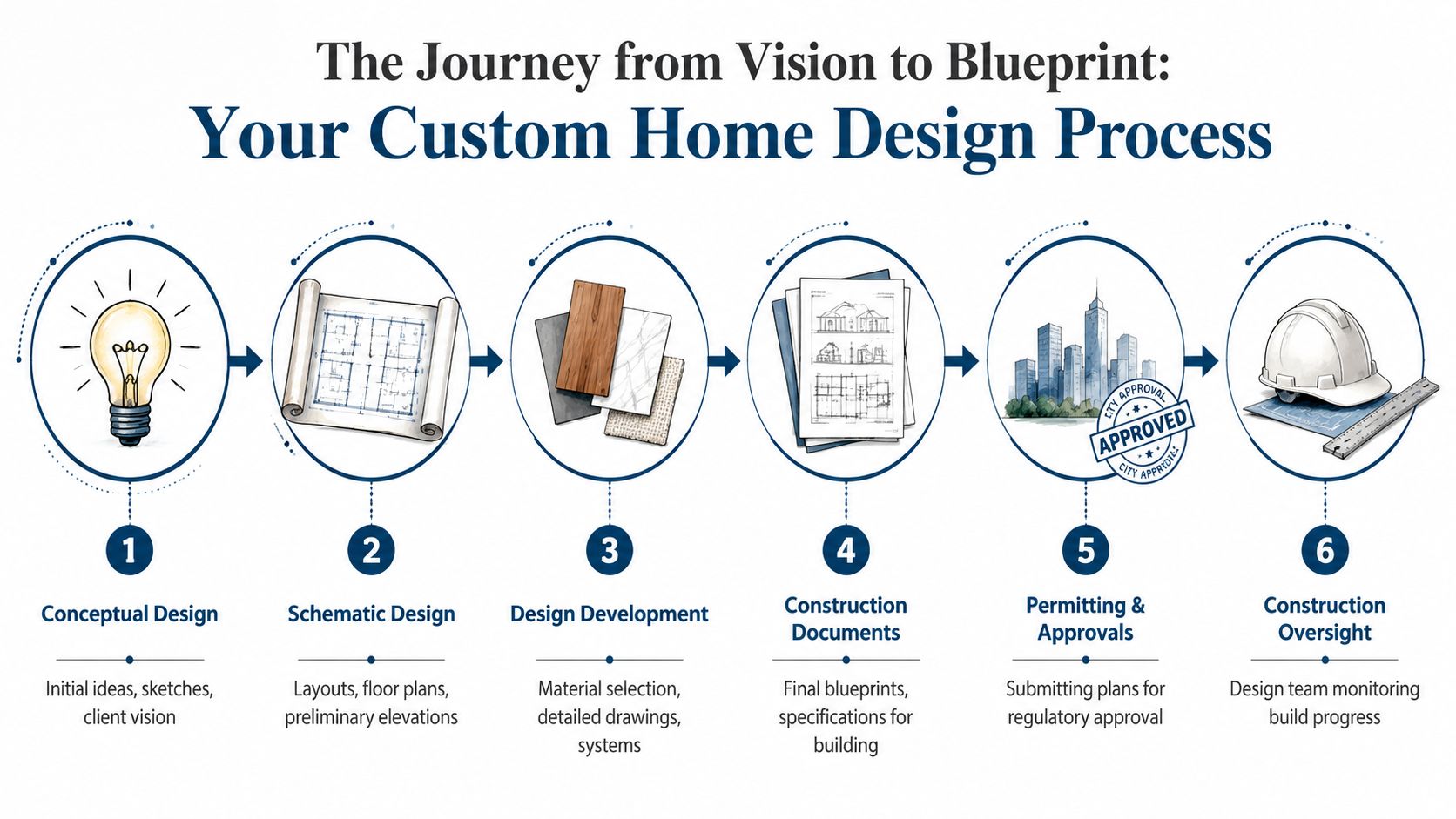
The cleanest custom home projects move through design in stages. Each phase answers a different set of questions, and each one should narrow uncertainty before the next begins. If you rush to permit drawings before the major decisions are settled, the plans may be complete on paper but unstable in practice.
Concept and feasibility
The team grounds the project by studying the lot, listening closely to how you want to live, and sorting priorities. For Naples homes, that often includes view orientation, privacy from neighboring properties, outdoor living, garage placement, entry sequence, and elevation strategy.
At this stage, rough sketches and test fits matter more than polished presentations. The point is to answer basic questions before momentum carries the project too far.
A few homeowners like using tools such as Room Sketch 3D floor planning to organize early ideas and compare general layout options before formal design meetings. That can be useful for communication, especially when you're trying to explain how you want rooms connected or separated.
Schematic design
Now the plan begins to take shape. Floor plans become more intentional. Exterior massing starts to read clearly. The team studies circulation, room sizes, and the relationship between architecture and the lot.
This is also where many hidden issues first become visible. A dramatic ceiling feature may affect roof structure. A broad span of glass may require different framing logic. A more open great room may shift mechanical planning.
If you want a broader look at how these phases connect during a build, this guide to the custom home building process gives a useful overview from planning through construction.
Design development
This is the phase where a home stops being a concept and starts becoming a coordinated system. Material selections move from general style to specific assemblies. Cabinet layouts, plumbing locations, appliance planning, lighting intent, staircase detailing, and finish transitions all start getting resolved.
This is also where disciplined teams spend time on specification work. Drawings alone don't tell the whole story. They need written detail around materials, quality expectations, and installation intent.
Construction documents
This is the permit and bidding set. The value here is precision. Professional custom home design services produce technical drawings detailed enough to support permitting and contractor pricing, including information tied to foundation requirements, load-bearing walls, roof structures, framing details, room dimensions, wall locations, and traffic flow, as described in this overview of what's included in custom home building plans.
That level of detail matters because vague plans create vague pricing. Vague pricing leads to conflict later.
A permit set should do more than get approved. It should tell the field what to build, and tell the client what is actually included.
Permitting and oversight
In Naples, permitting isn't just administrative. It affects schedule, sequencing, and sometimes design refinement. After permit submission, the design team and builder still need to stay engaged. Questions come up. Clarifications are needed. Product lead times may require timely substitutions or early releases.
The projects that hold together best are the ones where oversight continues after the drawings are issued.
The Advantage of a Unified Design-Build Partner
A common Naples scenario looks like this. A homeowner approves a beautiful set of plans, then pricing comes back higher than expected, a coastal code requirement changes a detail, and the team starts revising work that felt settled. The problem is rarely the design alone. The problem is how late construction reality entered the conversation.
Some owners still prefer the traditional path of hiring an architect first and bidding the plans afterward. That approach can work with the right team and a very clear set of documents. In high-end coastal construction, though, a unified design-build structure often creates better control because design decisions, pricing, permitting, engineering, and field execution stay tied together from the beginning.
Why the structure matters
Early builder involvement changes the quality of decisions. It lets the team review design intent against flood requirements, structural demands, procurement timing, and installation methods before a detail becomes expensive to revise.
That matters in Naples.
A flush interior-to-exterior transition, oversized openings, concealed drainage, specialty stone, or a large-format slab application can all be done well. Each one also carries technical consequences. Floor heights may need adjustment. Waterproofing assemblies may grow more complex. Lead times may affect when selections must be finalized. A unified team can address those issues while the design is still flexible, instead of after permits are underway or materials are on order.
Design-Build vs. Traditional Design-Bid-Build
Feature | Design-Build (Unified Team) | Design-Bid-Build (Separate Teams) |
|---|---|---|
Primary responsibility | One team manages design coordination and construction execution | Responsibility is split between designer and builder |
Budget input | Budget feedback can begin during design | Pricing often comes after plans are substantially complete |
Communication flow | Homeowner works through a more centralized process | Homeowner often relays questions between parties |
Constructability review | Buildability can be reviewed as drawings evolve | Conflicts may surface later during bidding or construction |
Change management | Design and field teams can resolve issues together | Changes can become more formal and slower to resolve |
Schedule coordination | Design, permitting, procurement, and construction can be sequenced together | Handoffs between teams can create lag |
Homeowners who want a clearer picture of this delivery method can review this explanation of how design-build construction works.
What to look for in a unified partner
The label matters less than the operating discipline behind it. In the Naples luxury market, the right partner should be able to coordinate architects, engineers, interior selections, permitting contacts, and high-skill subcontractors without losing control of the details.
Ask direct questions. Who reviews plans for constructability before pricing is issued? Who tracks long-lead materials against the permit schedule? Who is verifying that trim crews, tile installers, millwork fabricators, and mechanical trades can meet the finish level the home requires? A unified process only helps when the company running it has strong internal systems and strong trade relationships.
One Naples-based option is JVM Construction LLC, which coordinates design, permitting, scheduling, and subcontractor management within a single luxury residential process. Whether you choose that route or another qualified firm, the core standard is simple. One team should own alignment between design intent, budget, code requirements, and field execution from day one.
Budgeting Your Naples Dream Home A Realistic Guide
Luxury homeowners deserve plain talk on budget. Not vague reassurance. Not a preliminary number with half the project still undefined. The biggest issue in custom home design content is often budget realism, especially around how design choices, permitting, and site conditions affect the total job.
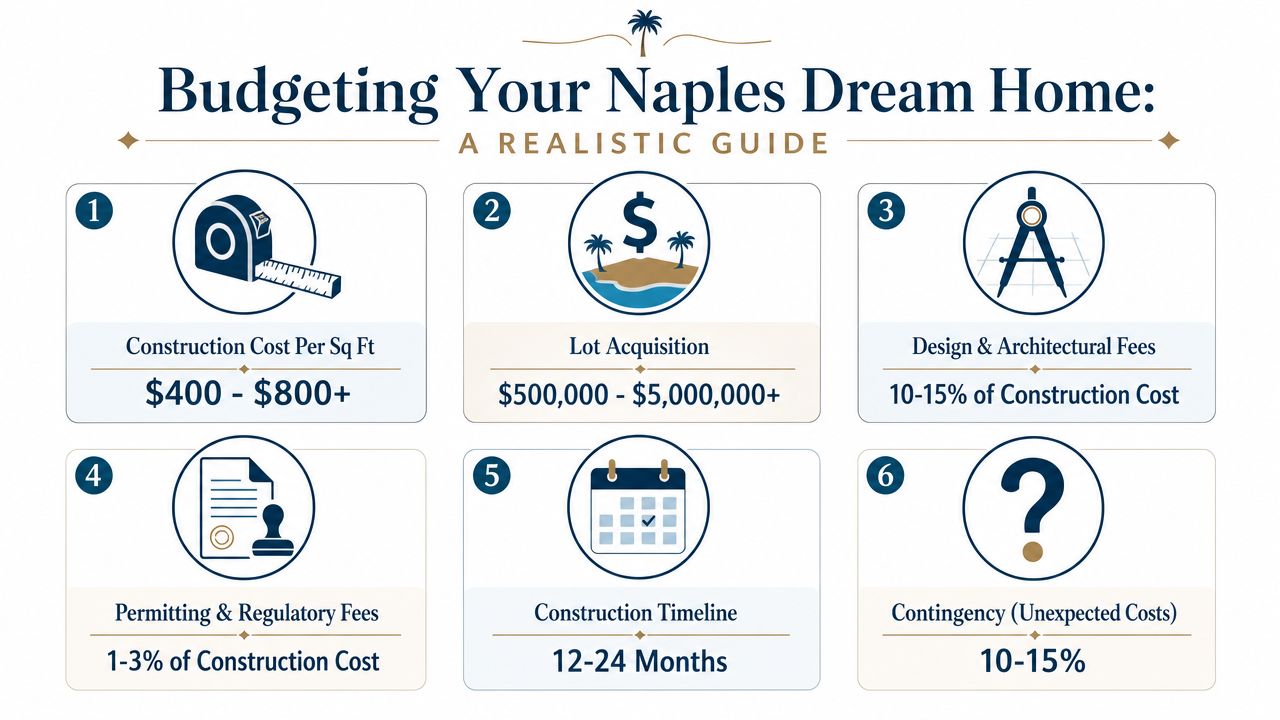
A neutral industry review points out that many discussions focus on the aesthetic side of design but miss how design decisions, permitting, and site constraints influence total project cost and schedule, often where the most expensive surprises begin, as noted in this article on custom home design services and budget clarity.
What actually drives the budget
A Naples custom home budget usually has several moving parts:
Design scope: Architectural planning, interior design, consultant coordination, and revisions all affect cost.
Permitting and approvals: Review cycles, supporting documents, and jurisdictional requirements can add time and expense.
Site conditions: Coastal exposure, drainage strategy, lot access, demolition, and elevation requirements can all change the build.
Selections and assemblies: Windows, doors, millwork, stone, roofing systems, and exterior details can shift pricing quickly.
Systems and performance: Mechanical choices, generator planning, smart home integration, and specialty lighting often expand scope.
The part many owners underestimate
Allowances and unresolved selections deserve close attention. A low allowance can make an early budget look comfortable, but it doesn't protect the final number if the level of finish you want is higher than assumed.
That's why realistic custom home planning in Naples, FL has to include open conversations about quality level, not just square footage and style direction. A waterfront contemporary with large-format stone, concealed detailing, and high-performance glazing is a different budget discussion than a more traditional residence with simpler assemblies.
If the specifications are thin, the budget is only pretending to be precise.
Schedule affects cost too
Time and cost are tied together. Specialty materials can take longer than expected. Review comments can require revisions. Storm season can affect sequencing. A late decision on windows, cabinetry, or custom steel can impact multiple trades down the line.
What works is front-loading the hard decisions. Resolve the layout, major assemblies, and finish direction early. Confirm what is fixed, what is still an allowance, and what could still move because of site or engineering findings.
A simple budgeting filter
When reviewing a proposal, ask three direct questions:
What is fully designed and included right now?
What is still an allowance or an open selection?
What site or permitting issues could change this number later?
Those answers usually tell you more than a polished presentation ever will.
How to Select the Right Naples Custom Home Builder
The right partner isn't just the one with attractive photos. You need a team that can manage complexity calmly, communicate clearly, and produce a finished home that matches both the drawings and the expectations set early on.
Questions that reveal how they actually work
A polished interview won't tell you much unless you ask process questions.
How do you manage specifications? High-spec custom projects often rely on detailed written specifications, sometimes over 40 pages long, to define finishes, installation procedures, and quality standards. That level of documentation helps control substitutions and reduce change orders, as described in this review of detailed custom home specifications.
Who handles communication during design and construction? You want to know whether updates come from a dedicated project manager, principal, estimator, or rotating office staff.
How early do you involve subcontractors and consultants? Strong builders bring the right trade insight in before conflicts reach the field.
What happens when a selection changes? Their answer should be organized, written, and transparent.
Look for local fluency
Naples isn't a generic building market. Coastal exposure, local review expectations, and the availability of quality trades all matter. A builder who knows the area can often identify issues earlier and schedule around local realities more effectively.
For homeowners comparing firms, this page on a Naples custom home builder is useful because it highlights what a local luxury construction process should include beyond drawings and finishes.
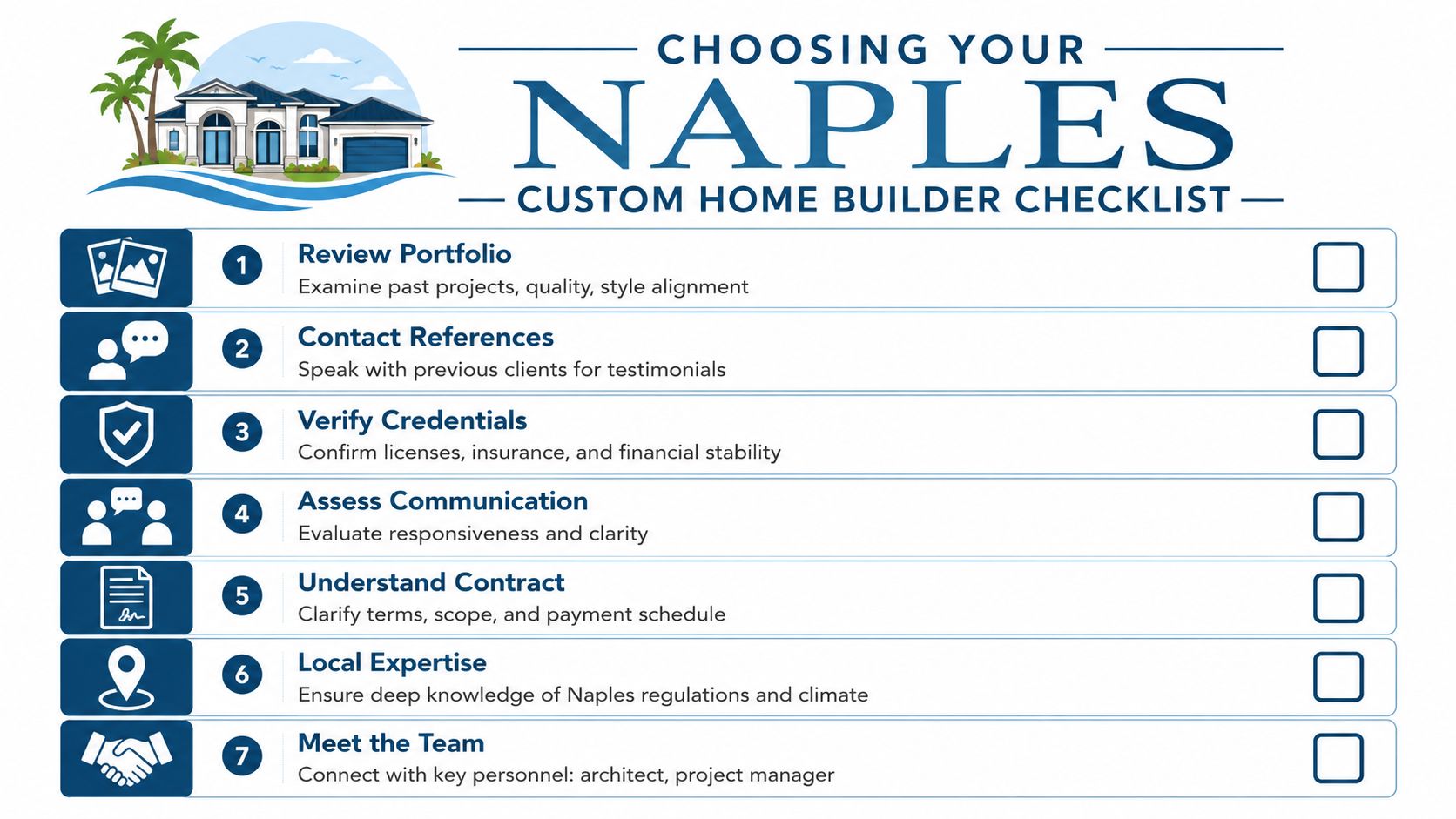
A short builder checklist
Use this filter during interviews:
Portfolio fit: Do their completed homes reflect the level of detail and architectural range you want?
Team chemistry: Can you see yourself solving stressful decisions with these people?
Documentation quality: Are proposals, specs, and change procedures clear?
Trade network: Do they have dependable local craftsmen for millwork, stone, finishes, and complex installations?
Site discipline: Ask how they maintain cleanliness, supervision, and neighbor awareness.
A custom home is a long relationship. If trust feels uncertain early, that usually doesn't improve once construction starts.
Your Custom Home Design Questions Answered
A few questions come up in nearly every first meeting. They're worth answering directly because they affect how comfortable the process feels from the outset.
What's the difference between an architect and a design-build firm
An architect focuses on design authorship and documentation. A design-build firm combines design coordination with construction responsibility under one structure. Some owners prefer to retain an outside architect and pair that firm with a builder. Others want one team managing the process from concept through completion.
Neither choice is automatically right. The better question is who will carry responsibility when pricing, detailing, and field conditions start interacting.
How involved do I need to be
You don't need to manage the project day to day, but you do need to make timely decisions. The best outcomes usually come from clients who are engaged at key milestones, clear about priorities, and willing to resolve selections before they become urgent.
If you travel often or split time between residences, the process can still work well. It just requires stronger meeting cadence, organized approvals, and disciplined documentation.
Can I bring my own interior designer
Yes, in many cases. That can work very well if roles are clear and the communication path is clean. Problems usually come from overlap or from late design changes that affect cabinetry, lighting, electrical, or framing after the field has already moved forward.
The fix is simple. Establish approval authority early and keep the builder, architect, and interior designer working from the same current information.
What should I do before the first serious meeting
Bring more than inspiration photos. Bring context. A rough list of how you live, what frustrates you in your current home, what you want privacy from, how often you entertain, and which rooms matter most will help the team design with purpose.
If you're relocating as part of the project, a practical moving checklist can also reduce stress on the personal side. This stress-free relocation guide is written for a different market, but the planning mindset is still useful when you're coordinating a new residence and a household move at the same time.
How do I know I'm ready to start
You're ready when you have three things. A property or a serious lot strategy, a realistic understanding that quality design takes coordination, and the willingness to make decisions with the right team in place. You do not need every finish selected on day one. You do need a process you trust.
A custom home in Naples should feel exciting, not opaque. With the right planning and the right people around the table, the path becomes much easier to follow.
If you're planning a luxury home in Naples and want a clear, disciplined path from concept to construction, contact JVM Construction LLC to start the conversation. A good first meeting should bring clarity to your site, your priorities, and the practical next steps needed to turn your vision into a buildable home.