You walk through a polished, move-in-ready Naples home and think, “We could be in by season.” Then you drive past a great lot in Old Naples or The Moorings and think, “If we're doing this, should we build exactly what we want?”
That's the essence of the spec home vs custom home decision. One path gives you speed, clarity, and a finished product you can touch today. The other gives you control, site-specific design, and a home shaped around how your family lives.
In Naples, this choice carries more weight than it does in a lot of other places. You're not just picking countertops and ceiling details. You're deciding how much your home should respond to coastal weather, humidity, long-term maintenance, insurance realities, entertaining patterns, aging in place, and future resale in a luxury market.
If you're in the middle of a relocation, the lifestyle piece matters just as much as the construction piece. A lot of families sorting through this are also sorting through schools, neighborhoods, clubs, commute patterns, and whether Naples is a full-time move or a long-horizon second-home decision. If that sounds familiar, this look at relocating to Naples, Florida helps frame the bigger picture before you lock in a home strategy.
The Naples Dream Home Dilemma
A couple flies in for a long weekend. They tour a beautiful finished home in a community near the water. The landscaping is done. The pool is done. The lighting is on. They can picture Thanksgiving there in ten minutes.
Then their agent shows them a lot.
Now the conversation changes. Instead of “Do we like this house?” it becomes “What would we build if we started fresh?” That's where most luxury buyers get stuck, and for good reason.
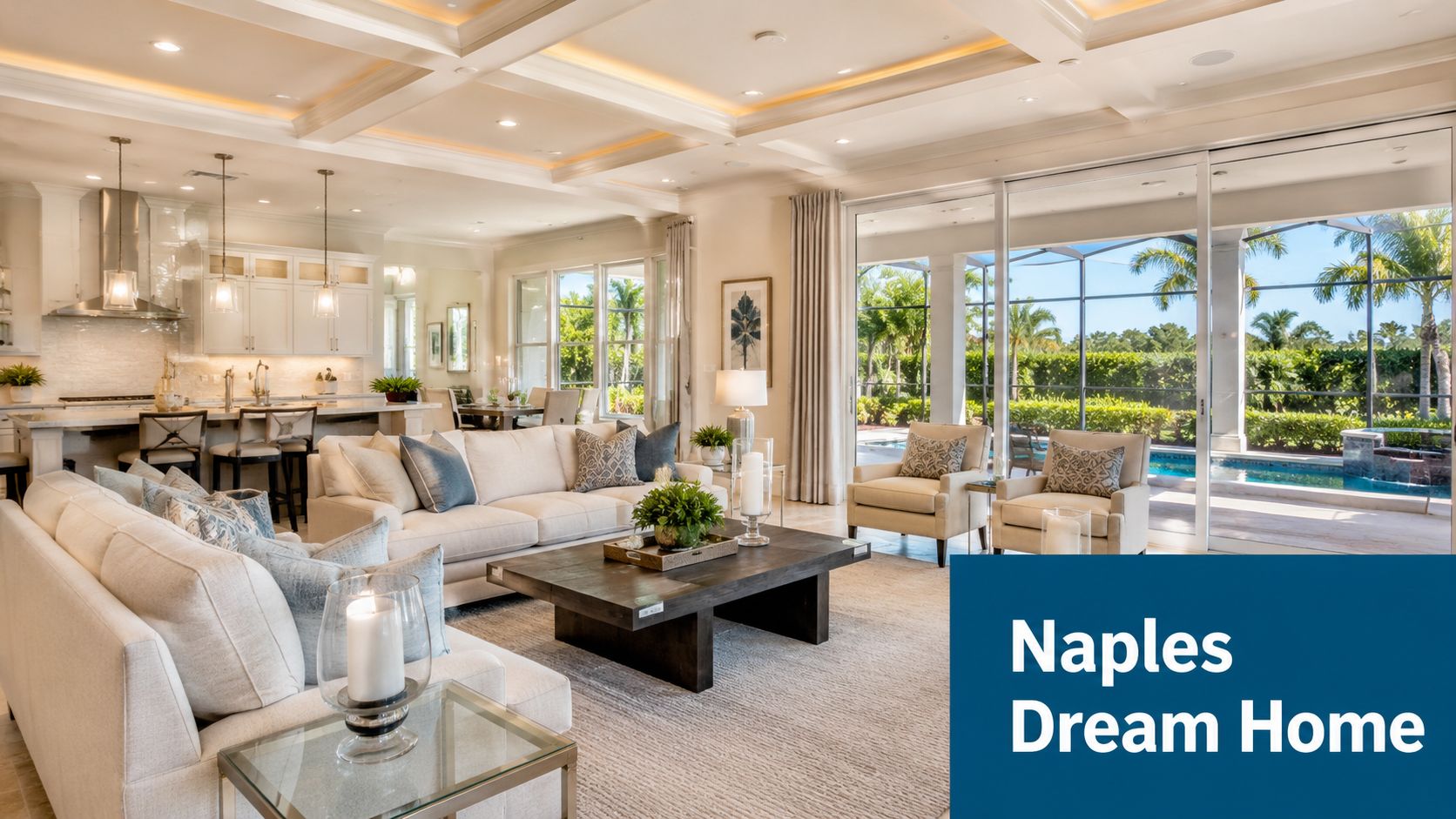
A spec home offers relief from decision fatigue. You can see the finished product, judge the layout with your own eyes, and avoid a long design process. A custom home asks for more patience, but it gives you the chance to shape the house around your lot, your routines, your privacy needs, and your standards.
Why this feels harder in Naples
Naples buyers usually aren't choosing between a good option and a bad one. They're choosing between two good options with very different trade-offs.
A move-in-ready luxury home may already have the right address, a strong floor plan, and tasteful finishes. But maybe the garage setup isn't ideal, the outdoor living area doesn't fit the way you entertain, or the mechanical systems weren't designed around the way you plan to own the home.
A custom build solves those issues. It can also introduce a longer process, more decisions, and more variables.
Buy a spec home when speed is your priority. Build custom when fit matters more than convenience.
That's the short version. The longer version matters if you care about getting this right the first time.
Defining the Two Paths to Your New Home
Start with the plain-English definition.
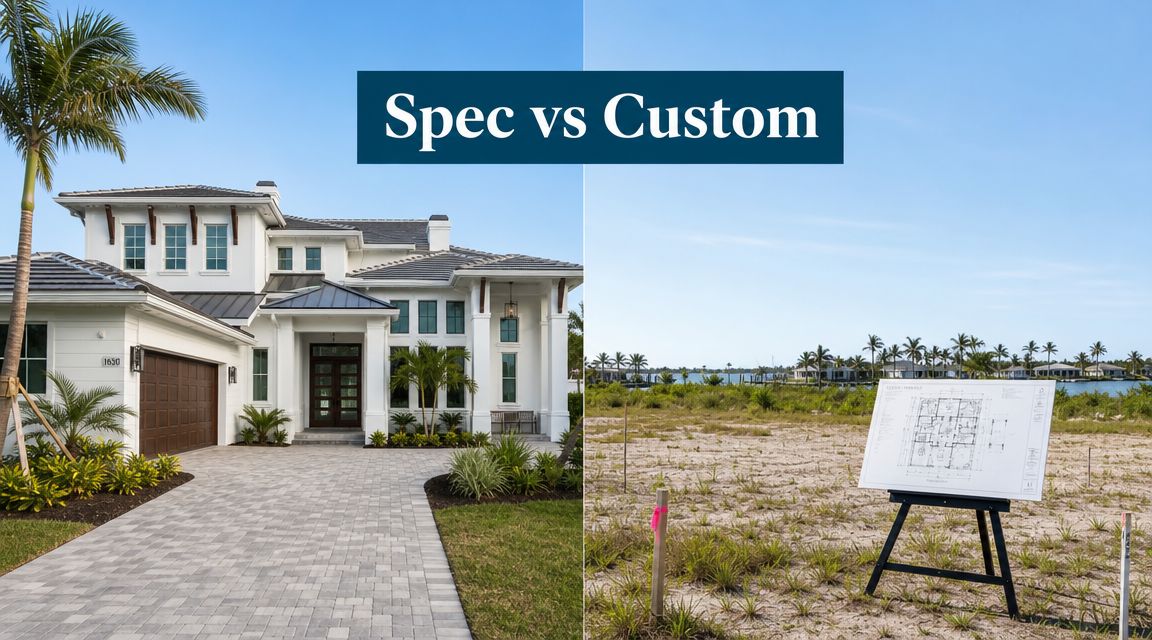
A spec home is built without a specific buyer in mind. A custom home is designed for one buyer. That sounds simple, but the difference affects almost every part of the experience, from timing to budget to how much control you have.
According to Dream Finders Homes' summary of Realtor.com guidance, spec homes are typically less expensive per square foot because builders standardize layouts and finishes, and a move-in-ready property can close in 30 to 90 days. By contrast, fully custom builds often take 12 to 24 months depending on complexity, permits, and supply-chain delays.
What a spec home really means
A spec home is not a cheap shortcut. In the luxury market, a well-done spec home can be beautifully executed. The key is that the builder made most of the major decisions before you arrived.
That usually means:
The floor plan is already set. Room relationships, ceiling treatments, window placements, and traffic flow are largely fixed.
The finish palette is already chosen. You may get a few limited selections if the home is early enough, but not full design freedom.
The systems package is selected by the builder. Smart-home features, lighting controls, audio prewire, and security can vary widely. If you're comparing homes, a practical reference point is this DR Horton smart home package guide, which shows how builder-grade technology packages are often structured and where buyers should look beyond the brochure.
For a closer look at how this category works in practice, this overview of builder spec homes is worth reading before you assume all move-in-ready homes are the same.
What a custom home really means
A custom home starts with your priorities, not the builder's inventory plan.
You choose the lot or work with one you already own. You shape the layout around your life. You decide what matters most, whether that's a first-floor primary suite, a detached guest casita, a serious home office, a humidity-conscious wine room, or a garage designed around multiple vehicles and storage.
Practical rule: If your wish list includes several non-negotiables that affect structure, layout, or mechanical planning, you're already leaning custom.
That doesn't automatically make custom the right decision. It just means you shouldn't pretend a spec home will deliver the same level of fit.
A Side-by-Side Comparison for Naples Homebuyers
Here's the cleanest way to look at the spec home vs custom home question. Judge it by design freedom, move-in timing, budgeting, and lot control.
Factor | Spec Home | Custom Home |
|---|---|---|
Design flexibility | Builder-selected layout and finishes, with limited changes if construction is already advanced | Designed around one buyer, with far more control over plan, materials, and systems |
Timeline to move-in | Faster path if the home is complete or near complete | Longer path because design, approvals, and construction all happen in sequence |
Cost structure | More predictable purchase process | More variables as design decisions and scope evolve |
Lot and location | Builder typically chooses the homesite | Buyer can select a lot based on privacy, views, elevation, street, or community fit |
Decision load | Lower. Fewer choices and less coordination required from the buyer | Higher. More meetings, more selections, more front-end planning |
Performance tailoring | Often built for broad market appeal | Can be engineered around site conditions, ownership goals, and lifestyle needs |
Design flexibility and personalization
This one isn't close. Custom wins.
If you want to change room proportions, widen hallways, rework the outdoor living zone, add a dedicated study, improve storage, or orient the house around a specific view corridor, custom gives you that control. In Naples, this matters more than buyers think. A lot may have a sunset exposure worth framing, a privacy issue worth solving, or a flood-related design consideration that changes how the home should sit.
Spec works well when you like the plan already and don't need to reinvent it.
If you walk into a spec home and your reaction is, “I'd only change a few cosmetic things,” that's a green light. If your reaction is, “We'd move the kitchen, combine two rooms, and redesign the outdoor area,” you're looking at the wrong path.
Timeline to move-in
Spec is the choice for families who want to be in Naples soon and don't want a long build cycle hanging over them.
Custom is for buyers who can tolerate a slower process in exchange for a better fit. That patience has to be real, not theoretical. A lot of people say they're fine waiting until they realize how many months of planning, approvals, selections, and site work that means in daily life.
Cost and budgeting
Custom homes usually cost more for a reason. You're paying for design effort, coordination, and one-off decisions.
Per Angi's comparison of spec homes and custom homes, pre-designed spec-home floor plans may cost $500 to $5,000, while custom blueprints often run $5,000 to $20,000. That gap tells you something important. Even before construction starts, custom demands more design investment and more specialized coordination.
Here's my advice.
Choose spec if budget certainty helps you sleep at night. You're buying a more defined product.
Choose custom if value means precision, not just price. You're spending more to solve for fit, performance, and long-term livability.
Don't choose custom just because it sounds prestigious. If you don't care intensely about the details, you won't enjoy the process enough to justify the extra complexity.
Lot and location
Many Naples buyers often make the wrong call.
A buyer falls in love with the idea of a custom house, then settles for a lot they don't love because they've become attached to the build idea itself. That's backwards. In luxury residential construction, the lot drives too much of the outcome.
A spec home can make sense if the location is already right and the house is strong enough. A custom home makes sense when the lot is special enough to deserve a specific response.
In Naples, I'd rather see a family buy the right lot and build the right house than overpay for a beautiful house on a compromised site.
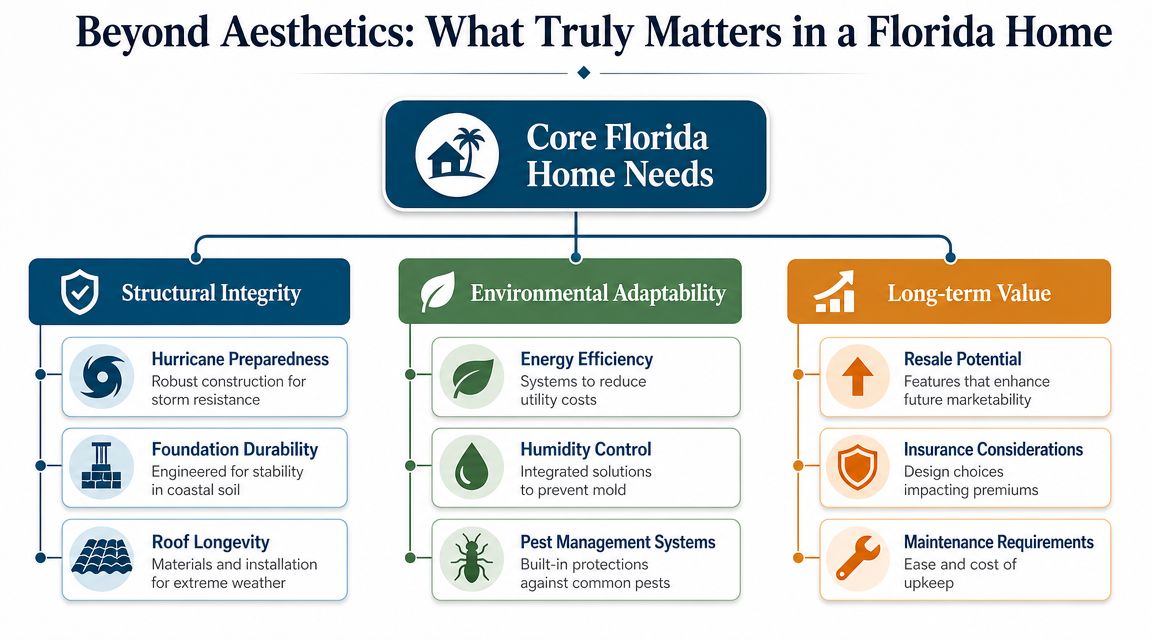
Beyond Aesthetics What Truly Matters in a Florida Home
A lot of buyers spend too much energy on what they can see on closing day and not enough on what they'll live with every day after.
That's a mistake in Florida.
The invisible performance question
The smartest reason to build custom in Naples often has nothing to do with style. It has to do with performance.
As noted in Duet Design Group's discussion of spec home vs custom home, buyers in coastal markets may choose custom to optimize for storm resilience, humidity control, and energy efficiency. That's the conversation more people should be having.
A home can look fantastic in listing photos and still be only average where it counts. In Naples, the hidden questions matter:
How does the house handle humidity?
Were the mechanical systems planned for this layout or dropped into it?
Was the structure designed with this specific site in mind?
Will the home age well under coastal conditions?
What luxury buyers should prioritize
If you're deciding between a high-end spec property and a custom build, look beyond finishes and ask about the bones of the house.
Consider priorities like these:
Storm resilience: Not just minimum compliance, but whether the design, materials, and detailing were chosen with real coastal exposure in mind.
Moisture management: Humidity control affects comfort, finishes, storage conditions, and long-term upkeep.
Mechanical planning: Good HVAC design, equipment placement, and serviceability matter more than buyers think.
Operational costs: The cheapest decision upfront isn't always the cheapest decision to own.
Aging in place: If this home may serve your family for years, circulation, entry transitions, elevator planning, and bathroom design should be deliberate.
A custom home earns its keep when it solves problems you can't fix later without major expense.
That doesn't mean every spec home falls short. Some are excellent. It means you should stop judging luxury only by cabinetry, stone, and decorative lighting. In a Naples home, comfort and durability come from decisions buried behind walls, under roofs, and inside equipment rooms.
Navigating Risk and Resale Value in the Luxury Market
Most articles stop at “spec is faster, custom is more personal.” That's not enough. High-end buyers should also ask a sharper question.
If your lifestyle changes in a few years, which home will be easier to sell?
Risk on the front end
Spec homes usually give buyers more certainty at the start. You can tour the actual product, review a tighter set of facts, and make a yes-or-no decision without months of planning.
Custom puts more responsibility on the buyer. You're making early decisions with incomplete visibility into every future condition. Even with a disciplined process, custom asks for more tolerance around timing, coordination, and evolving scope.
That's not a flaw. It's the nature of bespoke work.
Resale on the back end
Resale is where a lot of luxury buyers get sentimental, and sentiment can get expensive.
Realtor.com's market commentary on spec vs fully custom homes points to an issue that many comparisons skip. A highly individualized custom home may narrow the future buyer pool more than a well-executed, move-in-ready spec home.
That doesn't mean custom hurts resale by default. It means personalization has a limit.
If you build a house around tastes that only make sense to you, the next buyer may admire it and still discount it. On the other hand, if your custom choices improve livability without becoming eccentric, you may preserve broad luxury appeal.
A good rule in Naples is simple.
Personalize the function boldly.
Personalize the style with discipline.
A hidden prep kitchen, better storage, cleaner indoor-outdoor flow, stronger mechanical planning, and smarter privacy design usually help resale. Extremely specific decorative statements, unusual room tradeoffs, or niche lifestyle spaces can make the home harder to place with the next buyer.
The strongest luxury homes feel tailored without feeling trapped inside one owner's preferences.
Which Path Is Right for Your Family A Decision Framework
The right choice depends less on price labels and more on how you plan to live.
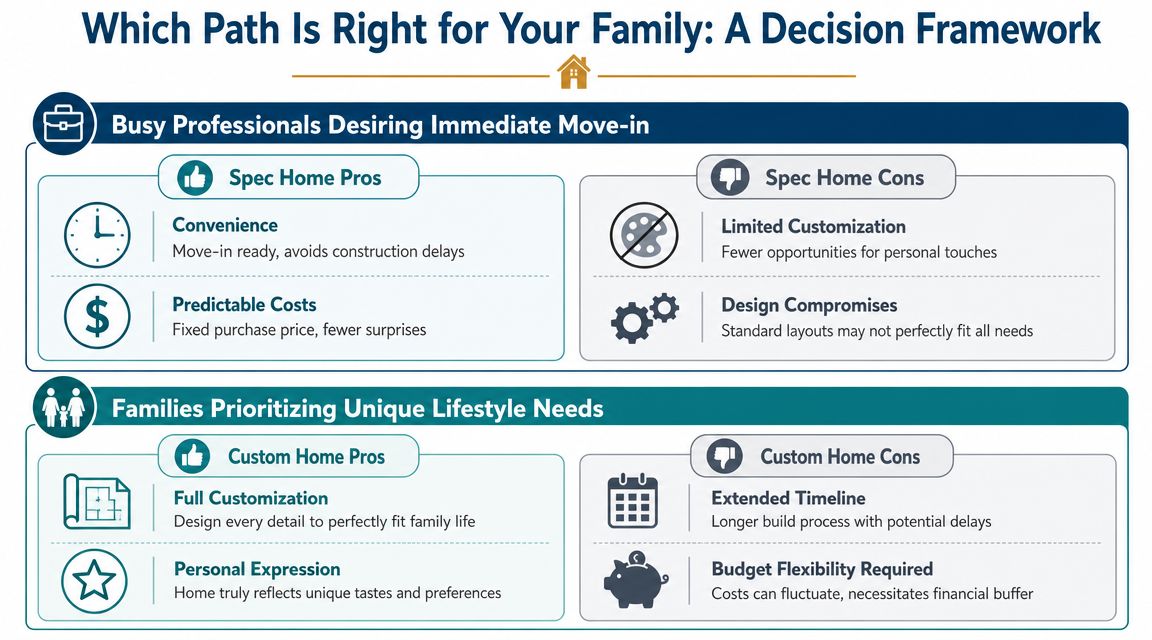
The relocating executive
You want a polished home, and you want your life back.
You may be moving full-time, splitting time between markets, or trying to get settled without adding a year-plus construction process to an already busy schedule. In that case, a spec home is often the right answer. It reduces decisions, shortens the path to occupancy, and lets you evaluate a real finished environment rather than a plan set and a series of meetings.
This buyer should prioritize layout quality, mechanical quality, community fit, and how much practical updating would be needed after closing.
The legacy builder
You're not chasing speed. You're building the house you expect to keep and enjoy for a long time.
This is the family that cares about lot orientation, multigenerational hosting, wellness spaces, privacy from neighboring homes, garage design, outdoor living, storage, and how the house performs through changing seasons of life. For this buyer, custom isn't indulgent. It's logical.
If your home needs to fit your family rather than the broad market, you'll feel those compromises every day in a spec property.
The condo owner moving into a house
This buyer often knows good finishes and high standards, but hasn't dealt with all the extra variables that come with land, drainage, exterior envelope decisions, service yards, pool placement, and long-term exterior maintenance.
That makes this group easy to misread. They may think they want custom because they have strong taste. What they may need is guidance on whether their priorities are mostly decorative or whether they're structural and site-driven.
Ask yourself these questions:
Do we need to move quickly, or do we want the right long-term answer?
Are our must-haves cosmetic, or do they affect layout and systems?
Is the lot itself central to the decision?
Will we regret design compromises more than we'll regret a longer process?
If you answer “yes” to the last three, custom is probably the better fit.
Planning Your Custom Home in Naples
You find a beautiful lot in Naples. The sunset view is right, the address is right, and the photos already have you thinking about the pool, the guest suite, and where everyone will gather on Christmas Eve. That is the moment to slow down. A successful custom home starts before sketches, finishes, or cabinet samples.
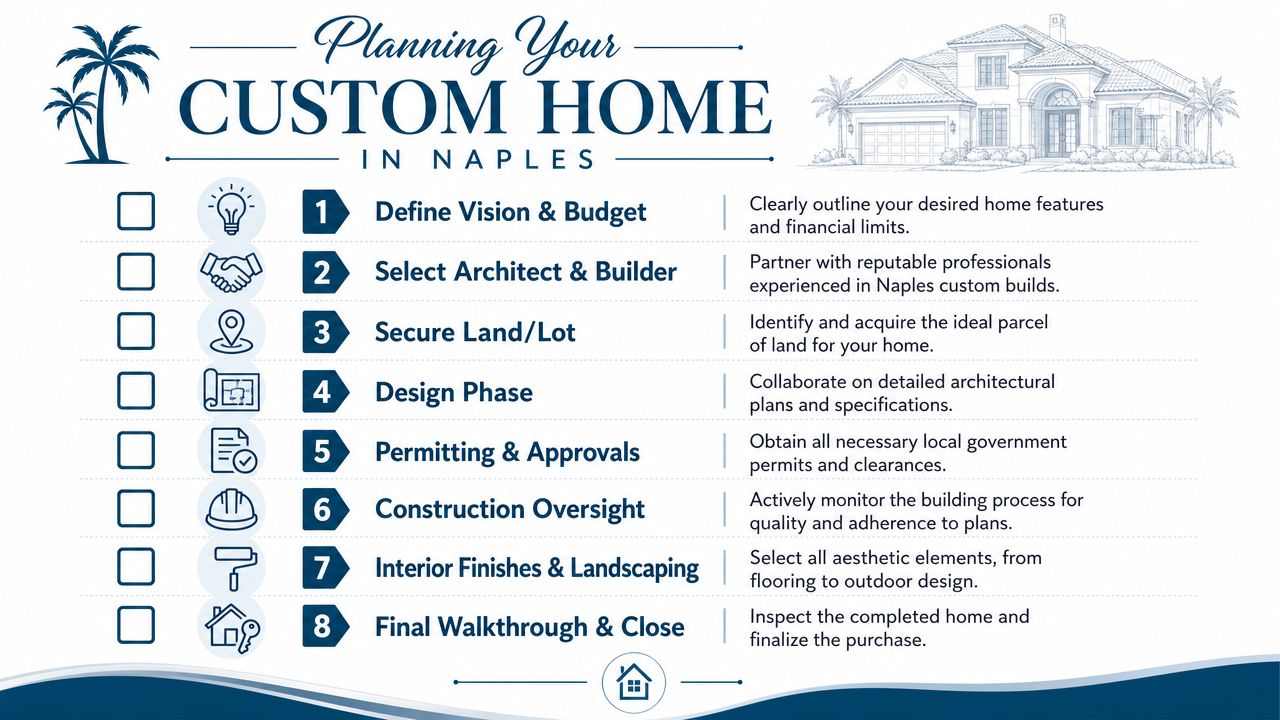
Custom works best when you treat pre-construction as the primary project. In Naples, that means testing whether the lot, flood exposure, sun orientation, privacy lines, drainage, and community rules support the house you want to build. Buyers who skip that work usually spend more money fixing paper decisions later.
Spec inventory still attracts plenty of buyers. About half of all new-home sales in 2024 were spec homes, and completed inventory rose 49% to 110,000 homes, the highest level since August 2009, according to Better Mortgage's spec house overview. That reflects demand for speed and certainty. It does not change the fact that custom is the better choice when your priorities are tied to site planning, performance, and long-term livability.
Questions to ask before you hire a builder
Start with the questions that expose process, discipline, and local judgment.
How do you vet a lot before design starts? In Naples, this should include drainage, grade, flood considerations, setback limits, and how the house will sit on the site.
How do you build the budget before finishes are selected? You want clarity on allowances, realistic cost ranges, and what tends to move the number.
Who owns communication once construction begins? One accountable point of contact prevents confusion and expensive delays.
How are changes documented and approved? Verbal decisions are a fast way to lose control of budget and schedule.
How do you coordinate architects, designers, engineers, and trades? Luxury homes suffer when everyone is talented but nobody is aligned.
What performance details do you prioritize in a coastal home? Ask about moisture control, window and door specifications, backup power planning, and service access, not just finishes.
If you want to understand the sequence before you commit, this custom home building process lays out the major steps clearly.
Don't overlook the systems behind the walls
In the Naples luxury market, the homes that age well are rarely the ones with the flashiest first impression. They are the ones planned correctly.
Electrical planning is a good example. Lighting scenes, low-voltage coordination, generator readiness, exterior lighting, motorized screens, security, and future capacity for new technology should be decided early, while walls are still lines on paper. This Guide to finding a qualified electrician is a useful reference if you want sharper questions before that scope gets finalized.
The right custom home is not just attractive on day one. It should handle coastal weather, support the way your family lives, and hold its value in a competitive luxury community.
If you choose custom, be disciplined. Confirm the lot first. Build the team carefully. Make decisions in the right order. That is how you end up with a Naples home that still feels right ten years from now, not just one that photographs well at closing.
If you're weighing a spec home against a custom build in Naples, schedule a conversation with JVM Construction LLC. Bring your lot, your floor plan ideas, or the listing that has you on the fence. A good first meeting should help you decide which path fits your family, your timeline, and the way you want to live.