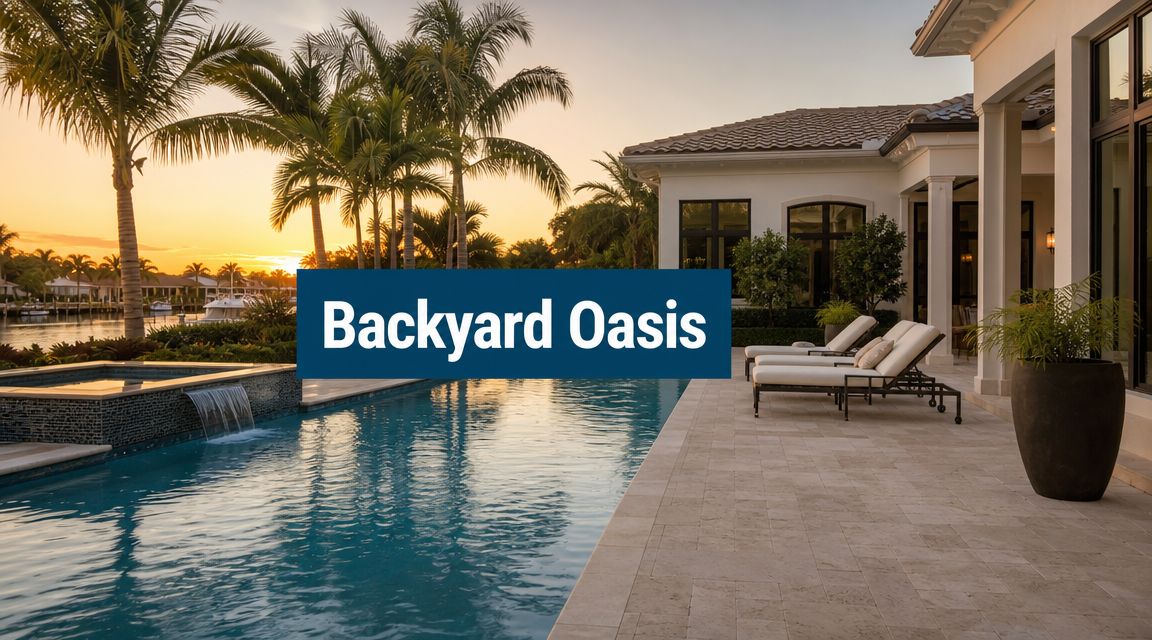
You're probably looking at a lanai, a rear elevation, or a vacant lot and trying to picture the finished life, not just the finished house. Morning coffee by the water. Grandchildren on a sun shelf. Evening lighting reflecting off a clean coping line. In Naples, that vision is rarely about a pool alone. It's about how the entire outdoor environment works with the home.
That's why smart pool construction in Naples starts earlier than most homeowners expect. The right pool isn't a decorative add-on chosen after the house is nearly done. It's part of custom home planning, site engineering, drainage strategy, utility routing, and how you want to live on the property for years to come.
Your Naples Dream A Pool Built for Life
A lot of Naples homeowners begin in the same place. They know they want a beautiful backyard, but they're still deciding what that should do for them. Some want a quiet resort feeling with clean lines and shallow lounging space. Others want a social layout with a spa, swim area, outdoor dining, and room for guests to move easily between the house and the water.
In Southwest Florida, that isn't a niche decision. Florida is the most pool-saturated major market in the country, with approximately 1.59 million residential swimming pools, about one pool per 14 residents, and estimated ownership across 15% to 17% of Florida households, according to Florida pool industry statistics. In Naples, that shows up in everyday living. Pools are part of how people use their homes, entertain, and evaluate luxury property.
The pool is part of the property plan
A strong pool project does more than look good from the patio doors. It needs to fit the architecture, respect the site, and hold up under coastal conditions. On a custom build, the pool affects rear elevation design, window placement, deck transitions, outdoor kitchen layout, and equipment location. On a remodel, it often exposes drainage, grading, and access issues that should be solved before finishes go in.
A luxury pool should feel like it belongs to the house, not like it landed behind it later.
That's the shift discerning homeowners make. They stop asking only, “What shape do I want?” and start asking better questions:
How will the pool relate to the house? Think axis lines, view corridors, and how you approach the water from interior living spaces.
What will the backyard need to support? Shade, privacy, dining, lighting, and circulation matter as much as the vessel itself.
What will still feel right in ten years? Oversized trends age quickly. Good proportions and sound construction don't.
What long-term value actually looks like
The broader U.S. swimming pool construction market is projected to reach $24.8 billion in 2026, growing at a 3.0% CAGR from 2021 to 2026 across 22,731 businesses, with pool construction identified under NAICS code 23899b, according to IBISWorld's swimming pool construction industry profile. For Naples homeowners, that matters because it reflects a mature construction trade with specialized labor, established methods, and recurring demand, not a fringe service.
A well-built pool adds daily use, architectural presence, and long-term enjoyment. A poorly planned one creates maintenance headaches, awkward deck flow, and expensive corrections. The difference usually comes down to planning discipline, structural execution, and whether the builder treats the pool as part of the property's full build strategy.
Phase 1 Envisioning Your Naples Oasis
The first productive conversation usually has very little to do with tile samples. It starts with use. If the pool's purpose is fuzzy, the design gets loaded with features that look impressive in renderings but don't improve how you live.
Start with function before form
Ask what the water is supposed to do on this property.
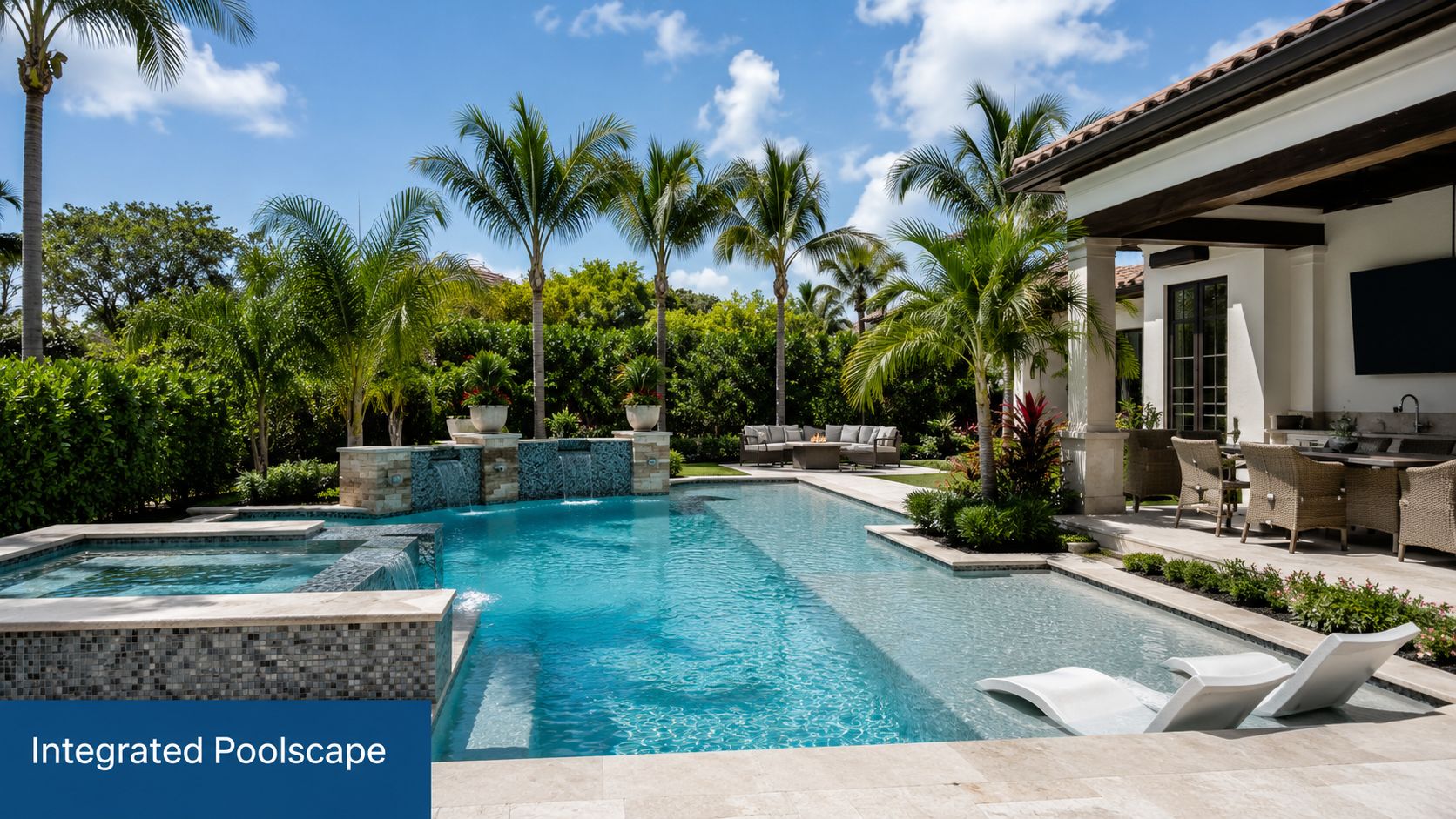
One family may need a broad entry and sun shelf because children and grandparents will use it often. Another homeowner may want a crisp geometric pool that extends the home's architecture and acts more as a reflecting plane than a play space. Fitness-minded owners often prefer uninterrupted swim length and fewer shallow interruptions. Entertainers usually benefit from stronger connections to dining, lounge seating, and a spillover spa.
That sounds obvious, but many expensive mistakes happen because design starts with a shape, not a lifestyle brief.
Tie the pool to the house, not just the backyard
In custom home planning in Naples, the pool should reinforce the architecture. A contemporary home usually wants stronger geometry, cleaner coping transitions, and tighter alignment with major openings. A more coastal or transitional residence may handle softer perimeter forms and layered landscaping more comfortably.
A practical planning review should cover these points early:
Primary view line: What do you see first from the great room, primary suite, or outdoor living area?
Sun exposure: Where will afternoon heat hit the deck, spa, and lounging zones?
Access paths: Can guests move from the house to seating, water, and dining without crowding one corner?
Service reality: Where will equipment go so it stays functional without dominating the experience?
For visual inspiration outside the Naples market, Stunning pool designs for Peoria, AZ offers useful examples of how water, hardscape, and outdoor living features can be composed as one environment instead of separate purchases.
Budget the full scope, not just the shell
A recurring problem in pool construction Naples projects is under-scoping the investment. Homeowners budget for the vessel, then discover later that the overall experience depends on everything around it. Decking, drainage, fencing, lighting, automation, garden enhancements, and utility coordination often determine whether the finished backyard feels polished or incomplete.
Here's a better way to frame the decision:
Project element | What it affects |
|---|---|
Pool shell and engineering | Structural performance, durability, code compliance |
Decking and coping | Comfort underfoot, visual quality, drainage transitions |
Equipment and automation | Ease of operation, maintenance workflow, noise management |
Fencing and barriers | Safety compliance, design continuity |
Landscape and lighting | Privacy, nighttime use, finished appearance |
Practical rule: If a feature changes how the yard drains, how people move, or how the home is viewed from inside, it belongs in the plan from the beginning.
That's especially true on luxury properties. The best projects are disciplined early. They define priorities, align the pool with the house, and make room for the pieces that turn a nice vessel into a complete outdoor living environment.
Navigating Naples Permits and Coastal Codes
Permitting frustrates homeowners when they think of it as paperwork. In Naples, it's more accurate to view it as technical review. The pool is an engineered structural system, and local approvals exist to verify that the design, site conditions, and safety measures are coordinated before excavation begins.
In practice, this phase shapes the schedule more than many clients expect.
Why permitting takes real time
In Naples, a pool requires a licensed contractor permit, structural engineering drawings, and multiple inspections. Local permitting guidance also includes requirements such as signed and sealed structural details, site information, and barrier-related documentation. A local builder estimate notes that permits can take 2 to 3 months, with a standard project running about 5 to 6 months total, meaning a substantial share of the timeline can be committed before physical construction starts, according to City of Naples permitting materials.
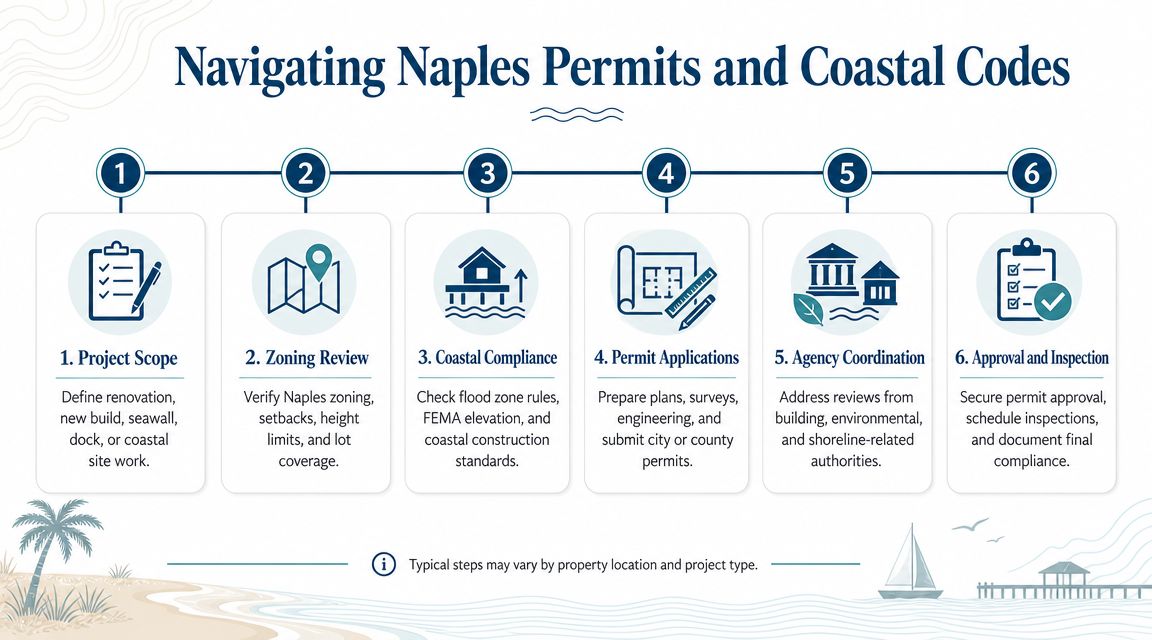
That matters because buyers often focus on finishes, while the actual gating items are plan review, engineering completeness, safety details, and inspection sequencing. If the permit set is sloppy, the project doesn't start cleanly. If the site conditions raise questions, the review can slow down further.
What the city is really checking
The permit review isn't trying to make the process harder. It's checking whether the proposed work can be built safely and legally on that lot. On coastal properties, that includes elevation and drainage realities that aren't visible in a design rendering.
Expect attention on items such as:
Structural information: The shell, reinforcement, and supporting details need to align with engineered documents.
Barrier compliance: Safety barriers and related plans are not optional late additions.
Electrical and inspection sequencing: Bonding, electrical rough-ins, and final approvals have to fit the build sequence.
Renovation-specific code issues: Existing pools can trigger different compliance questions than new construction.
Homeowners building or renovating in coastal Southwest Florida should also understand how the broader house responds to storm exposure. This overview of hurricane-resistant home plans in Naples is useful because the same thinking applies outdoors. Resilience begins in design, detailing, and code coordination, not after the project is underway.
What seasoned builders do differently
The permit phase goes more smoothly when the builder anticipates questions before they reach the reviewer. That means complete site data, accurate dimensions, coordinated engineering, and realistic expectations about hold points.
A simple comparison shows the difference:
Approach | Likely result |
|---|---|
Design first, compliance later | Revisions, delays, and redesign pressure |
Coordinated engineering from day one | Clearer review and fewer field surprises |
Treating barriers as an afterthought | Last-minute layout conflicts |
Planning around inspections | Better schedule control |
Permitting doesn't slow a good project down. It reveals whether the project was organized properly in the first place.
For luxury clients, confidence should arise not from hearing that the process is easy, but from knowing the team has accounted for technical review, coastal constraints, and the documentation needed to move from concept to approved construction.
The Blueprint The Core Construction Process
Once approvals are in hand, the visible work starts. This is the part homeowners usually picture first, but it only goes well when the hidden decisions were made correctly earlier. In pool construction Naples projects, the shell, plumbing, electrical coordination, and site handling have to work together from the first cut.
The sequence that protects the structure
A quality build follows a strict sequence: excavation, reinforced rebar installation based on an engineer-approved steel schedule, bonding of all metal fixtures, rough plumbing, and then gunite application, as outlined by Blue Haven's Naples-Fort Myers pool construction overview. That order matters because once gunite cures, changes become expensive and can compromise structural integrity and waterproofing.
The key point for homeowners is simple. If a builder gets casual before gunite, you pay for it later.
What to watch at each stage
The field work looks fast from the outside, but each stage has a specific quality checkpoint.
Layout and excavation Here, dimensions meet reality. Setbacks, elevations, drainage fall, and access all show up here. A plan can look perfect on paper and still need field judgment when existing grades, trees, utilities, or tight side-yard access complicate the dig.
Rebar and steel schedule
The steel is the skeleton of the shell. It should match the engineered intent, not a rough approximation. Proper spacing, secure placement, and attention to transitions around benches, spas, and raised walls matter because those are common stress areas.Bonding and rough systems
Lights, metal fixtures, plumbing lines, skimmers, drains, returns, spa jets, and water feature lines all need to be located correctly before the shell is shot. This is one of the least glamorous stages and one of the most important.Gunite application
Good gunite work depends on prep, crew skill, and timing. Once the shell is in, major corrections are no longer simple design changes. They become invasive structural fixes.
For homeowners who want a useful parallel, a broader construction quality control checklist helps explain why inspection discipline, documentation, and sequencing matter just as much in a pool build as they do in a full custom home.
Naples soil is not a side note
One of the most overlooked parts of pool construction in Naples is the lot itself. Florida-specific engineering guidance points to the importance of angle of repose in pool excavation, especially in sandy coastal conditions, and highlights that permitting often requires structural documents, site surveys, elevations, and barrier plans. That perspective is detailed in this discussion of swimming pool design and the angle of repose.
Why does that matter to a homeowner? Because a beautiful pool can still become a site problem if the excavation, drainage, and grade transitions aren't handled correctly.
Soil behavior, water movement, and elevation are construction issues first. They only become design issues after the structure is protected.
A lot with sandy soil, tight setbacks, or drainage sensitivity may need a more careful approach to excavation support, deck grading, or equipment pad location. That doesn't make the project bad. It just means the site has to be respected. The strongest builders don't hide that complexity. They plan for it.
Choosing Signature Materials and Features
Once the shell and systems are right, materials start to shape the experience. Many homeowners become excited at this stage, and understandably so. Finishes, water color, edge details, automation, and features are what people see and touch. But the best choices in Naples balance appearance with serviceability, heat, salt air exposure, and how much hands-on maintenance you want.
Water treatment and operating style
A common early decision is whether you want a saltwater setup or a more conventional modern chlorine system. The answer isn't about which one is trendy. It's about how you want the pool to feel and how comfortable you are with maintenance routines and equipment care.
A side-by-side view helps:
Choice | Strengths | Trade-offs |
|---|---|---|
Saltwater system | Softer-feeling water, popular with homeowners who want a less harsh swim experience | Equipment and material compatibility need careful consideration in a coastal environment |
Modern chlorine system | Familiar service approach, broad equipment support | Water feel and chemical management preferences vary by owner |
Some clients strongly prefer saltwater. Others want a straightforward service model with simple replacement paths for equipment and components. Neither choice is universally right. The right one fits the property, the owner's habits, and the maintenance plan.
Interior finishes and edge details
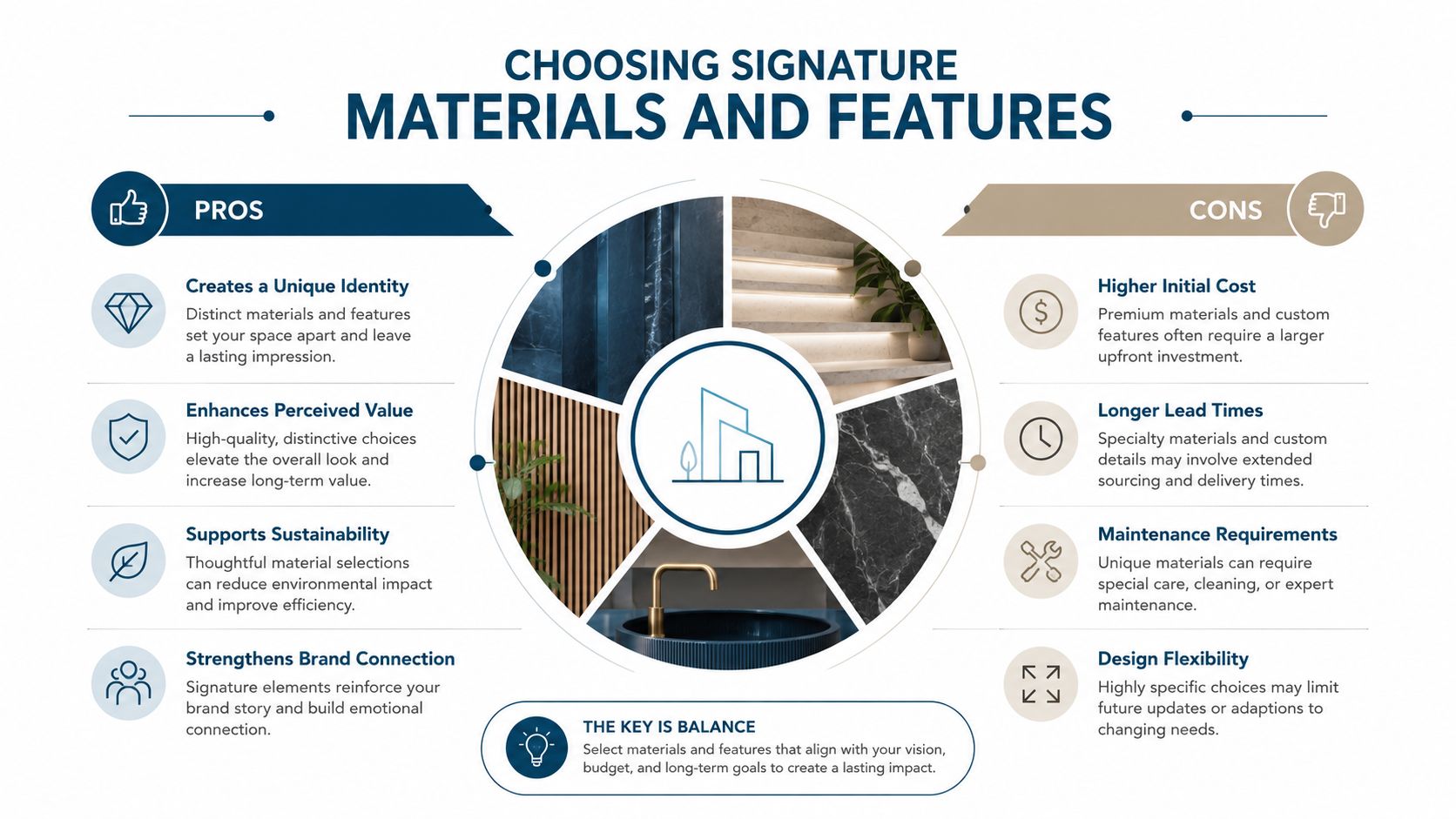
The interior finish affects water appearance, texture underfoot, and long-term wear. Classic plaster can create a clean traditional look. Pebble finishes usually offer more texture and a more natural visual depth. Glass bead and premium aggregate blends can produce a refined shimmer that suits more contemporary homes.
What matters is matching the finish to the architecture and the owner's tolerance for variation. A highly reflective finish can look stunning, but it may also highlight debris or changing light conditions more dramatically than a quieter surface.
Consider these practical filters:
For a formal architectural pool: Clean lines, restrained color, and sharper edge detailing usually age better than busy material mixes.
For a resort-style backyard: Texture and tonal variation can make the water feel richer and more relaxed.
For heavy family use: Comfort underfoot and ease of upkeep should outweigh fashion.
Special features that earn their keep
Some features add lasting value to daily use. Others look exciting in a proposal and end up rarely used.
A few examples:
Integrated spas make sense when they're sized and positioned for real use, not squeezed in as a status symbol.
Sun shelves work well for lounging, small children, and creating visual depth near the house.
Infinity, knife-edge, and perimeter overflow details can be striking, but they demand tighter design execution and should be chosen for the lot and architecture, not just prestige.
Automation systems are worth serious attention. App-based control of pumps, lighting, heating, and water features can make ownership much easier.
One practical option for homeowners coordinating a larger property project is to work with a general contractor that can integrate the pool house, outdoor structures, and main residence planning under one construction umbrella. JVM Construction LLC provides custom residential building services in Naples and also offers pool house design and construction, which can be relevant when the pool is only one part of a broader estate plan.
Good features reduce friction in daily use. Bad features create one more thing to fix, clean, or explain to guests.
In high-end work, restraint is often what separates refined design from a crowded backyard.
Creating the Poolscape Landscaping and Integration
A finished vessel can still feel unfinished if the surrounding environment isn't resolved. The strongest outdoor spaces in Naples don't stop at coping. They carry the same discipline into deck material, transitions, planting, lighting, privacy, and how people move from one zone to another.
Decking, drainage, and circulation
The surface around the pool does a lot of work. It has to feel good barefoot, drain properly, visually connect to the house, and hold up to weather and regular use. Travertine, shellstone, and other natural-look materials remain popular because they can complement luxury architecture while keeping the outdoor space from feeling overly hard or sterile.
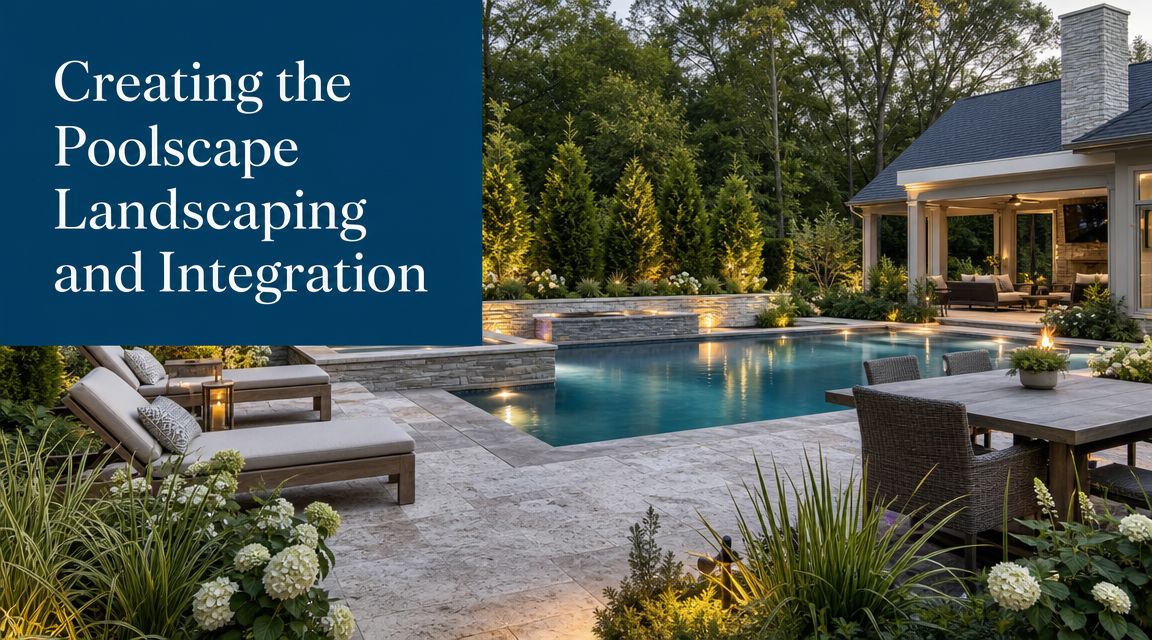
The mistake is treating deck selection as a cosmetic choice only. Decking affects slope, runoff, furniture stability, and the comfort of everyone using the space. On many Naples properties, drainage and finished elevation deserve as much attention as the stone itself. If water has nowhere sensible to go, the prettiest deck in the neighborhood becomes a nuisance.
Build the backyard as a system
A luxury poolscape usually includes several layers working together:
Water zone: The pool, spa, tanning ledge, and water features.
Living zone: Covered seating, lounge areas, dining, and shade.
Service zone: Equipment access, storage, and practical maintenance routes.
Softscape zone: Plantings for privacy, softness, and framing views.
When these are planned together, the backyard feels calm and legible. When they're designed separately, the result often feels crowded. Walkways pinch. Furniture lands in awkward traffic paths. Plantings block sightlines that should have stayed open.
Outdoor living features that complement the pool
For many Naples homeowners, the pool is only one component of the full outdoor living program. Outdoor kitchens, fire features, cabanas, shower areas, and well-planned lighting can expand use far beyond daytime swimming. If you're evaluating cooking and gathering areas around the pool, these top backyard kitchen designs offer useful layout ideas that help frame how food prep, seating, and circulation can work together outdoors.
Lighting deserves special attention because it changes the project after sunset. Underwater fixtures, step lighting, accent lighting in planting beds, and controlled ambient lighting around dining or lounge zones can make the space feel composed instead of harsh. For homeowners refining that layer, this guide to outdoor lighting in Naples is a practical reference for balancing atmosphere, function, and safety.
The poolscape should work at noon, at dusk, and on an ordinary Tuesday night when nobody is entertaining.
That's the standard worth aiming for. A successful project doesn't depend on one dramatic feature. It depends on many coordinated decisions that make the whole property more livable.
Protecting Your Investment for a Lifetime of Enjoyment
By the time a pool is finished, most homeowners are ready to enjoy it and stop thinking about construction. That's understandable, but long-term satisfaction depends on what happens next. The pool needs routine care, the surrounding materials need sensible upkeep, and any automation or specialty equipment needs periodic attention from people who know the system.
That's why the lasting measure of a good pool build isn't opening day. It's how the pool performs after seasons of sun, storms, guests, service visits, and daily use. A shell built on sound engineering, with thoughtful drainage and realistic material choices, gives you a much better ownership experience than one that won the design meeting but ignored the site.
What protects value over time
Owners who get the most from a luxury pool usually do a few things consistently:
Keep records organized: Plans, permits, finish specs, equipment information, and service history matter when repairs or upgrades come up.
Address small issues early: A minor leak, cracked joint, or equipment problem is easier to solve before it affects adjacent finishes or operations.
Maintain the whole environment: The pool, deck, lighting, landscaping, and drainage all influence one another.
For homeowners building from the ground up or taking on major site work, insurance planning is also worth reviewing before construction starts. The Schneider and Associates builder's risk guide is a useful overview of how construction-phase protection fits into a broader risk-management conversation.
The right partner changes the outcome
Luxury pool construction in Naples asks for more than attractive design. It asks for code fluency, structural discipline, good site judgment, and honest communication about trade-offs. Some lots need extra coordination. Some features deserve the premium. Some don't. The right builder tells you which is which.
If you're planning a new custom home, a significant remodel, or a pool-centered outdoor living project, treat the pool as part of the property's long-term build strategy. That approach protects value, reduces avoidable rework, and produces a backyard that still feels right years from now.
If you're ready to plan a pool as part of a larger luxury home vision, contact JVM Construction LLC. Their team works with homeowners in Naples on custom homes, large-scale remodels, and integrated outdoor living projects, helping coordinate design, permitting, and construction with a clear focus on quality and long-term performance.