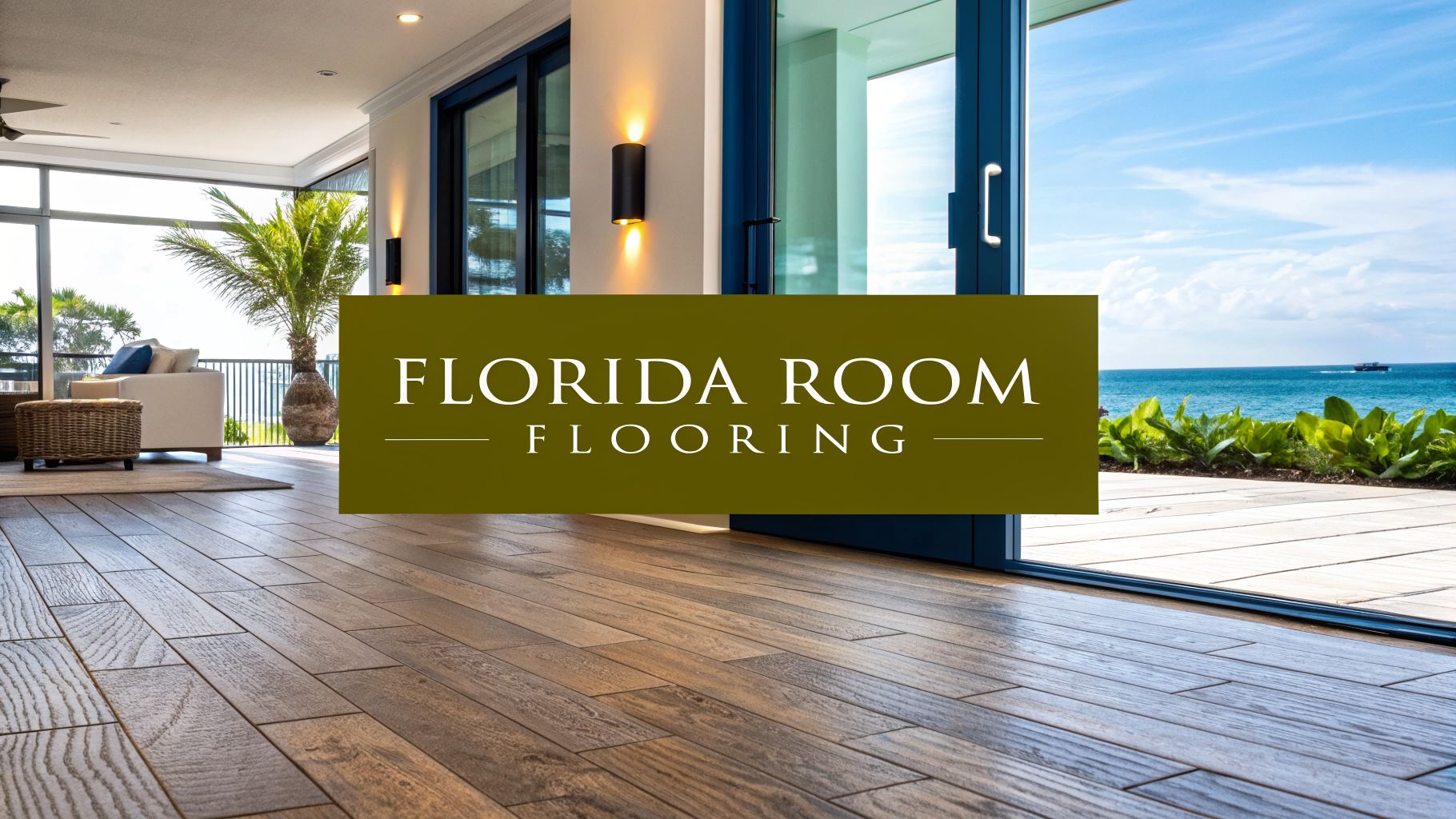
When you’re choosing flooring for a Florida room, you're looking for that perfect blend of beauty and brawn. You need a material that is completely waterproof and can stand up to our intense humidity, UV rays, and daily wear and tear. For homeowners in Naples, that usually means leaning toward standout choices like luxury vinyl plank, porcelain tile, or a high-quality engineered hardwood. These options give you the durability our coastal climate demands and the sophisticated look you want for your home.
Your Guide to The Perfect Florida Room Flooring
A Florida room is the soul of a Naples home. It’s where your comfortable indoor life meets the stunning beauty of the outdoors. But finding the right flooring for this unique space is more than just a design choice—it's a critical practical decision. You're building a foundation that has to survive intense sun, high humidity, and salty air, all while looking effortlessly elegant.
Think of your Florida room floor as the bridge between your climate-controlled home and the vibrant coastal environment just outside your door. It needs to handle both worlds with grace. We'll walk you through the top contenders that are up for the challenge, offering both resilience and style. The goal is to help you find a floor that won't warp, fade, or scratch, ensuring your beautiful space stays that way for years to come.
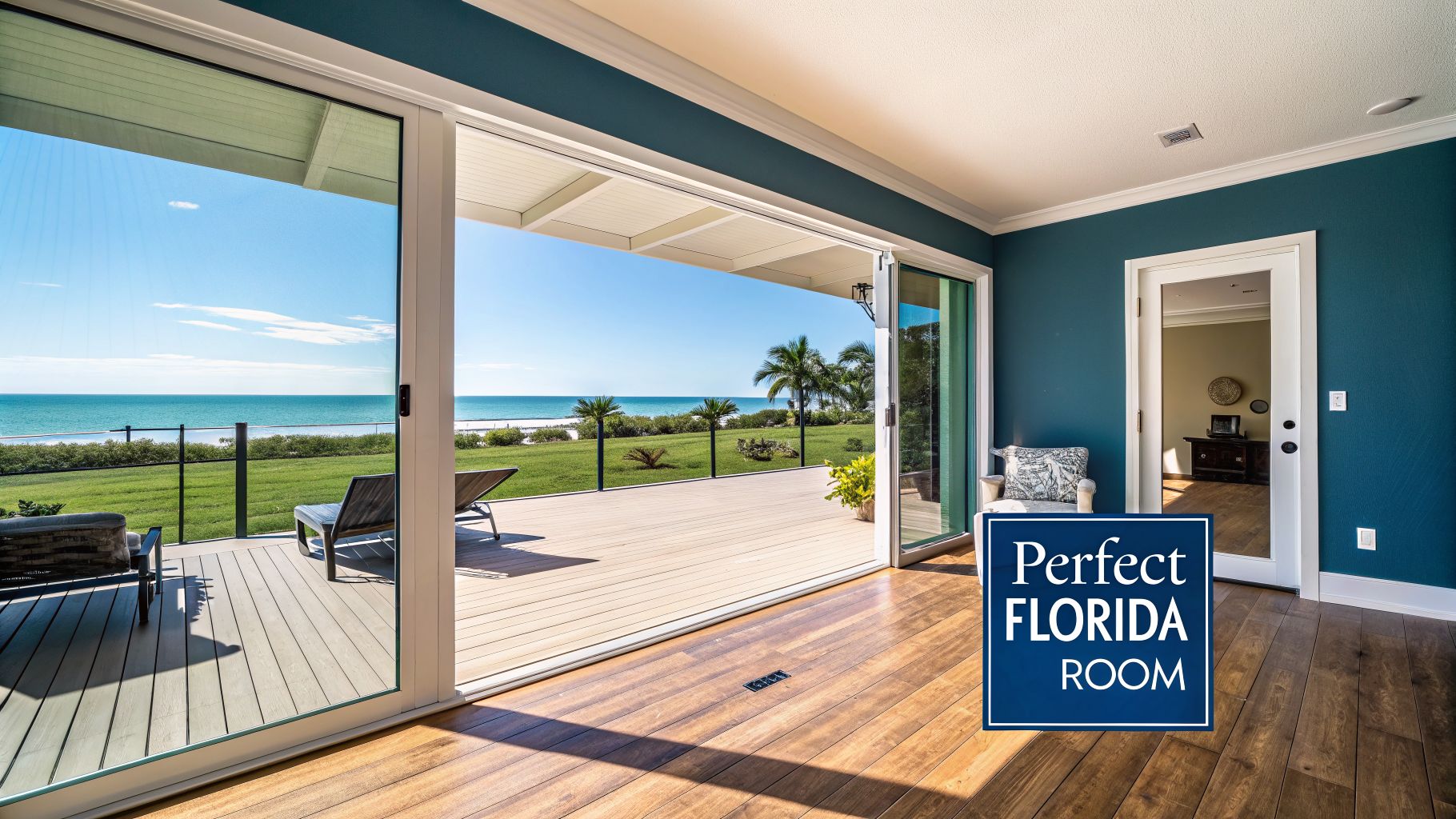
Finding a Floor That Lasts
From luxury vinyl that laughs at poolside splashes to engineered hardwood that brings a touch of warmth and sophistication, we'll explore why today’s materials are such a game-changer for homeowners. These floors are specifically designed for the exact conditions we face here in Southwest Florida.
A Florida room floor has to be a master of multitasking. It must be tough enough to handle tracked-in sand and moisture, yet beautiful enough to anchor the design of your primary living area. It’s a unique balance of performance and aesthetics that protects your home's value.
To help you get a quick sense of the leading options, here's a simple breakdown.
Quick Comparison of Top Florida Room Flooring Options
This table sums up the key features of the most popular flooring choices that are perfectly suited for the Naples climate.
Flooring Type | Waterproof Rating | Best For | Typical Lifespan |
|---|---|---|---|
Porcelain Tile | 100% Waterproof | High-traffic areas, direct sun, and moisture | 50+ years |
Luxury Vinyl Plank (LVP) | 100% Waterproof | Busy families, comfort, and scratch resistance | 15-25 years |
Engineered Hardwood | Water-Resistant | Sophisticated look in climate-controlled spaces | 20-30 years |
Each of these has its own strengths, but they all offer a great starting point for a beautiful and long-lasting room. You can see how these high-end finishes come to life by exploring our gallery of completed Naples projects.
Why Waterproofing Is Non-Negotiable
Living in Florida means dealing with a humid, subtropical climate where the average relative humidity hovers between 70-80% all year. That's why waterproof flooring isn't a luxury; it's a necessity for any home, especially in a space that bridges the indoors and outdoors.
Materials like rigid-core vinyl flooring, specifically SPC (Stone Plastic Composite) and WPC (Wood Plastic Composite), have become a go-to choice because they offer 100% water resistance. This means no swelling, warping, or mold growth, even when the summer storms roll in or the kids track water in from the pool.
This shift toward resilient flooring is a major trend. In fact, industry analysis projects a 2-3% increase in U.S. flooring sales in early 2026, driven by a surge in home sales and demand for durable flooring in high-end remodels. If you want to dive deeper, you can find more details on these trends over at TheFlooringFactoryOutlet.com.
Ultimately, a truly great Florida room is one that feels like a seamless extension of your home into the beautiful outdoors. Let's find you a floor that makes that happen.
Why Florida's Climate Demands a Special Kind of Floor
Choosing a floor for a Florida room isn't like outfitting any other space in your home. Here in Naples, that beautiful room that blurs the line between indoors and out is in a constant tug-of-war with the environment. It faces a unique combination of relentless humidity, intense sunshine, and everything we track in from the beach or pool.
Think of it this way: a standard indoor floor is simply not designed for this kind of life. It’s like putting a delicate, indoor-only rug on a covered patio—it might look great for a week, but it wasn't built to withstand the elements.
Getting this choice right means first understanding exactly what you're up against. Let's break down the three biggest challenges your Florida room floor will face.
The Unrelenting Humidity
There's no getting around it—Florida's air is heavy with moisture. With average humidity levels often soaring past 75%, the air itself is saturated with water. This is enemy number one for many popular flooring materials, especially classic solid hardwood.
Just like a sponge left in a damp sink, porous materials like solid wood will soak up moisture directly from the air. This causes the planks to swell up, leading to permanent damage like cupping, buckling, and ugly gaps between boards.
While the timeless look of solid hardwood is tempting, it's simply fighting a losing battle in an open-air Florida room. The constant cycle of expanding and shrinking will eventually destroy its integrity. To make a lasting investment, you have to consider the best flooring for humid climate options that are engineered specifically for these conditions.
Intense Sun and UV Exposure
The same brilliant sunshine that makes Naples so desirable can be surprisingly destructive to your floors. The sun’s ultraviolet (UV) rays act like a slow, persistent bleach, gradually draining the color and vibrancy from any surface that isn't properly protected.
This kind of damage sneaks up on you. You'll start to notice it in patches, where areas exposed to direct sun become visibly lighter than spots shaded by furniture or an area rug. For rich, dark, or brightly colored floors, this fading can completely change the room's aesthetic.
Here’s what UV rays can do over time:
Color Fading: Hardwood stains can bleach out, and the deep tones in luxury vinyl can start to look washed out and dull.
Material Breakdown: Over years of exposure, intense UV can even wear down the protective top layer of some floors, leaving them vulnerable to scratches and stains.
Heat Absorption: Dark-colored floors can get surprisingly hot, warming up the room and even driving up your air conditioning costs.
Sand, Salt, and Foot Traffic
Finally, let's talk about what our coastal lifestyle brings inside. Sand from a morning at the beach and water from an afternoon by the pool are just part of life here. But for your floor, they are highly abrasive and damaging.
Every grain of sand is like a tiny, sharp piece of grit. When it gets dragged across a floor by shoes, bare feet, or a pet's paws, it acts just like sandpaper, creating micro-scratches that slowly dull the finish. Saltwater can be even worse, as its corrosive properties can eat away at certain finishes over the long run.
A floor in a Naples sunroom has to be tough. It needs to stand up to this daily abuse without looking worn and tired after just a few years, which is why scratch resistance and easy maintenance are non-negotiable.
Now that we’ve covered the unique climate challenges your Florida room floor will face, let’s get into the good stuff: the materials that are actually up to the task. Choosing the best flooring for a Florida room isn't just about picking something that looks good; it's about finding that perfect marriage of tough performance and sophisticated style.
Let's walk through the champions of coastal flooring, each bringing something special to the table for your Naples home.
Flooring Material Deep Dive: Pros and Cons for a Florida Room
To give you a clearer picture, here is a quick comparison of the top contenders. Think of this as your cheat sheet for weighing what matters most to you as a homeowner, from maintenance to aesthetics.
Material | Pros | Cons | Best Suited For |
|---|---|---|---|
Luxury Vinyl Plank (LVP) | 100% waterproof, scratch-resistant, huge variety of styles, comfortable underfoot. | Can be punctured by very sharp objects; quality varies significantly between brands. | Busy households needing a versatile, worry-free floor that mimics wood or stone. |
Engineered Hardwood | Authentic wood look and feel, more stable than solid wood in humidity, adds significant home value. | Not fully waterproof; can still scratch or dent; generally a higher-cost option. | Homeowners who want the timeless beauty of real wood without the warping risks. |
Porcelain Tile | Virtually indestructible, 100% waterproof, UV-resistant, cool to the touch. | Hard underfoot, grout lines require cleaning, can be cold in cooler months. | High-traffic, sun-drenched rooms where ultimate durability and moisture-proofing are top priorities. |
This table helps lay out the trade-offs, but the real story is in how these materials feel and function in a real Naples home. Let's dive deeper into each one.
H3: Luxury Vinyl Plank: The All-Around Performer
Luxury Vinyl Plank (LVP) has absolutely exploded in popularity here in Naples, and for very good reason. It’s the ultimate chameleon of the flooring world, capable of looking just like natural wood or stone while delivering performance that those materials simply can't in our humid climate. And forget the flimsy sheet vinyl of your grandmother's kitchen—today’s LVP is a seriously high-tech product.
The magic of LVP is all in its core. You’ll mainly hear about two types:
SPC (Stone Plastic Composite): This core is incredibly dense and rigid. That makes it a beast at resisting dents from heavy furniture and scratches from foot traffic. Its stiffness also does a great job of hiding minor bumps and imperfections in the subfloor.
WPC (Wood Plastic Composite): This one has a foaming agent in the core, making it a bit softer and more comfortable to walk on. It also provides better sound insulation, which is a nice bonus for creating a more peaceful, quiet space.
The most important feature for any sunroom? Both SPC and WPC are 100% waterproof. That means spills, drips from the pool, and even our thick, humid air won’t make them swell, buckle, or warp. Imagine a beautiful LVP floor in a light, driftwood finish in your Port Royal home, flowing seamlessly from the sunroom right out to a covered lanai. It creates a flawless indoor-outdoor transition without a single worry about water damage.
This decision tree can help you visualize how factors like humidity, sun, and even sand can point you toward the right material for your specific needs.
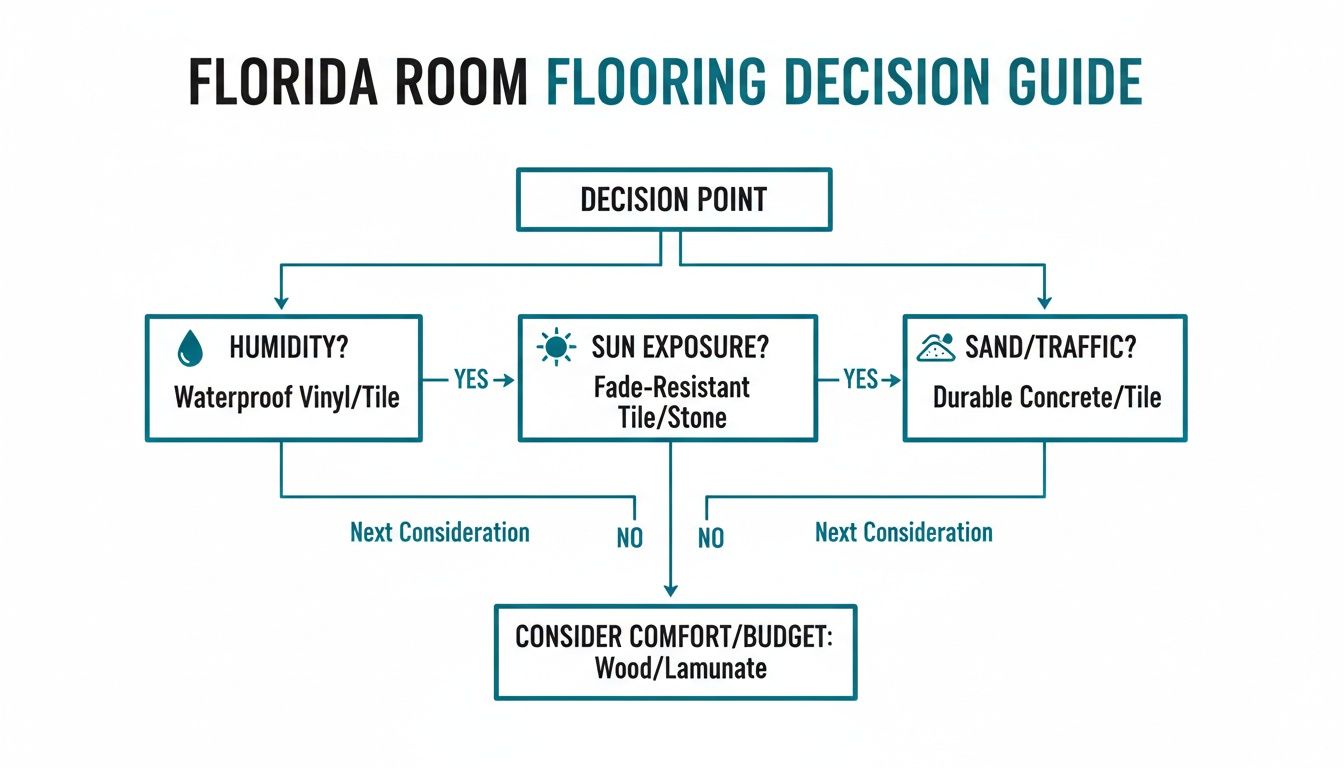
As the flowchart shows, if being completely waterproof is your non-negotiable, both LVP and tile are fantastic starting points. From there, other factors can help you make the final call.
H3: Engineered Hardwood: The Authentic Wood Solution
So many Naples homeowners I talk to love the classic warmth of real wood but are rightfully concerned about how it will hold up in our climate. This is exactly where engineered hardwood comes in. It gives you that authentic beauty you're after with a construction that's smart enough to handle Florida’s humidity swings.
Unlike a solid plank of wood, engineered hardwood is built in layers—a top layer of real wood veneer bonded to multiple layers of plywood.
Think of it like a high-tech wood sandwich. The layers are stacked in a cross-grain pattern, which gives the plank incredible dimensional stability. This construction fights the wood's natural urge to expand and contract with humidity changes.
This brilliant design means you can enjoy a genuine oak, hickory, or maple floor in your sunroom without holding your breath every time the barometer climbs. For example, a wide-plank, light-finished engineered oak gives an Old Naples sunroom a bright, coastal feel, adding an organic texture that beautifully complements the garden views and stands up to the environment.
If you're thinking about creating a new space that truly showcases premium materials like this, you can learn more about how we integrate them into our custom home building services.
H3: Porcelain Tile: The Undisputed Durability King
When you just need a floor that is tough as nails, porcelain tile is your answer. It’s made from a very fine, pure clay that's fired at incredibly high temperatures. This process makes porcelain much denser, harder, and less porous than regular ceramic tile, giving it a water absorption rate of 0.5% or less.
In plain English, that means it’s completely waterproof and couldn’t care less about Florida's humidity. It’s also wildly resistant to scratches, stains, and the fading that comes from being blasted by the sun all day, making it a perfect choice for sun-drenched rooms that see a lot of action.
Picture a sleek, large-format porcelain tile in a sandy color that flows from your living room, through the Florida room, and right out to the pool deck. Its natural cooling effect feels amazing on bare feet after a day in the sun, and you’ll never have to worry about sand scratching it or a splash of chlorinated water leaving a stain.
As you explore options, it's helpful to understand the difference between natural stone versus engineered stone, as porcelain stands as a premier engineered choice. Its sheer versatility and strength make it a top contender for any luxury coastal home.
What’s Trending in Florida Room Design for 2026?
The Florida room is really the soul of a Naples home, isn't it? It’s where the sunlight streams in, where you connect with the outdoors, and where the relaxed coastal lifestyle truly comes to life. The flooring you choose is the foundation for that entire vibe, setting the stage for everything else.
As we look ahead to 2026, we're seeing a big shift in how people design these spaces. The cool, almost sterile grays that have been popular for so long are finally making way for something warmer, more organic, and deeply connected to our gorgeous Naples scenery. This is about creating a foundation that doesn’t just look good, but feels right—a floor that makes the most of natural light and brings a sense of calm from the outside, in.
Let's dive into the key trends that are popping up in luxury coastal homes and how you can use them to inspire your own sun-drenched sanctuary.
The Move Toward Organic Warmth
For what felt like a decade, cool grays were everywhere. But that chapter is closing. The biggest story in flooring for 2026 is a return to "Organic Warmth." Think about tones that echo the golden glow of a sunset over the Gulf or the soft, sun-bleached shade of driftwood you’d find on the beach.
This whole look is inspired by biophilic design—a simple idea that we feel better when we're connected to nature. The colors are earthy and inviting, creating a space that feels both incredibly luxurious and completely effortless.
Honeyed Oak: A timeless choice that brings a bright, sunny character to a room.
Raw Birch: Perfect for a lighter, more minimalist aesthetic with beautifully subtle grain.
Toasted Pecan: Gives you a deeper, richer warmth without feeling dark or heavy.
These tones do more than just look pretty; they grab all that wonderful Florida sunlight and bounce it around, making the whole room feel bigger and brighter.
Grand Format Planks for That Wide-Open Feeling
Another trend we're seeing everywhere is the switch to grand format planks. People are moving on from the traditional narrow boards and falling in love with wider, longer planks. The effect is stunning—it creates a cleaner, more seamless foundation that completely changes how you experience the room.
Fewer seams mean fewer lines chopping up the space. Your eye just glides across the floor, making the entire room feel more expansive and put-together. It’s like the difference between painting with short, choppy strokes and long, graceful ones. The result is just more fluid and elegant.
The 2026 flooring scene in South Florida marks a dramatic pivot from the 'Cool Gray' era—dominant since around 2015—to 'Organic Warmth' tones. Grand format planks, now standard at 9 inches wide and up to 7-9 feet long, dominate trends, reducing seams by 40-50% compared to traditional 5-inch boards and creating an expansive feel in open floor plans. To see more on what's driving these changes, you can explore the top 2026 flooring trends for South Florida.
This is a game-changer in Florida rooms, especially since they often flow into other living areas or out to the lanai. Using these large planks helps tie everything together, blurring the lines for a beautifully unified home.
The Quiet Luxury of Matte Finishes
Finally, those super glossy, high-shine floors are taking a backseat to sophisticated matte finishes. A matte floor gives you a soft, non-reflective surface that feels incredibly modern and upscale. It diffuses light instead of bouncing it back at you, which makes the floor—especially wood-look styles—appear much more natural and authentic.
But honestly, the real beauty of a matte finish is how practical it is for a room that gets this much light.
Hides Almost Everything: Matte surfaces are fantastic at hiding the little things—minor scuffs, dust, and footprints that are just part of life in a well-loved room.
Cuts Down on Glare: In a space bathed in sunlight, a glossy floor can be blinding. A matte finish gets rid of that harsh glare, creating a much more comfortable and relaxing atmosphere.
Just picture it: a soft, matte-finished light oak floor in your Florida room. It’s a gorgeous, organic base for your furniture, but it’s also working behind the scenes to keep your space looking perfect with less fuss. That blend of sophisticated style and real-world practicality is exactly what modern Naples living is all about.
The Case for Engineered Hardwood: Real Wood, Reimagined for Florida
For so many homeowners in Naples, the rich, authentic character of real wood is non-negotiable. But let's be honest, the thought of putting solid hardwood in a humid, sun-drenched Florida room can be terrifying. This is exactly where engineered hardwood comes in, delivering that genuine wood beauty you love, but with the built-in stability our climate demands.
It’s the ideal solution for anyone who wants the look of real wood without constantly worrying about warping, cupping, and moisture damage.
A Smarter Construction for Our Climate
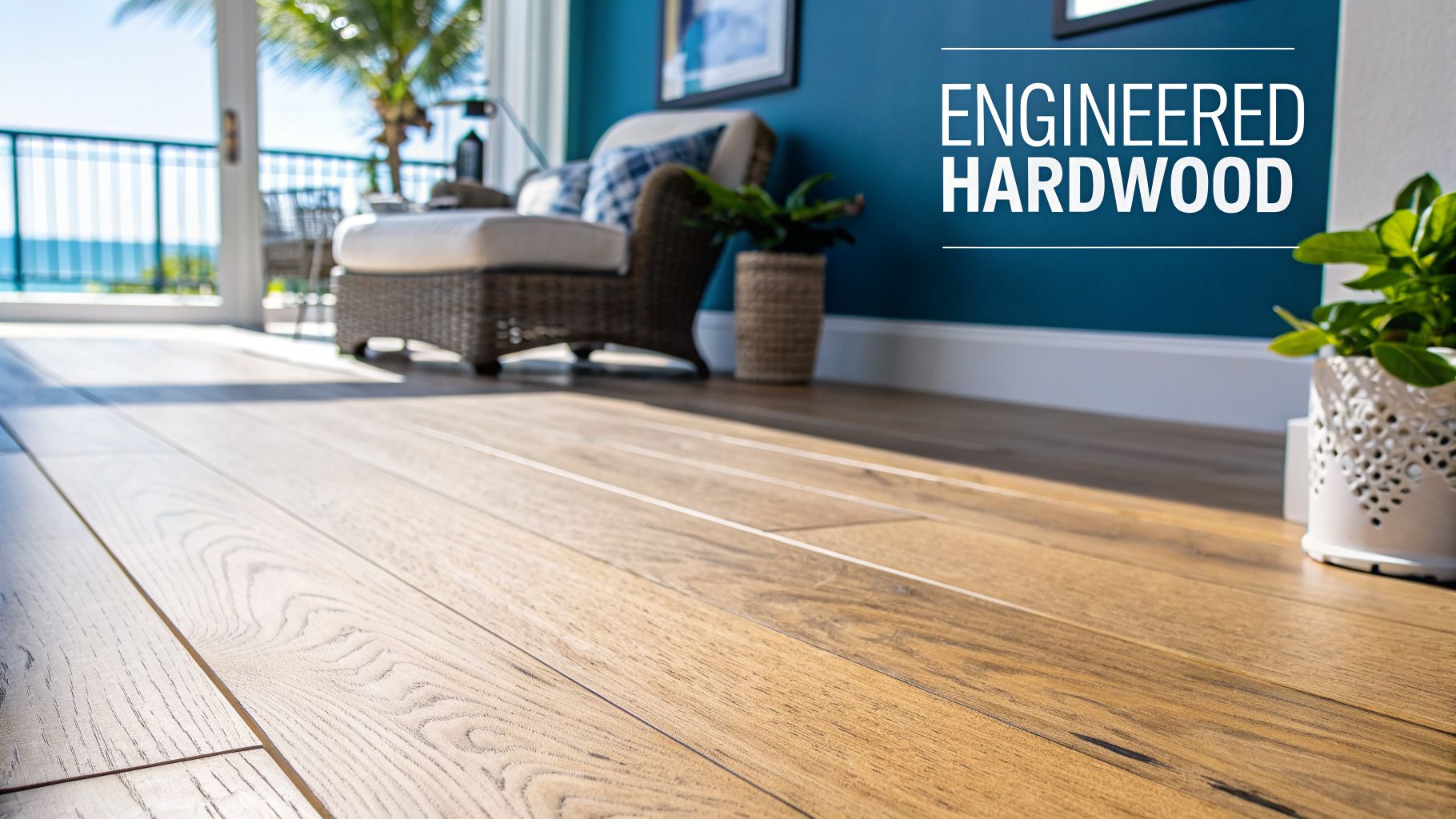
So what's the secret? It’s all in the construction. A solid wood plank is just that—one solid piece of wood. An engineered plank, on the other hand, is built in layers. You get a top layer of gorgeous, high-quality solid wood (the part you see and walk on), which is bonded to a core of multiple plywood or high-density fiberboard layers.
The real genius is how those core layers are put together. Each layer is stacked and fused in the opposite direction of the one below it, creating a stable, cross-grain pattern. This structure essentially works against itself, preventing the plank from expanding or contracting when humidity levels swing.
This clever design is what makes it a star performer in a Florida room. It stands up to the moisture in our air, resisting the gapping and buckling that can ruin a solid wood floor in this environment.
Nailing the High-End Coastal Aesthetic
Today’s engineered hardwood is a perfect match for the luxury coastal look we see all over Naples. It’s now widely available in the wider planks and longer boards that create an expansive, seamless feel, making any room appear larger and more open.
In fact, its stability is the reason it has become a go-to for luxury homes. Where solid wood can warp by as much as 5-10% in high humidity, engineered hardwood's cross-grain construction holds firm. Those wide planks (think 5+ inches) and longer boards are especially popular right now, minimizing seams and complementing the open-concept layouts so common in Florida's indoor-outdoor living spaces. You can see more on how these specific hardwood trends are influencing Florida homes in new builds and remodels.
To get that bright, airy feel, we often recommend:
Light European Oaks: These finishes do an amazing job of reflecting sunlight, making the whole room feel bigger and creating a calm, organic vibe.
Wire-Brushed Finishes: This texturing adds a touch of rustic character that feels lived-in and does a fantastic job of hiding minor scratches or scuffs.
Matte and Satin Finishes: With less sheen, these finishes offer a sophisticated, modern look that dramatically reduces glare from our intense Florida sun.
Is It the Right Choice for Your Florida Room?
Engineered hardwood really hits that sweet spot between timeless style and everyday performance. You get the authentic look and solid feel underfoot that only real wood can provide, but its modern construction ensures it’s a durable investment that will last for years.
For the homeowner who refuses to compromise—wanting both the organic allure of wood and a practical, worry-free solution—engineered hardwood is often the perfect answer for a beautiful Naples home.
Great Installation: The Secret to a Floor That Lasts
You’ve done the hard part and picked out the perfect flooring for your Florida room. But here’s a little secret from the pros: the material itself is only half the story. The real key to a beautiful floor that stands the test of time is a flawless installation. This is where true craftsmanship makes all the difference and protects your investment.
Think of it this way: you can buy the finest ingredients, but it’s the chef’s skill that turns them into a Michelin-star meal. It’s the same with your floors. A professional installation ensures your new flooring isn’t just laid down, but perfectly integrated into your Naples home for a finish that feels truly custom.
Why You Can't Skimp on Professional Installation
In a luxury home, a high-end finish is all about precision, and that goes way beyond simply cutting planks to fit. There's a real science to it, especially given our unique coastal climate. One of the most important, and surprisingly often skipped, steps is acclimation.
Acclimation is simply letting the new flooring material rest inside your home for a few days before it's installed. This gives the material time to adjust to your home's specific temperature and humidity, which prevents frustrating issues like buckling, gapping, or cupping down the road.
In Florida, with our constant humidity swings, skipping this step is just asking for trouble. An experienced installer knows this and will always build this crucial waiting period into their timeline, making sure the material is stable before a single piece is laid.
It’s All in the Details
A truly masterful installation is defined by the little things that come together to create a seamless, polished look. This includes:
A Perfect Subfloor: The best installers are obsessed with the subfloor. They’ll meticulously check, level, and clean it, because they know any bumps or imperfections will show right through the finished surface.
Expert Technique: Whether it’s the careful math needed for an intricate tile pattern or the artistic eye required to stagger wood planks naturally, technique is everything.
Flawless Transitions: The mark of truly great work is how the new floor meets other surfaces. Creating smooth, elegant transitions between your Florida room and the rest of your home is a sign of a real craftsman.
Working with an experienced team is the surest way to get a result you’ll love for years. If you’re getting ready for a remodel, it’s a good idea to know what to ask a general contractor to be sure their standards for quality match yours.
Ready to see how expert installation can bring your vision to life? Contact our team today, and let's make sure your new floor is a lasting work of art.
A Few Final Questions About Your Florida Room Floors
Making the final call on flooring can feel like a big decision. We get it. To help you feel completely confident, we've gathered a few of the questions we hear most often from Naples homeowners just like you.
Can I Put Area Rugs in My Florida Room?
Absolutely! In fact, we highly recommend it. An area rug is the perfect way to add a touch of softness, protect the floor underneath, and really define a space, like your seating area or a dining nook. It’s what makes a sunroom feel less like a porch and more like a true living room.
Of course, not just any rug will do in our humid climate. You need something that can handle the moisture and sun.
Natural Fibers: Think jute or sisal. Their earthy, woven texture is a natural fit for the coastal vibe, and they're surprisingly durable and breathable.
Indoor/Outdoor Rugs: These are your workhorses. Usually made from materials like polypropylene, they’re designed from the ground up to resist humidity, fight off fading from the sun, and handle occasional moisture with ease.
What's the Best Flooring for a Room That Gets a Lot of Sun?
If you're looking for a material that simply won't fade, porcelain tile is the hands-down winner. Because its color runs all the way through the tile, the intense Florida sun just can't bleach it out. It's virtually immune.
That said, other materials have come a very long way. High-quality Luxury Vinyl Plank (LVP) and many engineered hardwoods now come with some seriously advanced UV-protective coatings. These top layers are engineered specifically to shield the floor from the sun's rays and keep the color looking great for years.
Here's a pro tip: When you're shopping for any flooring that's going to be in a sunny spot, always ask about the product’s UV rating and the specifics of its warranty against fading. That's how you know you're getting a floor built for a sun-drenched Naples home.
How Do I Clean Sand Off My Floors Without Scratching Them?
Ah, the classic Naples problem! Sand is going to find its way inside; that's just part of living by the coast. The trick is to get it up without letting those tiny, abrasive grains grind against your floor's finish and dull it over time.
Your best friends here are a vacuum with a soft-bristle brush attachment or a simple microfiber dust mop. These tools lift the sand away instead of dragging it across the surface. Whatever you do, avoid a regular broom with stiff bristles—it basically acts like sandpaper on your beautiful new floors. For tile, you can sweep and mop as usual, but for LVP and engineered wood, always stick to the manufacturer's cleaning guide and pH-neutral cleaners to keep that protective finish intact.
Feeling good about your flooring choice is the last piece of the puzzle. When you’re ready to turn that vision into a stunning reality, the team at JVM Construction is here to help. We live and breathe luxury renovations and custom homes that are built to last right here in Naples.
You can learn more about our process and see how we bring dreams to life by visiting our contact page. Ready to start the conversation about your project? Give us a call or fill out our online form today. We'd love to hear what you have planned.