
Enhance Your Naples Home: The Definitive Guide to Vaulted Ceilings
Walk into a newly finished Naples great room with a well-proportioned vault, and the ceiling sets the tone before the stone flooring, millwork, or view command attention. Height changes how the room reads. It can make a house feel gracious and custom, or make it feel echo-prone, overheated, and harder to light if the design is handled casually.
That distinction matters in Southwest Florida. A vault is never just a visual choice here. It affects roof framing, insulation strategy, duct routing, moisture control, storm-rated glazing details, and even how often you need a lift for future maintenance. Homeowners planning a custom build or major remodel in Naples need more than inspiration photos. They need to know what each vault type gives them, what it costs them, and where it creates complications.
In my experience, the best ceiling decisions come from balancing style with building science. A dramatic barrel vault may suit a formal entry or a long gallery hall, but it can complicate air distribution in a humid climate. A coffered vault can add order and character to a large room, though it also adds finish carpentry cost and more surfaces to detail cleanly. Even a simpler tray or cove profile can be the smarter move when the goal is a refined interior with better service access and tighter budget control. Homeowners weighing classic versus contemporary ceiling design ideas usually benefit from reviewing ceiling form at the same time as the HVAC and lighting plan, not after framing is underway.
At JVM Construction, we treat the ceiling as the fifth wall because it has a direct effect on comfort, maintenance, and resale appeal. In Naples communities from Port Royal to Aqualane Shores to Mediterra, the right vault needs to fit the home’s architecture, the exposure of the lot, and the expectations of a coastal luxury buyer. Material choices also matter. Finishes and framing assemblies should be selected for humidity resistance and long-term stability, especially in homes with large spans, expansive glass, and high-performance mechanical systems.
The sections below examine eight vault ceiling designs with a Naples-specific lens. The focus is practical. Where each style works best, what trade-offs come with it, how it performs in a coastal home, and which options tend to justify their cost in a high-end build.
1. Coffered Vault Ceilings
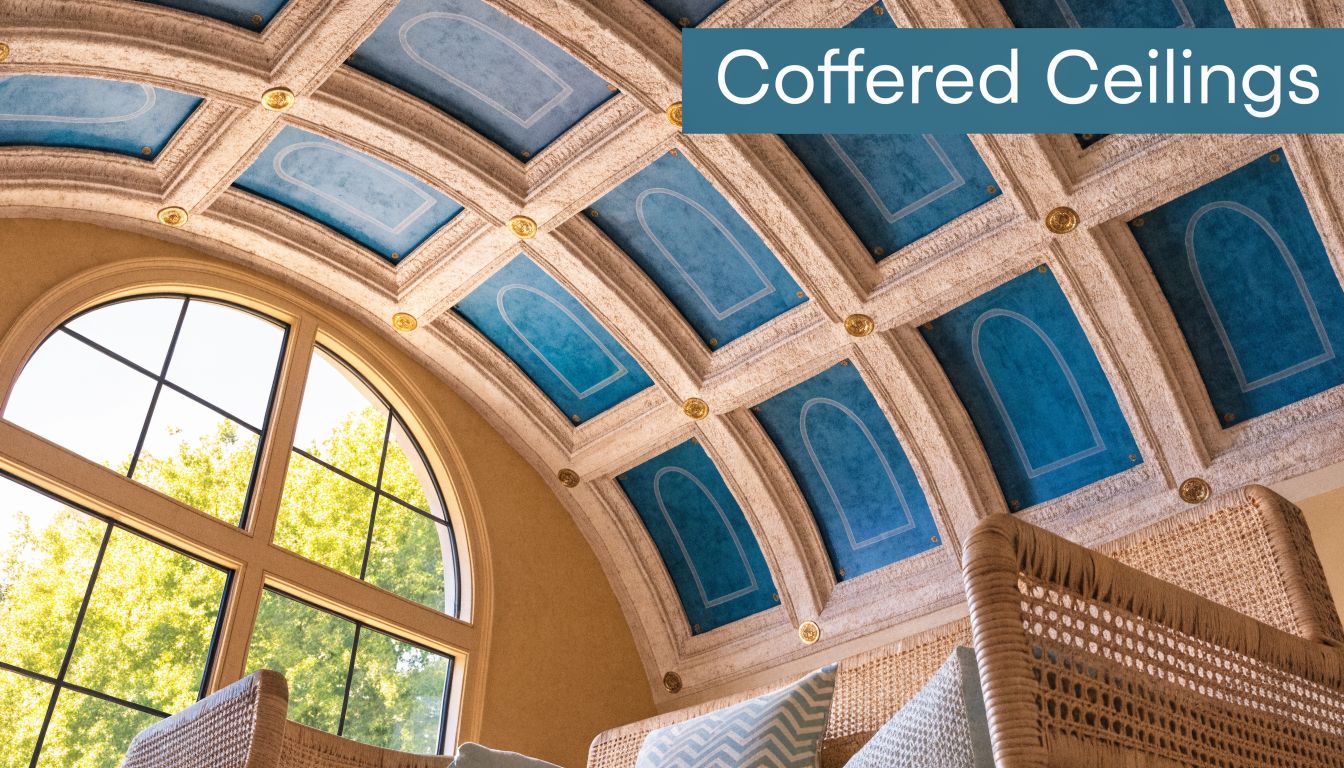
Walk into a Naples great room with a high roofline and broad water views, and a plain vault can feel unfinished. A coffered vault solves that by giving the ceiling structure, scale, and a clear pattern your eye can read from across the room. In Mediterranean, transitional, and formal coastal homes, it often delivers the right amount of architectural detail without pushing the room into excess.
I recommend this ceiling when the room is large enough to support it and the rest of the house has the millwork quality to match. Coffered vaults ask for precision. If the beam spacing is off, if the coffers ignore the window layout, or if the trim package is too heavy, the ceiling starts to fight the architecture instead of strengthening it.
In Naples, the best versions usually show restraint. Lighter coffer fields help bounce daylight deeper into the room. Cleaner beam profiles feel more current and hold up better in resale than dark, ornate treatments that can date the interior quickly.
Where it earns its cost
This ceiling type makes the most sense in great rooms, studies, formal dining rooms, and primary sitting rooms with enough width and ceiling height to keep the coffers from feeling crowded. It can also bring order to an open-concept living area by visually organizing a large span without adding walls or dropping the whole ceiling plane.
The trade-off is cost. A coffered vault is not just a framing decision. It adds finish carpentry, drywall transitions, extra paint labor, more detailed lighting coordination, and more surfaces that need to stay crisp in a humid climate. In a luxury Naples build, that cost can be justified when the room is a focal point and the home’s architecture supports a richer ceiling language. In secondary bedrooms, casual dens, or spaces with limited height, a tray or cove ceiling often delivers a better return.
For homeowners planning a full custom build, this is the kind of detail that should be priced and drawn early with an experienced Naples custom home building team, not added after structural framing is underway.
Naples-specific planning points
Coffered vaults perform best here when the assembly is designed for moisture control and service access. Wood movement, hairline cracking at beam joints, and uneven finish lines show up faster in coastal homes if the substrate, HVAC strategy, and conditioning schedule are not handled correctly.
A few choices matter more than homeowners expect:
Keep the coffers proportional to the room. Deep recesses need real height. In a marginal room, shallow coffers with sharper profiles usually look better.
Coordinate the layout with the architecture. Beam lines should relate to windows, fireplaces, kitchen islands, and chandelier locations.
Plan air distribution before millwork details are finalized. High decorative ceilings can create hot and cool pockets if supply and return placement is treated as an afterthought.
Use stable materials and finishes. In Naples, that often means careful substrate selection, humidity-resistant primers, and trim details that tolerate slight seasonal movement.
Realistically review cleaning and maintenance. Coffered vaults collect dust on ledges and reveal repainting issues faster than a simpler ceiling profile.
I have seen homeowners spend heavily on a coffered vault, then lose the effect by overloading it with too many recessed cans, oversized beams, or contrast paint that chops up the ceiling. The ceiling should frame the room, not dominate every conversation in it.
For homeowners drawn to this layered look, contemporary ceiling design ideas from JVM Construction are a useful next step, especially if you’re trying to balance classic detailing with a cleaner Naples aesthetic.
2. Barrel Vault Ceilings
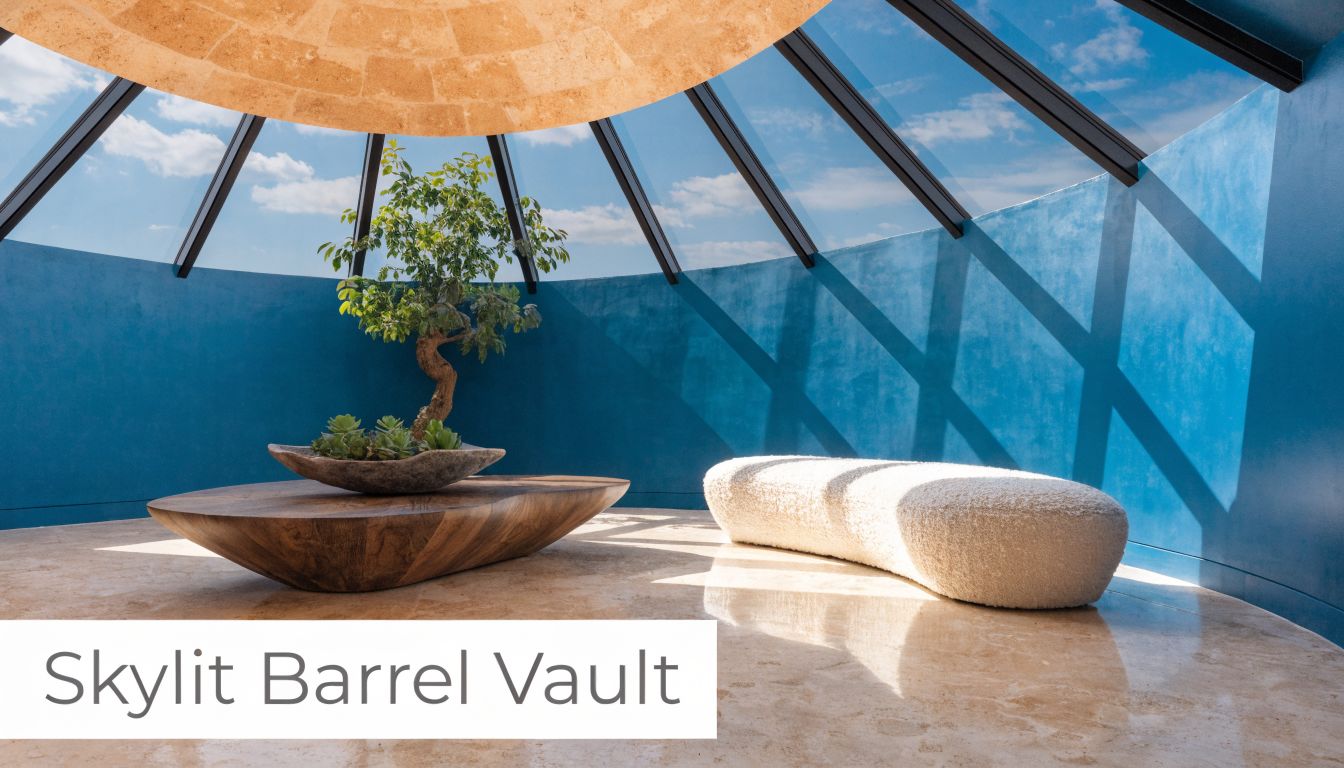
You walk into a long waterfront great room and the ceiling does the directing. A barrel vault pulls your eye from the entry toward the view, which is why this profile works so well in Naples homes with strong axial layouts and outdoor living beyond.
The form is simple. One continuous curve runs the length of the room. Done well, it feels calm and intentional. Done poorly, it feels like a tunnel dropped into a house that never asked for it.
Barrel vaults earn their keep in spaces that already have direction: gallery halls, primary bedroom vestibules, dining rooms, and narrower great rooms with a clear focal point. In coastal luxury communities around Naples, I see them used most successfully in Mediterranean, transitional, and softly contemporary homes where the architecture can support a curved ceiling without forcing ornamental trim.
Where the value is, and where the cost goes up
A barrel vault usually costs less to frame and finish than more complex intersecting vaults, but more than a standard tray or flat ceiling. The added cost comes from curved framing, drywall labor, finish work, and coordination with lighting and mechanicals. In new construction, that premium is usually reasonable. In a remodel, it rises fast if roof lines, attic access, or duct routes are already fixed.
The climate changes the calculation. In Naples, the ceiling shape has to work with insulated roof assemblies, humidity control, and supply and return placement that can condition the upper volume. A beautiful curve with poor air movement will leave warm air trapped high and can make the room less comfortable than a simpler ceiling.
Material choice matters too. For custom builds in a hurricane-prone market, I prefer assemblies that are straightforward to strap, brace, and finish cleanly with rated components appropriate to the structure. Curved drywall can perform very well here, but only when the substrate, fastening schedule, and moisture management are handled correctly.
What to decide early
If a barrel vault is under consideration, sort out these items during design, not after framing starts:
Give the room enough length for the shape to read clearly. Short rooms often look swollen rather than graceful.
Set the rise carefully. Too shallow and the ceiling looks almost flat. Too high and the room starts to feel compressed at the side walls.
Keep the finish palette restrained. Plaster, smooth drywall, or light wood detailing usually ages better than busy patterns on a curved surface.
Coordinate linear diffusers, returns, and concealed lighting early. Retrofitting them into a finished vault is expensive and rarely looks intentional.
Review the exterior roof impact. Interior curves are easier to justify when the roof structure above can accommodate them without awkward transitions.
I also caution homeowners against adding a barrel vault just because they want one dramatic ceiling somewhere in the plan. The best projects use it where it improves the room's geometry and circulation. If you are in the planning stage, studying how an experienced Naples team approaches luxury home construction for custom coastal residences will give you a better sense of how these decisions get resolved before they turn into costly field revisions.
A barrel vault should guide the room, not overpower it. That is the trade-off. It delivers strong architectural character with fewer moving parts than a groin or ribbed vault, but only if the proportions, HVAC strategy, and finish discipline are right from the start.
3. Groin Vault Ceilings

You walk through the front door, pause in the center of the foyer, and the ceiling tells you exactly where the house begins. That is where a groin vault earns its cost. Two curved vaults intersect, the lines cross overhead, and the room gains structure, hierarchy, and a stronger sense of arrival.
In custom Naples homes, I use groin vaults sparingly and usually in one of two places: a formal entry or a major hall intersection. They perform best where circulation crosses and the architecture needs a focal point above eye level. Used well, they add complexity without crowding the walls with extra columns, deep trim packages, or ornamental millwork.
The trade-off is straightforward. A groin vault is more demanding than a barrel vault to frame, finish, and light correctly. The intersecting curves create four transition zones, and every one of them shows mistakes. If the geometry is off, even slightly, the finished ceiling looks tense instead of graceful.
That is why room proportion matters so much here.
A compact foyer rarely gives a groin vault enough span to read cleanly. In a larger entry hall, gallery, or vestibule between formal rooms, the shape has room to develop and the center intersection feels intentional. This ceiling type also suits homeowners who want a classical or Mediterranean note without turning the entire house into a themed interior, which is a common concern in Naples luxury communities where coastal restraint often ages better than heavy ornament.
Where the value shows up
A groin vault can justify its premium when it solves a planning problem and creates a memorable arrival sequence at the same time. It is less about adding decoration and more about giving an important crossing point architectural weight.
For Naples projects, the practical questions matter as much as the visual result:
Framing and finish labor cost more: Intersections require tighter layout, stronger supervision, and drywall crews that can finish compound curves cleanly.
HVAC coordination gets harder: Supply and return placement needs to happen early, especially in humid coastal homes where airflow and dehumidification cannot be an afterthought.
Lighting needs discipline: Small aperture fixtures, concealed uplighting, or carefully aligned accent lights usually work better than a grid of cans scattered across the curves.
Material choice matters near the coast: Use assemblies and finishes that hold up to seasonal humidity swings and integrate cleanly with hurricane-rated window and door packages nearby.
I also caution clients against adding decorative ribs unless the rest of the house supports that language. In many Naples homes, a plain plaster groin vault with sharp geometry looks more expensive than one overloaded with faux historical detail.
If you are planning a custom build and weighing whether this ceiling belongs in the foyer, the smartest next step is to review how an experienced team handles structure, finish sequencing, and mechanical coordination during luxury home construction in Naples.
A groin vault is a high-reward move in the right location. It costs more than simpler vault types, but in a strong entry sequence, few ceiling treatments create the same sense of permanence and intent.
4. Cove Vault Ceilings
A cove vault ceiling softens the room before anyone identifies why. Instead of a hard angle where the wall meets the ceiling, the transition curves gently upward. That subtle move changes the feel of the space. It makes a room feel calmer, more polished, and less boxy.
This is a strong choice for contemporary Naples homes, especially when the goal is understated luxury rather than overt ornament. In waterfront residences with clean cabinetry, large-format stone, and slim-profile windows, cove details often fit better than heavy beams or classical paneling.
Why cove vaults feel more modern
Sharp corners create a defined edge. Cove transitions erase that edge. In design terms, that means the eye moves more smoothly around the room, which is a major reason cove vaults work so well in primary bedrooms, media lounges, and open living areas.
They also pair naturally with indirect lighting. A concealed LED strip tucked into the cove can wash the ceiling with light and emphasize the curve without exposing the fixture itself. That’s especially useful in spaces where homeowners want ambient evening light instead of visible cans everywhere.
Soft transitions usually age better than trendy decorative add-ons.
Practical trade-offs in humid climates
Cove vaults look simple, but they require planning. The framing has to be accurate, the drywall crew has to know how to build a smooth radius, and the painter needs to finish it cleanly. Every imperfection catches light on a curve.
They’re also not a free pass on performance. In Naples, you still need to think about insulation continuity, air sealing, and service access above the ceiling. A beautiful cove with poorly planned HVAC can leave you with comfort issues in exactly the room meant to feel most serene.
Keep these points in mind:
Use coves where lighting matters: Bedrooms, great rooms, and formal sitting spaces benefit most.
Choose the radius carefully: Too tight feels fussy. Too broad can disappear.
Coordinate with millwork and trim: Modern coves usually work best with cleaner profiles.
What doesn’t work is mixing a sleek cove vault with heavily traditional molding packages. The language clashes. The best cove ceilings feel intentional from wall finish to fixture choice.
5. Tray Vault Ceilings
Walk into a Naples primary bedroom with 10-foot walls and a flat lid, and the room can feel heavier than the square footage suggests. Raise the center plane with a tray vault, keep the perimeter lower, and the space gains relief without taking on the cost, engineering, and visual force of a full barrel or dome.
That balance is why tray vaults show up so often in well-designed custom homes here. They fit the way people live in Naples, especially in primary suites, dining rooms, studies, and condo renovations where structure, mechanical runs, and budget all need to stay under control.
Why tray vaults earn their keep
A tray vault gives you design flexibility without asking the house to revolve around the ceiling. The detailing can shift traditional, transitional, or clean contemporary based on the profile, trim package, and lighting plan. In luxury coastal homes, that matters. The ceiling should support the architecture and furnishings, not turn every room into a feature room.
They also make financial sense more often than other vault types. A tray usually costs less to frame and finish than a true curved vault, and it is easier to repeat selectively across a floor plan. That makes it a strong cost-benefit choice for homeowners who want architectural depth in several rooms without putting the budget into specialty framing and finish labor everywhere.
Where they work best in Naples
I like tray vaults in rooms that benefit from polish but still need to feel settled. Primary bedrooms are a good example. So are formal dining rooms, club rooms, and smaller great-room zones in larger open plans. In these spaces, a tray gives you vertical interest while keeping the room proportioned for furniture, artwork, and controlled lighting.
They are also useful under hip-roof conditions, which come up often in Florida home design. As noted in SK Roofing & Construction’s discussion of vaulting a hip roof, roof structure affects how much ceiling volume you can realistically create. A tray can be the practical answer when a full structural vault is possible but not the smartest use of money.
Trade-offs that matter in a humid, coastal climate
Tray vaults are forgiving visually, but they still need discipline. The proportions matter. A tray that is too shallow disappears. One that climbs too high or uses multiple fussy steps can date the room fast.
In Naples, I also look hard at HVAC before approving the final section. Higher center ceilings can collect heat, and poorly placed supply and return locations can leave the occupied zone less comfortable than the ceiling suggests. If the home includes concealed LED lighting in the tray, plan access, insulation continuity, and air sealing early. Humid air finding its way into the ceiling assembly is a performance problem, not just a finishing problem.
For coastal construction, material choices matter too. Use moisture-resistant board where appropriate, keep framing tolerances tight, and coordinate the ceiling package with any required hurricane-rated glazing nearby. Big windows and doors often drive the room composition in Naples. The tray has to work with that glass, not compete with it.
A few rules keep tray vaults looking expensive rather than generic:
Align the tray with the room layout: Center it on the bed, table, or main seating group, not just on the framing grid.
Keep the geometry disciplined: One clean step or a subtle slope usually ages better than stacked decorative layers.
Use lighting with restraint: Perimeter light can add depth, but too much glow reads like a hotel renovation.
Size it for the room: Large rooms can carry a broader tray. Smaller rooms need a tighter, quieter profile.
Tray vault ceilings are rarely the boldest option. They are often the smartest one. In Naples luxury homes, that usually leads to better long-term results.
6. Dome Vault Ceilings
You step through the front door, look up, and the ceiling settles the whole room in one move. That is the role of a dome. In a Naples custom home, it belongs in a space with real ceremonial weight, such as a foyer, rotunda, formal dining room, or a primary suite vestibule with strong architecture around it.
A dome succeeds when the room plan and the ceiling geometry are resolved together. Circular, oval, and octagonal rooms are the cleanest fit. Square rooms can work too, but only if the transition into the dome is drawn carefully with pendentives or disciplined corner detailing. If that geometry gets fuzzy on paper, it will look worse after drywall and paint.
Historically, domes have always depended on proportion, structure, and light working as one system. That principle still applies in residential work. Homeowners do not need a grand historical reference to appreciate it. They notice when a dome feels centered, calm, and intentional, and they notice just as quickly when it feels oversized or ornamental for its setting.
In Naples, domes also need a cost-benefit test. They are among the more expensive vault types because the framing is specialized, the drywall crew needs real curved-surface skill, and the finish work shows every inconsistency. A well-built dome can justify that premium in an entry sequence or formal room that anchors the house. In a secondary bedroom or casual living area, the same budget usually delivers more value elsewhere, often in millwork, glazing upgrades, or better outdoor transitions.
Material selection matters here. Humidity exposes weak finishing fast, especially on curved surfaces where light grazes across the ceiling and highlights every wave or seam. I prefer assemblies and finish schedules that are suited to coastal conditions, and I want the framing crew, drywall crew, painter, and HVAC contractor coordinated before the ceiling is closed.
An oculus or skylight raises the stakes. Natural light can make a dome exceptional, but in Southwest Florida it also introduces heat gain, waterproofing risk, and more scrutiny around hurricane-rated glazing details. If a client wants that feature, I price it as a performance decision, not just a design flourish.
The best dome in a home feels anchored to the room, the plan, and the climate.
Restraint usually leads to the better house. One dome in the right place creates more impact than several competing ceiling gestures spread through the plan.
7. Ribbed Vault Ceilings
Ribbed vault ceilings bring line, shadow, and structure together. The ribs can be decorative or structural in appearance, but either way, they create a framework that gives the vault more definition than a plain curved surface. In Naples, this style is a natural fit for Mediterranean, Spanish Revival, and some traditional coastal homes.
I like ribbed vaults most in rooms where texture matters as much as scale. Libraries, wine rooms, galleries, and intimate great rooms all benefit from the added articulation. A ribbed vault can make a ceiling feel crafted rather than merely tall.
Why ribbed vaults have staying power
Historically, rib and groin systems helped builders create expressive ceilings with clear structural logic. In residential design, that legacy still matters because the eye reads ribs as purposeful. They create cadence across the ceiling and can visually tie into beams, openings, or wall pilasters below.
They also help break down larger surfaces. In a long barrel vault, ribs can keep the ceiling from feeling blank. In a more decorative home, they can connect beautifully to plaster textures, wood finishes, and custom iron lighting.
What to watch during design and build
This style rewards precision. Rib spacing, rib depth, and alignment with the room’s architecture all need to be deliberate. If the ribs are too heavy, the ceiling starts to feel oppressive. If they’re too small, they look apologetic.
Here's a practical perspective:
Use ribs to reinforce architecture: They should align with openings, niches, or key room axes.
Choose materials carefully: Painted millwork, stained wood, or plaster each create a different level of formality.
Light between the ribs: That usually shows the vault shape better than trying to highlight the rib itself.
One caution for Naples homeowners. Ribbed ceilings gather visual complexity quickly. If the room already has strong flooring patterns, dramatic stone, and elaborate cabinetry, a ribbed vault can push it too far. This ceiling works best when the surrounding palette gives it room to lead.
8. Barrel Vault with Skylights or Windows
Early afternoon in Naples, the sun is high, the pool deck is throwing light back into the house, and a great room can either feel bright and refined or hot and washed out. A barrel vault with skylights or high windows can produce a beautiful result, but only if the daylight strategy is designed as carefully as the ceiling itself.
This approach works well in kitchens, breakfast rooms, hallways, and great rooms because it brings light deeper into the home while keeping the ceiling line clean and architectural. In a custom coastal home, that combination has real value. You get the drama of the vault and daylight from above, without giving up wall space for cabinetry, art, or large sliders.
The trade-off is performance. In Naples, glass at the ceiling needs to address heat gain, glare, UV exposure, wind loads, and water management from the start. If those decisions are made late, this ceiling gets expensive fast.
Why homeowners choose it
A standard barrel vault already makes a room feel longer and taller. Adding skylights or clerestory-style windows increases that effect because the eye follows the curve toward the light source. On tighter luxury lots, that can make a moderate footprint feel more generous than it is.
I recommend this design most often in spaces that need daylight but still need privacy, or in rooms where exterior wall space is already committed to doors and views. It is especially effective in a morning room facing east or a central hall that would otherwise rely on artificial light all day.
What matters in Naples
Openings in a vaulted ceiling are not just a design feature. They affect framing, roofing, insulation continuity, and HVAC sizing.
For Naples homes, the planning checklist is straightforward:
Use hurricane-rated glazing and framing: Overhead glass and high wall glazing must meet local wind and impact requirements.
Control solar exposure: Low-E coatings, laminated glass, and the right orientation help reduce glare and heat.
Detail waterproofing carefully: Skylights fail at the transitions, not in the showroom. Flashing, curb details, and roof integration need an experienced installer.
Size the HVAC for the actual glass load: A beautiful vaulted room that struggles to stay cool is a design miss.
Plan shades before framing is complete: Recessed motorized shades and wiring are much easier to handle early.
Cost is usually higher than a standard barrel vault because every opening interrupts the curved structure and adds finish coordination. The payoff can be strong if the room benefits from top light. If the space already has generous windows and southern exposure, more glass overhead may add complication more than value.
Used well, this is one of the smartest ways to give a Naples home a brighter interior and a memorable ceiling at the same time. Used casually, it can create glare, higher cooling demand, and details that are hard to service later. The difference comes down to disciplined design and a builder who treats daylight, structure, and moisture control as one system.
8-Point Comparison of Vault Ceiling Designs
Design | Complexity 🔄 | Resources & Cost ⚡ | Expected Impact 📊 | Ideal Use Cases 💡 | Key Advantages ⭐ |
|---|---|---|---|---|---|
Coffered Vault Ceilings | High, intricate grid, skilled carpentry | Premium materials & labor; ~$25–75+/ft² | Strong luxury aesthetic; improved acoustics & perceived height | High-end living rooms, great rooms, primary spaces | Dramatic depth, lighting integration, timeless appeal |
Barrel Vault Ceilings | High, curved framing & structural planning | Specialized framing/finish; ~$35–85+/ft² | Dramatic flow and openness; continuous sightlines | Hallways, kitchens, master suites, great rooms | Clean curved statement; skylight-friendly |
Groin Vault Ceilings | Very high, intersecting vaults; complex geometry | Highly specialized engineering/carpentry; ~$40–100+/ft² | Exceptional architectural drama; focal intersection | Grand foyers, gallery spaces, formal entries | Strong spatial definition; classical elegance |
Cove Vault Ceilings | Moderate–High, radius calculation, finishing finesse | Skilled drywall/finish work; ~$20–60/ft² | Soft transitions; excellent for indirect lighting | Contemporary living spaces, master suites, open plans | Smooth aesthetic, lighting opportunities, less structural load |
Tray Vault Ceilings | Moderate, rectilinear framing, precise angles | Mid-range materials & labor; ~$15–45/ft² | Modern visual interest; defined ceiling zones | Bedrooms, kitchens, condos, open-concept areas | Easier build than curves; great for recessed lighting |
Dome Vault Ceilings | Extremely high, radial framing, specialist teams | Highest-tier engineering & craft; ~$50–150+/ft² | Monumental focal point; grandeur and strong acoustics | Grand foyers, rotundas, formal gathering spaces | Extraordinary spaciousness; iconic architectural statement |
Ribbed Vault Ceilings | High, coordinated ribs and surfaces | Skilled carpentry/masonry; ~$30–70/ft² | Strong linear character; structural definition | Libraries, wine cellars, traditional/Mediterranean rooms | Structural support with decorative impact; lighting versatility |
Barrel Vault with Skylights/Windows | Very high, glazing + structural integration | Premium glazing & waterproofing; ~$50–120+/ft² (+skylights) | Maximizes daylight; dynamic light/shadow patterns | Kitchens, great rooms, sunrooms, master suites | Natural light and wellness benefits; striking visual drama |
From Blueprint to Breathtaking: Building Your Vision in Naples
Choosing among these vault ceiling designs isn’t just a style exercise. It shapes how your home feels every day. The ceiling affects light, acoustics, furniture scale, mechanical planning, maintenance access, and the emotional tone of each room. In a luxury home, those decisions shouldn’t be made late or treated as cosmetic upgrades.
That’s especially true in Naples. Coastal homes ask more of every design choice. Humidity, storm resilience, solar exposure, and long-term serviceability all need to be addressed while preserving elegance. A ceiling that looks stunning in a rendering can become a headache if the insulation strategy is weak, the lighting is improvised, or the framing doesn’t support the intended finish quality.
The good news is that vaulted ceilings offer real range. A coffered vault can bring formality and depth to a traditional living area. A barrel vault can guide movement through a home with clean architectural confidence. A groin vault can transform a foyer. Cove and tray vaults can add sophistication without overwhelming the room. Domes and ribbed vaults can become defining features when used selectively. And a barrel vault with glazing can make Florida light work for you, not against you.
The strongest custom homes don’t use every dramatic ceiling idea available. They choose the right ones, place them intentionally, and let the architecture breathe. That’s what creates a home that feels refined rather than overdesigned. One well-executed vault in the right location will usually outperform several mediocre ones competing for attention.
For homeowners in the early planning phase, this is also the point where visualization helps. Before framing starts, it’s worth studying how curves, rises, beam depths, and lighting will read from eye level. Tools and renderings can make those decisions more concrete, which is one reason many clients benefit from aiStager's guide to 3D visualization as they compare architectural options.
At JVM Construction, we approach ceilings the same way we approach the rest of a luxury build. With discipline, craftsmanship, and respect for how the home will live. We coordinate design intent with engineering, permitting, framing, finish work, and field execution so the final result doesn’t just photograph well. It performs, lasts, and feels right at full scale.
If you’re planning a custom home build in Naples, FL, or preparing for a whole-home remodel, now is the right time to decide where a vaulted ceiling belongs and which type will serve the home best. The earlier that conversation happens, the more options you have, and the cleaner the result will be.
A great vaulted ceiling doesn’t just raise the roofline. It raises the standard for the entire house. If you’re ready to turn ideas into a buildable plan, JVM Construction is ready to help you do it the right way.
If you're planning a custom home or high-end remodel in Naples and want ceiling details that feel as good in person as they do on paper, talk with JVM Construction LLC. Their team can help you evaluate the right vault ceiling designs for your layout, style, and coastal building needs, then carry that vision through design coordination, permitting, and construction with the level of precision a luxury home deserves.