When you start planning a custom home in Naples, the kitchen usually begins as a mood board. Light oak, painted island, paneled refrigeration, maybe a range wall that opens toward the great room and pool. Then the key decisions begin. Cabinet depth affects appliance fit. Door style changes trim details. Finish choice affects how the room ages in salt air.
That’s why naples kitchen cabinets shouldn’t be treated like a late-stage design selection. In a custom build or major renovation, cabinetry is tied to framing dimensions, electrical planning, plumbing locations, flooring transitions, ceiling details, and the way the whole home functions day to day.
Clients often come in focused on color first. Builders look at structure first. Both matter. The right cabinet package has to do three jobs at once. It needs to fit the architecture, handle Florida’s climate, and support the way your household lives.
Your Naples Dream Home Starts in the Kitchen
You walk the framed house before drywall, stand where the island will go, and realize the kitchen is already setting the terms for the rest of the build. Window heights affect upper cabinets. Appliance specs affect wall widths. A vent hood decision can change framing, duct runs, and even exterior elevations. In a Naples custom home, cabinetry is not a finish choice you make at the end. It is part of the construction plan from the start.
A common goal for a new Naples home is a feeling of openness, calm, and durability. The kitchen has to carry all three. If the cabinet plan is off, the room can look expensive in photos and still feel awkward in daily use.
I see the same costly misses on jobs that start cabinetry too late. Fillers end up wider than they should be because appliance openings were not coordinated early. Island overhangs look generous on plan and turn tight once stool spacing and walkway clearance are measured in the field. Painted finishes chosen under showroom lighting can age poorly in rooms with strong sun, outdoor exposure, and year-round humidity.
A cabinet plan is part of the house’s infrastructure.
In Naples homes, cabinets do more than hold dishes. They set sightlines from the foyer, tie the kitchen to the great room, and often carry into the pantry, bar, laundry, and bath vanities. That continuity matters in a custom build. If the kitchen cabinetry feels undersized, over-styled, or poorly coordinated with the trim package, the whole house loses cohesion.
Why cabinetry shapes the whole project
Three decisions tend to drive the rest of the work:
Cabinet construction: Box material, joinery, door style, and hardware affect how well the installation holds its lines over time.
Layout integration: Appliance openings, venting paths, island dimensions, pantry access, and lighting locations need to match the floor plan before rough-ins are complete.
Finish direction: Painted, stained, natural wood, or mixed finishes influence flooring transitions, wall color, ceiling detail, and trim profiles throughout the main living area.
Naples gives buyers plenty of options, which helps and complicates the process. There are enough local showrooms, suppliers, and semi-custom or custom lines to suit almost any design direction. The harder part is sorting past the display sample and asking the right questions about construction quality, finish system, serviceability, and lead time. A helpful starting point is understanding how cabinet material choices perform in real-world conditions, especially before selections are tied to the build schedule.
What experienced planning looks like
The right cabinet plan starts with jobsite questions, not color chips:
How much salt air reaches the home based on its location and exposure?
Are the cabinets aligning with a custom trim and ceiling package?
Does the kitchen open directly to a covered lanai or outdoor kitchen?
Are there paneled appliances that need exact reveals and filler allowances?
Will the pantry work as a secondary prep space, or is it simple storage?
Those answers shape the cabinet package before drawings are finalized. Good cabinetry should still look right years after move-in, but in a custom Naples build, it also has to install cleanly, coordinate with the structure, and support the way the house will be lived in.
Choosing Cabinet Materials for Florida's Coastal Climate
A cabinet sample can look perfect in the showroom and still be the wrong choice for a Naples build. By the time that mistake shows up on site, the kitchen layout is set, appliance panels are ordered, and the paint schedule is already tied to the cabinet install.
Material selection protects the schedule as much as the finish.

In Naples, cabinetry has to handle conditioned interiors, periods of high humidity, salt air, and frequent transitions between indoor and outdoor living. I look at cabinet materials the same way I look at windows, flooring, and exterior doors. They are part of the building system, not a late decorative choice. If the kitchen opens to a lanai, sits near large expanses of glass, or carries full-height panels into adjacent spaces, material movement and finish durability need to be addressed before final shop drawings are approved.
What holds up and what usually creates problems
For doors, drawer fronts, and exposed end panels, stable hardwoods still make the most dependable choice in many custom homes. White oak performs well because it moves more predictably than many softer species, and it gives good options for natural, stained, or light washed finishes that fit Naples architecture.
Cabinet boxes are a different conversation. The right answer depends on construction quality, panel density, joinery, and exposure. A well-made plywood box with a durable interior finish usually gives fewer problems than lower-grade particleboard in a humid setting, especially around sinks, dishwashers, and perimeter runs near exterior openings.
Lower-cost engineered products can still be used, but they need to be specified carefully. Trouble starts when a budget core is paired with a premium design expectation.
Choose by component, not by one blanket material label
Homeowners often ask for "wood cabinets" as if every part should be built the same way. That usually leads to bad comparisons. Good cabinet packages are assembled by component, with each part chosen for the way it will perform.
Cabinet component | What to prioritize |
|---|---|
Doors and drawer fronts | Stable material that resists visible movement and holds the finish well |
Cabinet boxes | Moisture resistance, fastener strength, and consistent panel quality |
Shelving and interiors | Sag resistance, cleanable surfaces, and durability under daily use |
End panels and applied moldings | Finish compatibility and movement control |
Finish system | Resistance to moisture, routine cleaning, sunlight, and touch-up issues |
That approach matters during construction. Appliance specs, hood framing, backsplash tolerances, and under-cabinet lighting all depend on cabinet dimensions staying consistent from fabrication through installation.
Where engineered materials fit
Engineered panels are common in painted and contemporary kitchens for a reason. They can produce flatter surfaces and cleaner slab profiles than many solid wood assemblies. In the right application, that is a sound choice.
The question is where they are being used and how they are finished. A protected pantry wall has different demands than a sink base, an island that takes daily impact, or perimeter cabinetry next to sliding doors that stay open through season. Core quality, edge treatment, and finish application matter more than the sales label on the sample.
If you want a side-by-side look at common options, this guide to the best kitchen cabinet material is a useful starting point before you review exact shop specifications.
Finish failures are often material failures in disguise
A weak finish shows up first, but the root problem is often underneath. Joint lines open. Corners print through. Edges chip. Panels swell around plumbing leaks or repeated humidity swings.
Painted cabinetry needs extra scrutiny in Naples. Bright whites can highlight hairline movement at joints and shadowing at seams. Dark finishes show dust, salt residue, and wear faster. Mid-tone woods and lower-sheen finishes usually age more gracefully, but they still need a finish system built for repeated cleaning and sun exposure.
Approve finish samples in daylight. Review them under the actual fixture temperatures planned for the kitchen. A finish that looks warm and clean in the showroom can read flat, yellow, or overly gray once it is installed in the house.
A builder’s filter for material decisions
Material decisions should be made while the rest of the house is still being coordinated, not after the cabinet order is placed. On a custom build or major renovation, I want these questions answered early:
Where is each cabinet run located? Island, prep pantry, bar, laundry, and bathroom vanities do not need identical construction.
How exposed is the kitchen? Homes closer to the water or designed for constant indoor-outdoor flow need tougher specifications.
Will the cabinetry carry into other rooms? Full-height millwork and long sightlines make movement and finish consistency more visible.
How much service access is needed later? Removable panels, replaceable pieces, and finish touch-up options matter in a long-term home.
Does the material match the build schedule? Some custom finishes and specialty species add lead time that has to be accounted for before drywall close-out and template dates.
The best cabinet material is the one that fits the architecture, the exposure level, and the way the house will be used five years from now, not just the way a sample looks under showroom lighting.
A Builder's View on Custom vs Stock Cabinetry
You feel this decision on site, not in a showroom.
A kitchen plan can look settled on paper, then framing reveals a shifted opening, the ceiling detail changes, or the appliance package grows from standard sizes to built-in refrigeration and a larger hood. That is the point where cabinet selection stops being a catalog exercise and becomes part of construction management. In a Naples custom home or major renovation, cabinetry has to fit the house being built, the tolerances in the field, and the sequence of trades that follow.
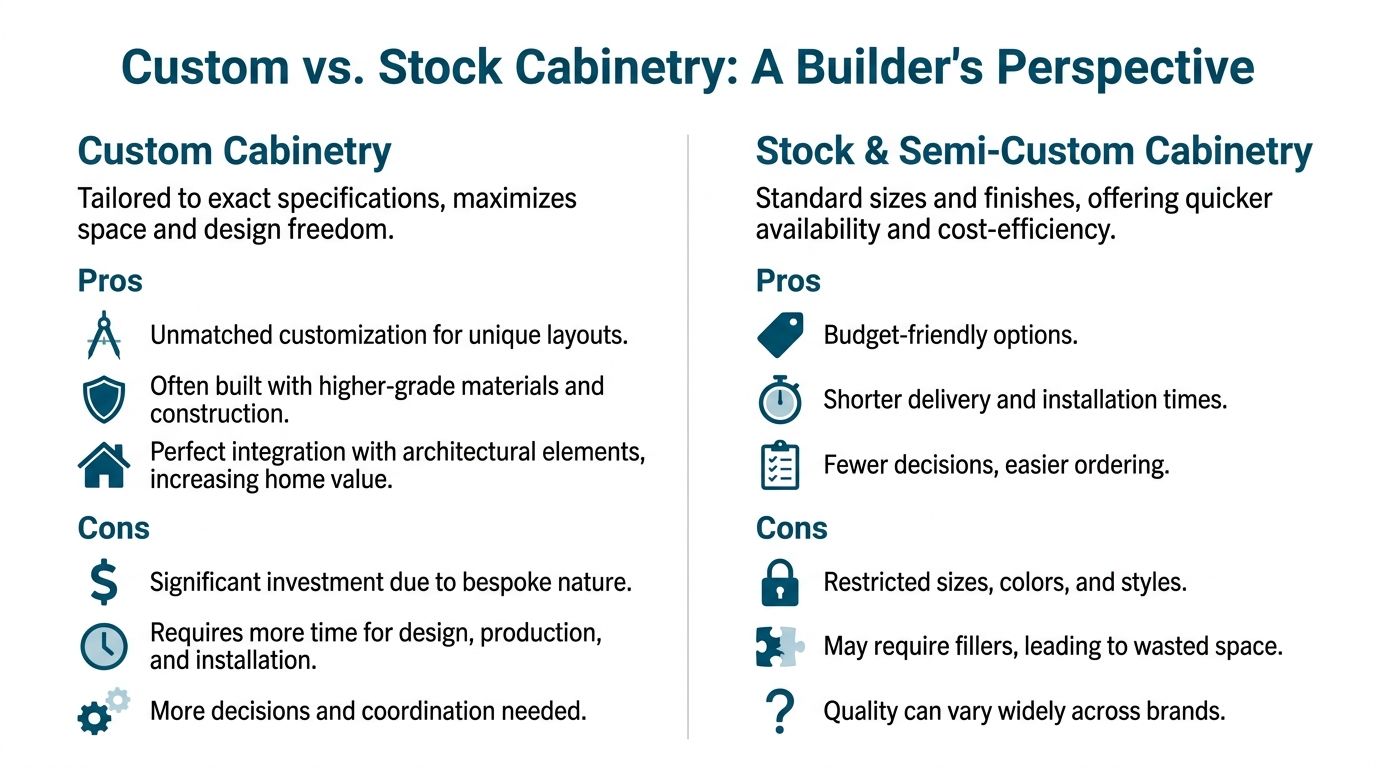
If the layout is straightforward, appliance selections are standard, and the cabinetry is not carrying major architectural weight, stock or semi-custom can be a reasonable choice. If the kitchen ties into detailed trim work, paneled appliances, full-height millwork, or long sightlines into adjacent rooms, custom usually earns its cost.
What stock saves and where it gives ground
Stock and semi-custom lines save time in the early decision phase. Fewer modifications. Fewer finish choices. A faster path to pricing.
That works well in the right room. It starts to strain when the architecture is doing more than the cabinet line was built to handle.
The trouble spots are predictable:
Appliance fit: Flush installations, panel-ready units, and specialty vent hoods need tighter control than many stock lines allow.
Fillers and lost space: Standard widths often leave narrow leftovers that get covered instead of turned into storage.
Trim and ceiling alignment: Crown, beams, and full-height end panels look cleaner when the cabinet plan was drawn around the room, not adjusted after the fact.
Field changes: Minor framing variations are easier to absorb with custom dimensions than with fixed box sizes.
Why custom earns its place in a high-end home
Custom cabinetry lets the room set the dimensions. That changes everything from alignment to storage to installation labor.
A custom run can center perfectly on a range wall, hold a clean reveal at a pantry opening, and carry the same logic into the butler's pantry, bar, and laundry. In a new custom build, that coordination should happen before trim details are finalized and long before template dates are booked. In a major renovation, it matters just as much because older homes, waterfront condos, and reworked floor plans rarely give you ideal conditions.
I tell clients the expensive mistake is not the upgrade itself. It is paying for square footage, ceiling detail, and premium appliances, then forcing the kitchen into cabinet sizes that leave dead gaps and awkward transitions.
Material quality matters, but fit and coordination matter just as much
Custom does not automatically mean better, and stock does not automatically mean cheap. A well-made manufactured line can perform very well in a secondary space or in a kitchen with clean, standard dimensions. A weak custom shop can still produce poor joinery, sloppy finish work, and bad installation drawings.
The better question is how the cabinetry will be built, finished, delivered, and installed within the larger job. Door style, finish selection, and durability all matter here, especially for painted cabinetry. Homeowners comparing options often benefit from reviewing guidance on paint for kitchen cabinets because finish quality affects how cabinets hold up under cleaning, light, and daily use. For design direction, this overview of latest trends in kitchen cabinetry is useful, but trends should still be filtered through the architecture of the house and the conditions of coastal living.
A practical decision filter
If your priority is... | Usually the better fit is... |
|---|---|
Speed and fewer design decisions | Stock or semi-custom |
Architectural integration | Custom |
Exact appliance paneling | Custom |
Lower initial price point | Stock or semi-custom |
Maximizing every inch in a unique layout | Custom |
For homeowners comparing vendors, firms such as local millwork shops, cabinet dealers, design-build teams, and builders like JVM Construction LLC can coordinate cabinetry as part of a larger custom home or whole-home renovation scope. The label matters less than the process. Cabinet drawings should be reviewed in step with appliance specs, electrical locations, trim details, flooring transitions, and installation access.
What works in real projects
A mixed strategy often gives the best result.
Use custom where the eye lands first and where tolerances are tight. The main kitchen, island, pantry entry, and any wall with paneled appliances usually fall into that category. Use a well-built manufactured line in utility rooms, secondary baths, or other spaces where standard sizing does not create visual or functional compromises.
That approach protects the rooms that define the house without spending custom dollars where they will not change the outcome.
Designing for the Naples Lifestyle Style and Function
Late in a custom build, this is the point where kitchen decisions start affecting more than cabinet looks. An island that is six inches too long can pinch a main walkway. A tall pantry wall can interfere with trim alignment at the ceiling. A beautiful door style can feel out of place once the flooring, stone, beam details, and window package are installed. In Naples homes, cabinetry has to fit the way the house is built and the way the house is used.
The cabinet styles that hold up best here share one trait. They support the architecture instead of competing with it.
Shaker and transitional profiles still work well in Naples because they give the room structure without adding visual noise. In a home with wide-plank floors, large-format stone, and expansive glass, that restraint matters. Cleaner profiles also age better than ornate doors that looked impressive in a showroom but feel heavy once the full kitchen is installed.
A few directions consistently perform well in new custom homes and major renovations.
Coastal modern fits open plans with strong indoor-outdoor connections. Flat or lightly detailed doors, light wood tones, soft painted finishes, and simple hardware keep the kitchen in step with large glass openings and lanai views.
Transitional is the safest long-term choice for many homeowners. A narrow Shaker or quiet recessed panel works across a wide range of architectural styles, from refined coastal homes to more traditional Naples exteriors.
British West Indies influence can add warmth and personality, but it needs discipline. Furniture-style details, leg accents, and richer paint colors work best when they are limited to one or two focal areas, usually the island or a hutch-style section.
Layout matters just as much as style.
In a custom home, I want cabinet design reviewed with framing dimensions, ceiling treatments, appliance specs, and traffic paths before fabrication starts. That is how you avoid an island that looks good on paper but crowds the refrigerator landing zone, or a pantry entry that interrupts the sightline from the great room.
The kitchen plans that work best for daily Naples living usually include a few consistent moves:
A properly sized island with enough overhang for seating and enough clearance for open drawers, appliance doors, and people passing behind stools
A working pantry or back kitchen for coffee equipment, small appliances, and bulk storage that would otherwise clutter the main room
Full-height cabinetry on a focal wall to anchor taller ceilings and reduce the chopped-up look that comes from short uppers with too much drywall above
Drawer-heavy base storage near prep and cooking zones, because deep drawers are easier to use than lower-door cabinets in everyday life
Panel-ready refrigeration and ventilation planning when a cleaner architectural look is part of the goal
Good function often comes from small sizing decisions. Appliance garages only work when they are built around the actual mixer, toaster, or espresso machine. Island seating only feels comfortable when knees, chair backs, and walkway space have all been accounted for. Those details are rarely solved at the last minute.
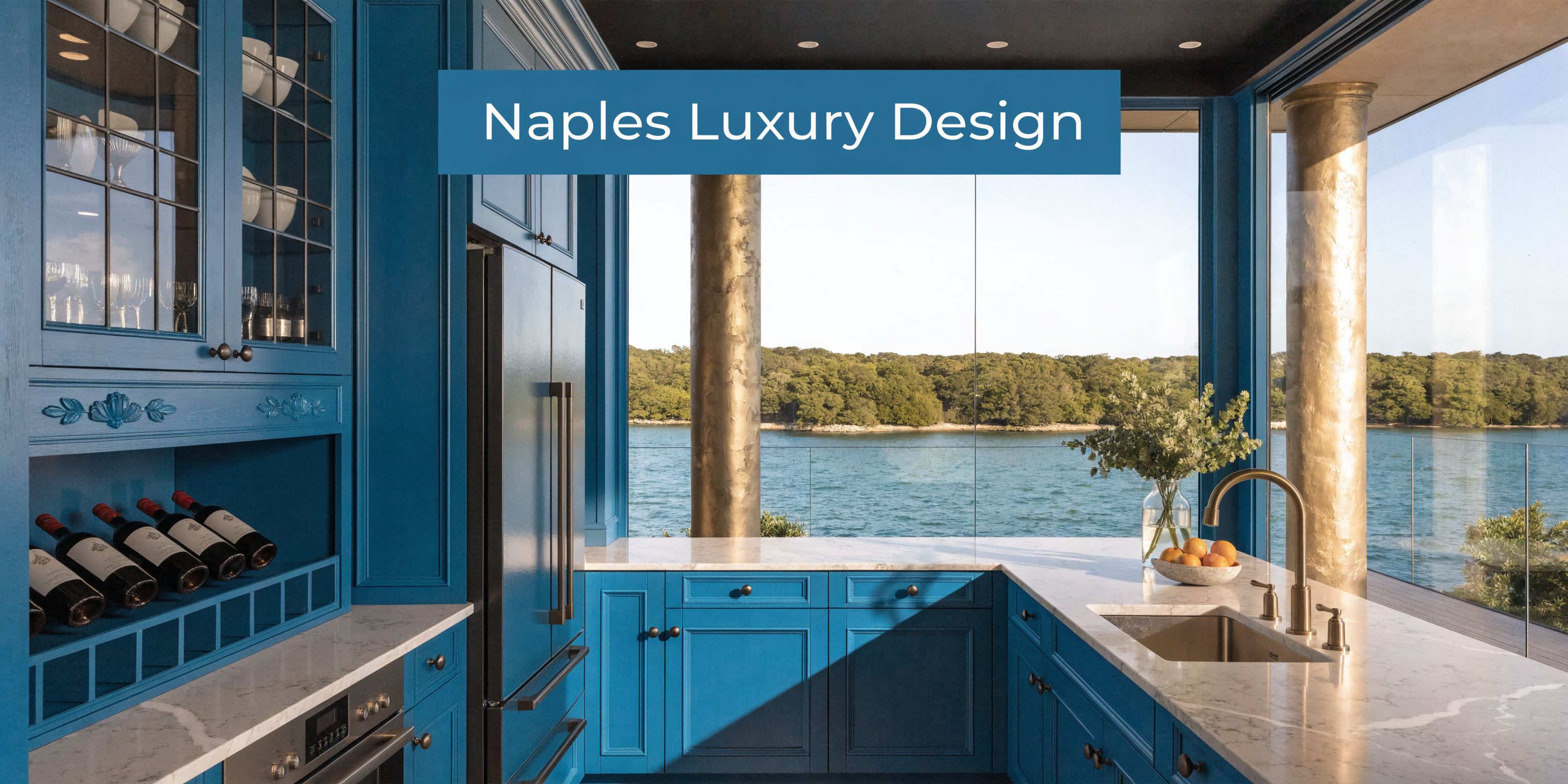
Color needs the same level of discipline. Blue islands, white perimeters, warm wood lowers, and painted pantry walls can all work here, but the right choice depends on the fixed finishes already in the project. Floor tone, countertop movement, window light, wall color, and adjacent millwork all change how a cabinet finish reads. I also look at who will live in the home. A house used for frequent entertaining has different wear patterns than a seasonal residence, and that should influence sheen, color depth, and touch-up expectations.
If you are comparing painted finishes, this guide to paint for kitchen cabinets gives a useful overview of how different paint systems wear and how they tend to be maintained.
For homeowners still refining the visual direction, these latest trends in kitchen cabinetry can help sort lasting ideas from short-lived ones.
The kitchens that stay attractive and easy to use ten years later are usually the ones where style decisions followed the house plan, not the other way around. In Naples, good cabinetry should support entertaining, daily routine, storage, sightlines, and the architecture of the home at the same time.
Decoding Your Cabinet Investment Costs and Timelines
Cabinet pricing can feel opaque because proposals often bundle design, fabrication, finish, hardware, delivery, and installation into a few line items. That makes comparison harder than it should be.
For luxury Naples homes, cabinets alone can average $100,000 to $300,000 in kitchen remodels, custom options can boost property values by 12 to 18%, and permitting plus HOA reviews can add 15 to 25% to timelines, according to this Houzz Naples design-build reference. Even if your project is a custom home rather than a stand-alone kitchen remodel, that range gives useful context for what premium cabinetry can represent in the overall budget.
What you’re paying for
A cabinet proposal usually includes several distinct cost drivers.
Cost area | What it covers |
|---|---|
Construction | Cabinet boxes, door style, drawer boxes, interiors |
Material level | Hardwood selections, engineered panels, specialty veneers |
Hardware | Hinges, drawer slides, organizers, pull-outs |
Finish | Paint, stain, topcoat, color matching, sheen control |
Installation | Set, level, scribe, appliance panel fit, final adjustments |
The cheapest proposal often strips quality out of one of those categories. Sometimes it’s weak hardware. Sometimes it’s a thinner box or a lower-grade finish. Sometimes installation is barely scoped, which becomes your problem later.
Why timeline mistakes get expensive
Cabinets sit in the middle of the construction sequence. They can’t be treated as a decorative add-on.
Selections affect electrical rough-ins, lighting placement, plumbing, appliance coordination, countertop templating, backsplash timing, and trim completion. If cabinet drawings lag, everything behind them gets squeezed.
That’s why scheduling matters as much as budget. This overview of what is construction scheduling is helpful for understanding how one delayed selection can ripple through an entire custom build.
Late cabinet decisions don’t just delay cabinets. They delay everyone who works after cabinets.
How to read a proposal like a builder
Before approving a cabinet package, ask for clarity on these points:
Are appliances fully coordinated? Panel-ready units, vent inserts, and clearance needs should already be reflected.
What hardware is included? Hinges and slides shouldn’t be a vague allowance.
What happens at trim connections? Crown, fillers, panels, and end conditions need to be shown.
Is finish scope complete? Touch-up expectations and sample approval steps should be clear.
Who owns field verification? Someone has to confirm dimensions before fabrication locks.
A strong proposal reduces surprises. A vague one invites change orders, patchwork decisions, and installation arguments.
A realistic way to think about value
The right cabinet investment isn’t about spending more for its own sake. It’s about putting money where the room carries the most visual weight and the most daily use.
If the kitchen is the anchor of the home, cabinetry should be budgeted early and detailed carefully. That approach usually costs less than redesigning around compromises late in the build.
Protecting Your Cabinets Maintenance in a Salt Air Zone
Even excellent cabinetry needs care in Naples. Salt air, humidity, sun exposure, and routine use all put pressure on finishes and hardware over time.
That doesn’t mean maintenance has to be complicated. It does mean it should be consistent.

Start with the hardware
In high-end homes, hardware quality pays off long after move-in. Full extension soft-close slides and hinges are especially important in Naples luxury builds because they reduce drawer front misalignment by 40 to 60% over 10 years and are tested to endure over 200,000 cycles without failure, according to Daso Custom Cabinetry’s Naples cabinet specifications.
That performance matters in a humid environment where metal parts and moving components are under more stress. It also means maintenance is often about inspection and adjustment, not constant repair.
A practical care routine
Most homeowners don’t need specialty procedures. They need a repeatable habit.
Wipe surfaces gently: Use a soft microfiber cloth and a cabinet-safe cleaner. Avoid abrasive pads and aggressive degreasers.
Dry around pulls and edges: Moisture tends to linger near hardware, sink runs, and lower cabinet corners.
Check hinges and drawer alignment: If a reveal changes or a door rubs, have it adjusted early.
Watch sun-facing areas: Strong daylight can be harder on painted finishes and certain stains.
Keep interior conditions steady: Air conditioning and humidity control help finishes and joinery stay more stable.
Areas that deserve extra attention
Some cabinet zones take more punishment than others.
The sink cabinet deals with splashes and plumbing risk. Trash pull-outs see frequent movement and impact. Islands become the household crossroads, especially near seating. Perimeter cabinets near sliding doors and outdoor openings can pick up more moisture and airborne residue than homeowners expect.
Small maintenance issues are easiest to solve while they still look cosmetic.
What homeowners should avoid
The most common cabinet care mistakes are simple:
Overwet cleaning
Harsh chemical sprays
Ignoring a sticking drawer or hinge
Letting water sit at seams or under the sink
Using touch-up products that don’t match the finish system
Good cabinetry doesn’t ask for constant attention. It does respond well to basic discipline. If your cabinets were selected correctly, installed well, and maintained with some care, they should continue to look composed and work smoothly through the normal rhythm of life in a coastal home.
Building Your Vision A Partnership for a Flawless Kitchen
The best cabinet decisions rarely come from chasing one feature, one sample, or one trend. They come from putting the full picture together.
Material selection determines whether the kitchen can hold up in a coastal setting. The custom versus stock decision affects fit, storage, and architectural cohesion. Design choices shape how the room feels from the front door and how it functions on an ordinary day. Budget and schedule planning determine whether the install is orderly or frustrating. Maintenance protects the investment after move-in.
That’s why Naples kitchen cabinets deserve to be treated as part of the whole home, not a stand-alone purchase.
A well-built kitchen should feel inevitable once it’s installed. The proportions should make sense. Appliance panels should align. Storage should feel easy to use. Finishes should suit the house instead of competing with it. None of that happens by accident.
Builders, architects, designers, cabinet makers, and installers all have to work from the same logic. If one decision gets made in isolation, the room usually shows it. If the process stays coordinated, the kitchen becomes one of the clearest expressions of the home’s quality.
For homeowners planning a custom build, a condo transformation, or a major renovation, the goal isn’t just to choose attractive cabinets. It’s to make choices that still feel right years from now, after the house has settled into daily use and the climate has had time to test every surface.
That’s the standard worth building toward.
If you're planning a custom home, whole-home remodel, or high-end condo renovation in Naples, JVM Construction LLC can help you coordinate cabinetry decisions with the larger build process so materials, layout, scheduling, and installation all work together from the start.